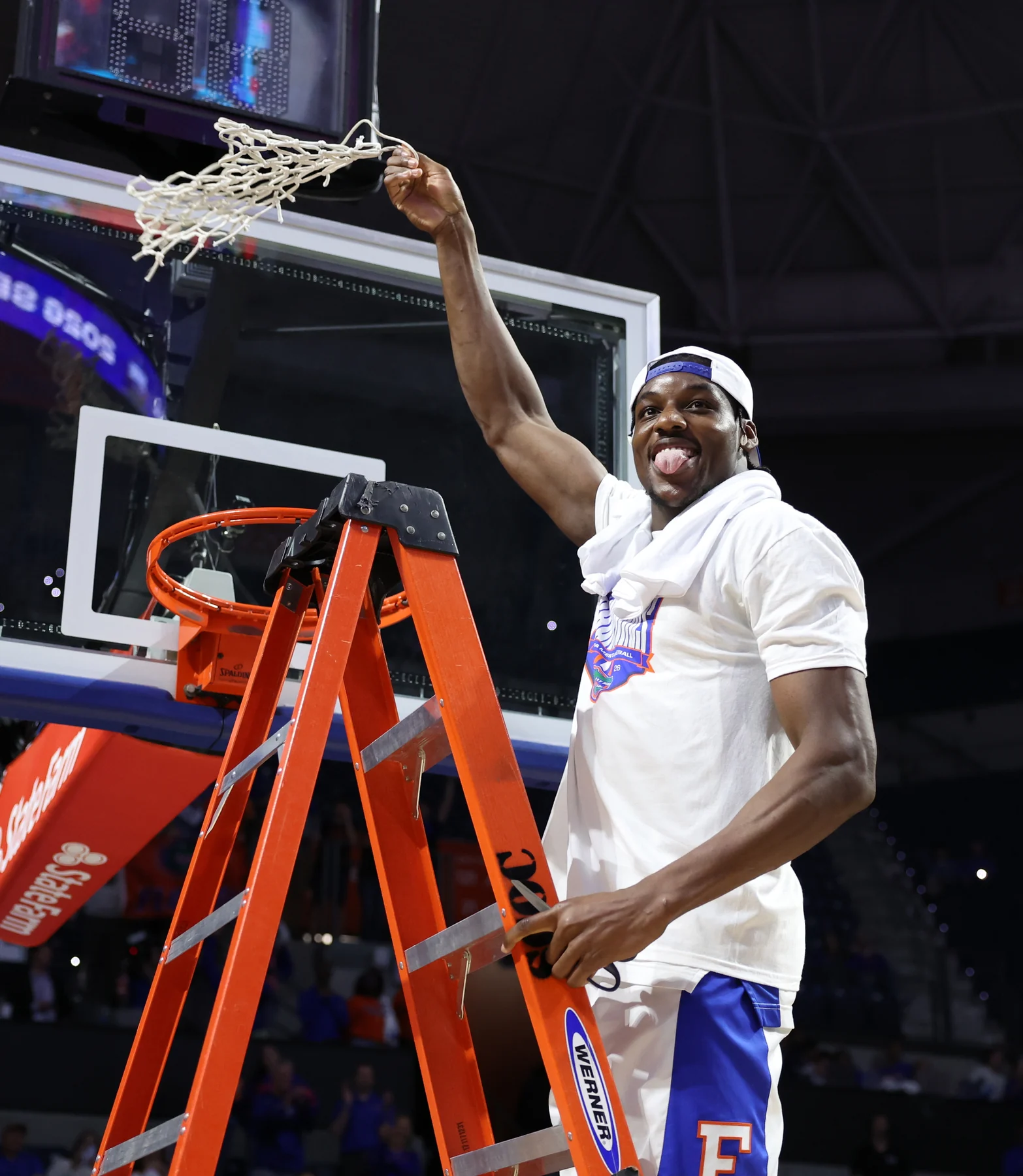
Florida and Duke lead the dated preseason board below, followed by Illinois, UConn and Michigan State. This guide records Jon Rothstein's first 25 positions as retrieved on October 14, 2026, then examines what the strongest team cases depend on and which November games can challenge them. The team analysis is our editorial interpretation of official rosters, player biographies and schedules; the ranking order is explicitly attributed.
The cover shows Florida's Rueben Chinyelu at the February 2026 SEC title celebration. The photographs provide historical player context; the roster and schedule discussion concerns 2026–27.
The preseason Top 25 board on October 14
The table below records the first 25 positions in Jon Rothstein's preseason rankings, retrieved on October 14, 2026. It is one analyst's projection. His page says it changes daily; the retrieval date identifies the version discussed here rather than promising that the live page will retain this order.
| Rank | Team | Rank | Team |
|---|---|---|---|
| 1 | Florida | 14 | USC |
| 2 | Duke | 15 | Arkansas |
| 3 | Illinois | 16 | St. John's |
| 4 | UConn | 17 | BYU |
| 5 | Michigan State | 18 | Louisville |
| 6 | Arizona | 19 | UCLA |
| 7 | Virginia | 20 | Kansas |
| 8 | Texas | 21 | Iowa State |
| 9 | Michigan | 22 | Kentucky |
| 10 | Miami | 23 | Vanderbilt |
| 11 | Tennessee | 24 | Texas Tech |
| 12 | Gonzaga | 25 | Alabama |
| 13 | Houston |
For the official media poll, check the AP poll publisher's page. When this guide was checked, it still displayed an April 7 release. CBS's AP table likewise carried an April 7, 2026 update date. Those tables should not be relabelled as the 2026–27 preseason poll simply because their page titles mention the new season.
Reading the order as a set of basketball questions is more productive than treating every adjacent position as a measurable gap. A ninth-ranked team can have a stronger case against one opponent than a seventh-ranked team does. Size, ball pressure, shooting and available creators interact with the matchup. A list compresses those considerations into one number, leaving the assumptions outside the table.
It also helps to separate three questions when discussing a team: who is on the published roster, who is available to play, and how that group will function together. A roster can establish a player's presence without settling every eligibility issue or predicting a starting five. The analysis below concentrates on confirmed personnel, the roles worth watching and opportunities for early evidence. Where a ranking depends on an unresolved scenario, that dependence belongs beside the assessment.
If you are comparing this board with an AP, coaches or analytical ranking, our college basketball rankings guide explains their different jobs. For this dated preseason snapshot, the useful starting point is the same: identify the author and assumptions before arguing about the number.
Why Florida and Duke lead the conversation
Florida and Duke occupy the first two places in this snapshot, but their strongest personnel arguments differ. Florida can lean on a familiar interior group. Duke combines established players with an experienced scoring addition. The distinction matters when deciding which parts of a preseason case should survive an uneven opening night.
Florida: continuity across the frontcourt
Florida's official 2026–27 roster includes seniors Thomas Haugh, Alex Condon and Rueben Chinyelu. Their listed heights span 6-foot-9 to 6-foot-11, providing a substantial interior foundation. The school's account of Chinyelu's return confirms that all three chose another season. Chinyelu averaged 10.9 points and 11.2 rebounds in 2025–26 and earned the 2026 Naismith Defensive Player of the Year award.
That evidence supports confidence in an established rebounding and defensive contributor. It also identifies a question opponents can pose: how does Florida create room when defenders crowd the paint? The same school report describes staff preparing Chinyelu for occasional open perimeter opportunities. Preparation is useful, but it should not be confused with proven shooting volume or efficiency.
For a viewer, the informative possessions may be the ones after the initial entry is denied. Watch whether Florida moves the ball to a second side, whether a big can connect the next pass, and whether the guards keep the defense engaged outside the lane. Those actions can make familiar size more effective. A comfortable rebounding night against an undersized opponent answers less about the half-court spacing problem than a patient possession against a crowded interior does.
Duke: a returning foundation with a different scoring mix
Duke's current roster includes Caleb Foster, Patrick Ngongba II and Dame Sarr alongside Wisconsin transfer John Blackwell. The official Blackwell biography records 107 games and 74 starts across three Wisconsin seasons, with 1,505 career points. His experience comes from a previous college setting; it establishes a substantial body of work without supplying a Duke scoring forecast.
The appeal is a combination of existing program familiarity and a newcomer who has already carried meaningful college responsibilities. The question is how those responsibilities connect. Foster's involvement, Blackwell's touches and Ngongba's interior opportunities must fit within the same possessions. Adding individual production from separate teams does not produce a realistic team total because players will share the ball and playing time.
Watch how Duke distributes creation when its first option is defended. Does another perimeter player receive the ball with time to attack, or inherit a difficult shot late in the clock? Are interior touches a useful release valve rather than a separate offense? These are tests of integration, not predictions of the starting five. The roster gives Duke several pieces for that work; the opening games will show how they are arranged.
Illinois, UConn and Michigan State: different forms of continuity
The next three teams illustrate why counting returning players is only the beginning of a preseason assessment. Continuity is more valuable when you identify the basketball function being preserved: interior spacing, perimeter decision-making, defensive communication or a reliable way to start an offense.
Illinois's April return announcement confirmed Tomislav Ivisic, Zvonimir Ivisic and Jake Davis alongside David Mirkovic. The previous season's shooting contributions offer a concrete reason to care. Tomislav made 50 three-pointers; Davis made 54 while shooting 40.6% from beyond the arc. Andrej Stojakovic's current Illinois biography also records his return to the roster after averaging 13.5 points in 2025–26.
Keeping players with those established offensive references gives Illinois a starting point for spacing. An opponent has to decide whether to stay attached to a shooting threat or help on a drive. The next question is whether the new group's ballhandlers can turn that decision into an advantage. Returning shot makers can make that job easier, but their presence alone does not answer who creates the initial separation or how the ball arrives on time.
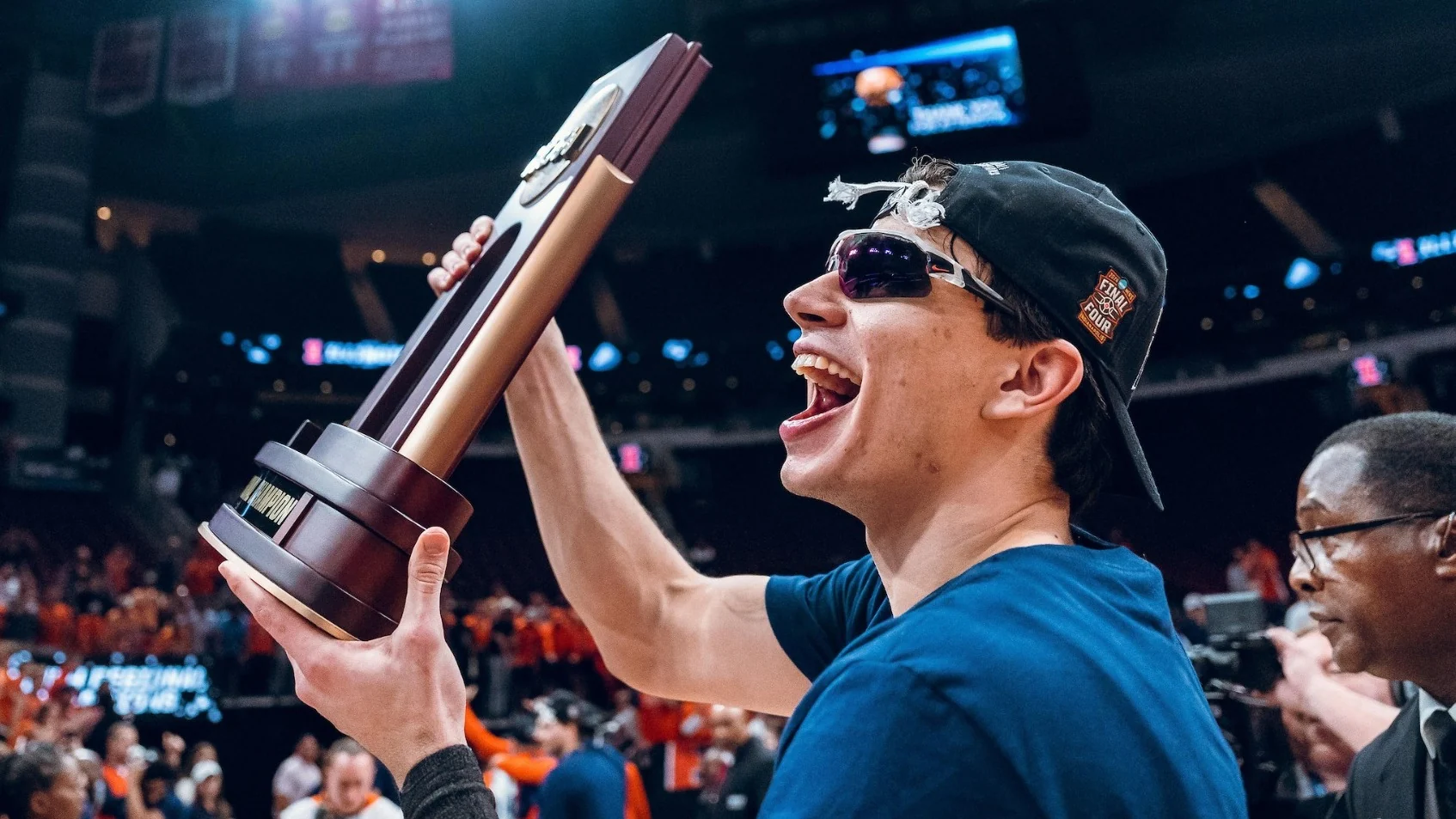
What returning guards can establish before November
UConn's 2026–27 roster lists Silas Demary Jr. and Braylon Mullins alongside frontcourt additions Nik Khamenia, previously at Duke, and Na'jai Hines, previously at Seton Hall. The useful comparison with Illinois is positional. UConn has familiar perimeter players who can help connect new interior pieces, while Illinois's return announcement emphasizes a substantial group of established frontcourt and shooting contributors.
For UConn, watch the timing between a guard and a new screener: where the screen arrives, when the roll begins and whether a second defender has to commit. A clean sequence can produce an advantage even when the final shot misses. Conversely, several made jumpers do not settle whether the screen partnership will work against more physical coverage. This is a practical way to assess integration without declaring an unannounced starting lineup.
Michigan State has a particularly concrete perimeter reference in Jeremy Fears Jr. His official biography records 9.4 assists per game and a 3.86 assist-to-turnover ratio in 2025–26. The latter divides recorded assists by turnovers; it gives context to the assist volume rather than assuming every fast possession was productive.
That demonstrated distributing role makes the surrounding fit worth watching. If teammates run into usable passing windows and provide an available outlet against pressure, Fears has a foundation for involving them. The historical numbers support interest in that mechanism. They do not promise the same average next season, especially as opponents change how they defend him. For all three teams, continuity earns a stronger argument when its preserved function still works against a live adjustment.
Why Michigan and Texas Tech divide the preseason lists
ESPN's October 7 projection had Michigan 22nd and Texas Tech ninth; Texas Tech fell out when contested fifth-year players were excluded. Compare those positions with the ninth and 24th spots in the Rothstein snapshot above. The distance between the lists is a prompt to inspect assumptions, not proof that one list has measured the teams incorrectly.
Michigan enters a new head-coaching arrangement after its 2026 national championship. The school's July 10 announcement named Mike Boynton Jr. head coach after two seasons on the Michigan staff. That history supplies program familiarity, but the responsibility at the top is still different. Familiar terminology and existing relationships do not mean every rotation or game-management choice will remain identical.
There is also a confirmed personnel change. Michigan's September 4 school podcast transcript reports that Brandon McCoy Jr. will miss the season after an ACL injury on the summer tour. Losing an incoming guard changes who must supply the possessions originally available to him. The useful question is how Michigan distributes those responsibilities, rather than assigning an imaginary replacement scoring average.
For Texas Tech, Donovan Atwell's previous production makes the availability question easy to understand. The school's August 17 return announcement records 130 made three-pointers at 45.8% in 2025–26. A player with that demonstrated shooting contribution can affect where a help defender stands even on possessions when he never attempts a shot. If he is unavailable, replacing the spacing threat can be as significant as replacing the points.
That August announcement records a signing and intended return. It should not be used as a blanket answer to every later eligibility development. When comparing preseason lists, ask whether the author assumes a player will participate or evaluates the group available at a particular date. A conditional ceiling and a narrower available-roster assessment can be reasonable answers to different questions.
Our 2026–27 eligibility guide covers the broader context. For ranking purposes, the practical habit is to attach the relevant scenario to the team assessment. That gives a reader something to update when a new official announcement appears, instead of treating every movement in the order as a sudden change in basketball ability.
Rebuilt rosters and the roles that matter
A transfer-heavy roster should be evaluated through the jobs its players can perform together. Two useful preseason examples are Houston's interior partnership and Kentucky's effort to connect new guards with a demonstrated shooting threat. Neither requires adding up previous individual averages and pretending the result is a forecast.
Houston: replacing production within an established system
Joseph Tugler's official Houston biography records 1.5 blocks and 3.0 offensive rebounds per game in 2025–26. His current roster page includes Delrecco Gillespie, whose Houston signing announcement reports 17.7 points and 11.3 rebounds per game during his previous season at Kent State. Kelvin Sampson specifically discussed Gillespie's rebounding and ability to jump again quickly.
Those references give a viewer concrete work to examine. When Tugler helps near the rim, another player must secure the rebound or account for the attacker left behind. A productive rebounding newcomer can contribute to that sequence, but success depends on positioning and communication as well as an individual average. The relevant question is whether Houston finishes the defensive possession after forcing the first difficult attempt.
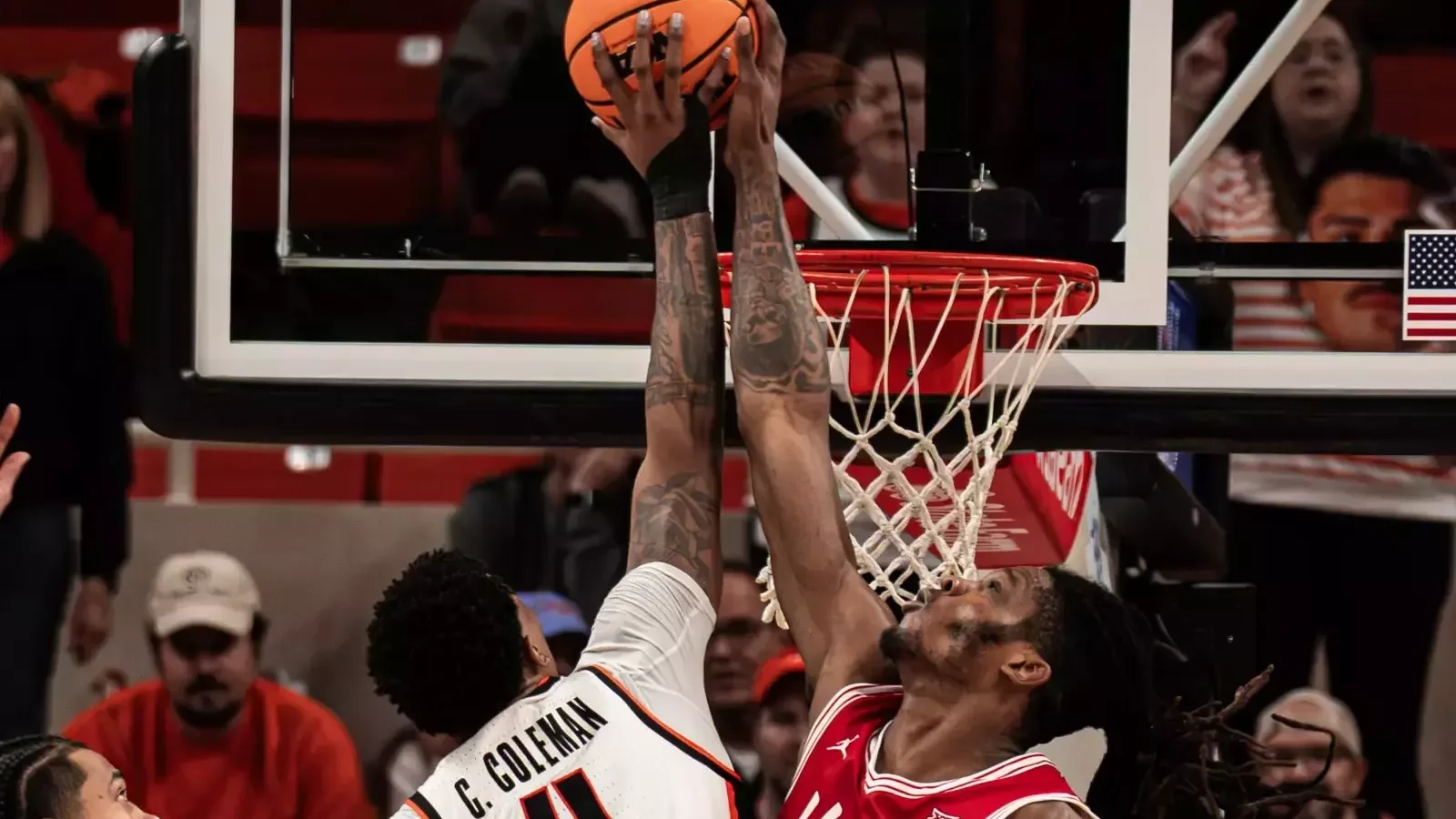
At the other end, offensive rebounding can create additional chances without asking a new perimeter group to manufacture a perfect first shot. There is a tradeoff to watch: sending players toward the glass also requires a plan to stop the opponent's transition. The new group must make those decisions together. The roster supplies experienced interior contributors; the ranking case improves if their actions connect with the surrounding players rather than occurring in isolation.
Kentucky: connecting creation with shooting
Kentucky's current roster lists Zoom Diallo from Washington, Alex Wilkins from Furman and Milan Momcilovic from Iowa State, alongside sophomore center Malachi Moreno. The official Momcilovic biography records 136 made three-pointers and 48.7% shooting from deep in 2025–26. That is specific evidence of a shooting contribution; it should retain its previous-school and previous-season labels.
The useful fit question is how Kentucky brings that shooting into the same action as its guards. If a defender stays close to Momcilovic, a drive may have more room. If that defender helps, an accurate pass arriving before the recovery can create a usable catch. A pass that arrives late can erase the advantage, even with a strong shooter waiting outside.
That is why possession quality should accompany the early shooting percentage. Kentucky could execute the spacing well and miss several open attempts, or make difficult attempts while its offense remains disjointed. Examine where the catches occur and how much time remains to act. The new combinations have to establish that timing against different defensive choices before an encouraging collection of transfer résumés becomes a convincing team argument.
November games that can change the conversation
A preseason ranking becomes more useful when it points you toward a game that can test the argument behind it. These five scheduled meetings connect teams in the snapshot and offer different settings for early evidence. Dates and locations were checked against official school schedules or announcements on October 14, 2026.
| Date in 2026 | Scheduled game | Setting |
|---|---|---|
| November 2 | Florida vs. Miami | Tampa, Florida; neutral event |
| November 2 | Arizona vs. UCLA | T-Mobile Arena, Las Vegas; neutral event |
| November 6 | Michigan vs. UConn | TD Garden, Boston; neutral event |
| November 10 | Duke vs. Michigan State | United Center, Chicago; Champions Classic |
| November 17 | Illinois at Duke | Cameron Indoor Stadium, Durham, North Carolina |
Florida–Miami brings the leading team away from its usual home floor immediately. The useful observation is how the Gators' interior group operates when the first possession does not produce a comfortable paint touch. Arizona–UCLA offers another direct comparison within the board on the same date. Calling it a neutral game is more accurate than reading a designated visitor label as a trip to UCLA's campus.
Michigan–UConn is especially useful for the continuity question. Michigan has a changed coaching arrangement and an injury-related redistribution of roles; UConn's listed perimeter group must connect with new frontcourt contributors. Watch which team can sustain clear decisions after the opponent changes its first defensive approach. That can reveal more than a brief run of made threes or a final margin alone.
Duke then has two different comparisons a week apart: Michigan State in Chicago and Illinois in Durham. Fears's demonstrated passing role makes the first an interesting test of Duke's collective defensive timing. The second gives Illinois's preserved interior and shooting group a campus road setting. Viewing the games together also helps identify whether either team repairs a weakness exposed in the earlier contest.
Keep the venue attached to the date when discussing these results later. Four games played in different neutral arenas and one campus road game do not supply identical contexts. Nor does a single early defeat erase a roster's useful pieces. The question is which basketball mechanism worked, which failed, and whether the response appears in the next meaningful test.
For viewing plans, use today's games and the TV schedule, then confirm the event's stated time zone and channel before tipoff. The dates above are a watchlist, while broadcast details should be checked close to the game.
Following the first official poll and beyond
When using the official AP preseason poll for 2026–27, read it with its release date and vote totals. AP's own explanation describes a points system that awards 25 points for a first-place vote, descending to one point for 25th. That produces an aggregate of media voters' choices, a different product from the individually authored snapshot in this guide.
A preseason poll also has a different job from a tournament seed list. The NCAA's men's selection process describes the committee building its own list through evaluation and voting. An October position does not award a March seed. Our bracketology guide explains the postseason forecasting context if that is the question you are trying to answer.
How to update a preseason opinion after the first games
Start with the roster assumption that mattered most. For Florida, examine whether the established interior group can produce good possessions when the paint is crowded. For Duke, examine whether experienced players and additions can share responsibility after the first action is denied. These questions are more informative than deciding in advance that any close game proves a team was overrated.
Then record the setting and available personnel alongside the outcome. A neutral-floor meeting, a campus road game and a home opener provide different contexts. If a relevant player cannot participate, say so when assessing the performance. Preserve that information before comparing the next game, so the comparison reflects the basketball group that actually played.
Separate execution from the immediate shooting result. A sequence of missed open shots can still reveal useful spacing; made contested shots can hide possessions that did not create an advantage. Use the next opponent's adjustment to ask whether the mechanism survives. For the interior examples above, that might mean watching who handles the rebound when a teammate helps, or whether the next pass remains available against tighter pressure.
Finally, keep the size of the evidence in proportion. The NCAA's selection-criteria explanation stresses the limitations of early data and a broad assessment of the season's work. A few November possessions can identify a problem worth tracking without proving it is permanent. The dated Top 25 gives you an opening set of expectations. Official roster news and repeated game evidence provide the reasons to revise them.
Sign in with Google to join the discussion.