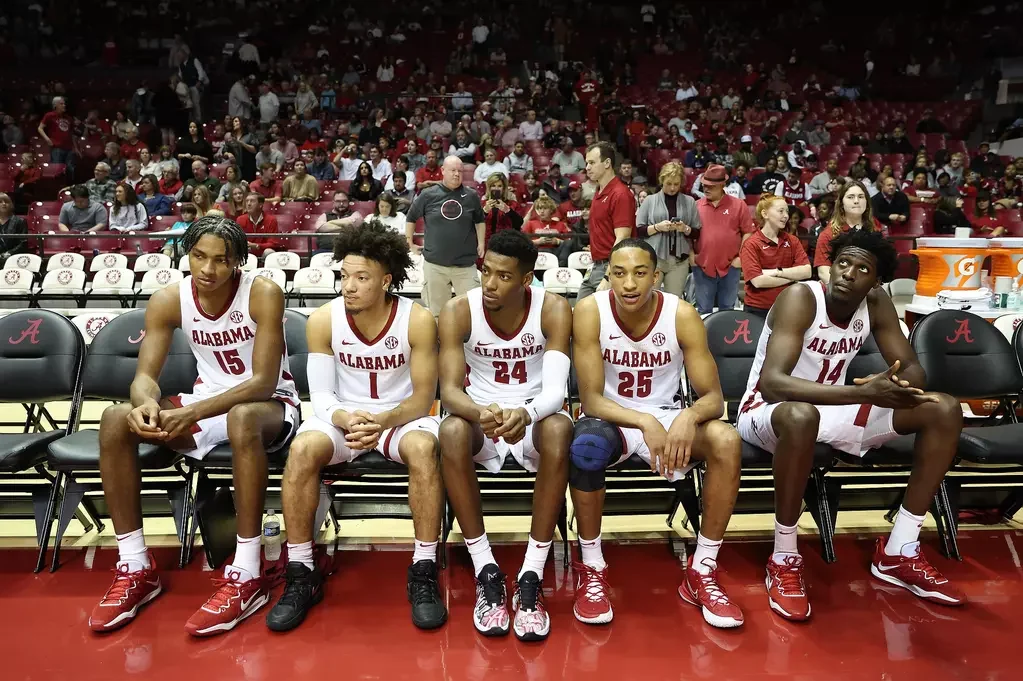
The 2026–27 eligibility answer in one minute
The cleanest answer is that 2026–27 is a transition season, not a universal fifth season for every senior. Division I adopted an age-based five-year eligibility framework in June 2026, but the implementation table matters more than the slogan. A player who still had eligibility after 2025–26 can be evaluated under the old four-seasons-in-five-years approach or the new age-based approach, whichever is more favorable. A player who used his final season under the previous rules during 2025–26 does not acquire another season merely because the national policy changed. Incoming students in 2026–27 also receive a favorable comparison; the new model becomes the only model for first full-time enrollees beginning in fall 2027.
A transition year, not a blanket fifth season
That distinction is central to men's basketball, where one year of a veteran point guard or a rim-protecting center can swing an entire rotation. “Five years” describes a period of eligibility under the revised model. It is not a promise that every athlete previously limited to four seasons can now play a fifth in November. The NCAA's own transition chart explicitly separates those with remaining eligibility from those whose fourth season was completed by spring 2026. Treat a social-media claim that a former senior is “back” as a lead to verify, not as a final lineup card.
For a fan checking a team's outlook, the useful sequence is: first, identify the player's first full-time college enrollment and age-based clock; second, establish seasons already used and whether any eligibility remained after 2025–26; third, look for a school or NCAA determination, or a court order with a precise scope; fourth, check whether the athlete is actually on the active team and available for a specific game. These are related but separate questions.
The four questions behind a roster listing
A team webpage may keep a player's name while eligibility is under review, and a favorable eligibility decision does not require a coach to give that player minutes. Conversely, a player can practice while waiting for a ruling yet remain unavailable for competition. The difference shows up in the game plan: if a proven lead guard is uncertain, an opponent can pressure the replacement ball handler; if a returning big is uncertain, foul coverage and defensive rebounding depth matter more. Those are editorial basketball implications, not predictions about an unnamed individual's case.
Use the team directory for the current team context, then verify availability close to tipoff. This guide is current through September 16, 2026; eligibility and court decisions are moving faster than a preseason preview can safely assume.
How the five-year clock and transition actually work
The new model replaces a collection of season-counting and waiver questions with a continuous eligibility period. Under the current Division I bylaw, an athlete's five academic years begin at the earlier of two events: the first regular term in which the athlete attends a class while enrolled full time at a college, or the start of the regular academic year immediately after the athlete's nineteenth birthday. The NCAA Eligibility Center says “college” includes domestic, international and two-year institutions. A junior-college stop is therefore not invisible to the clock simply because the player had not yet worn a Division I jersey.
When the clock starts
Consider a hypothetical guard who enrolls full time at a two-year school and later transfers to a Division I program. His clock is tied to that initial full-time enrollment if it precedes the age trigger, not to his first high-major appearance. Now consider a prospect who delays college while training: the age trigger may start the period even without full-time enrollment. These examples illustrate the rule; they do not resolve any real athlete's eligibility. Dates of birth, school terms and enrollment status are decisive details, and an online class label alone does not tell the whole story.
Once it begins, the period runs continuously. Under the new model, simply sitting on the bench, taking a developmental year, transferring or missing competition does not pause the clock. The NCAA identifies limited exceptions for circumstances such as active-duty military service, an official religious mission and pregnancy, with specific conditions; it is not an open-ended hardship appeal. That difference matters in basketball because coaches often think of a redshirt year as an extra season of team development. The new framework can let an athlete compete throughout the available window, but it does not automatically extend that window when a season is spent outside games.
Which rule applies to each player group
The transition prevents a one-line answer for every 2026–27 roster. A current athlete who had eligibility remaining after 2025–26, or a prospect first enrolling full time during 2026–27, receives the more favorable calculation under old or new rules. Someone who completed a final fourth season by spring 2026 is not granted a bonus season through this policy. A player first enrolling full time in fall 2027 or later falls under the age-based framework alone. The school and NCAA must apply those categories to individual facts rather than a media-guide class label.
For a fan, the practical consequence is uncertainty concentrated at the edge of a rotation. A team might list several experienced forwards as “seniors,” but their ages, enrollment histories and previously remaining eligibility can differ. The right question is not “How many seniors are back?” It is “Which of these players has a confirmed pathway to compete, and under what rule?” Until a school confirms that status, any projected rebounding or rim protection from that group should carry a visible caveat.
What changed for recruits, redshirts and transfers
Three words that appear together in offseason conversation—recruit, redshirt and transfer—now point to different rule questions. A recruit's pre-enrollment activities are governed by prospect rules. A current player's eligibility period depends on the transition calculation. A transfer must also meet notification and academic requirements. Calling all of this the “new fifth-year rule” obscures why two players can arrive on campus in August but have different paths to the opening game.
For a player developing outside the active rotation, the age-based clock changes the old intuition about a redshirt. The NCAA says athletics redshirt and season-of-competition accounting disappear under the new model. A year without game minutes no longer automatically preserves one of four playable seasons in the same familiar way; the continuous clock is the core constraint. A coach may still use a season for development, but the athletic value of that choice must be measured against the time remaining. That is an editorial implication of the rule, not a claim that every practice-only athlete loses a year in the transition.
Pre-enrollment draft, agents and prize money
The NCAA's April 2026 prospect changes allow a precollege entrant to enter an opt-in professional draft once without harming collegiate eligibility, provided the athlete withdraws by the legislated deadline. The same announcement permits professional agents before initial college enrollment and prize money in the relevant sport before enrollment. The NCAA explicitly distinguishes those changes from the rules governing prize money after enrollment. In men's basketball, that makes an early NBA-draft exploration by a prospective player a different story from an enrolled college player's status. A social post showing an agent or an exploratory draft decision is not, by itself, evidence of ineligibility or clearance.
Transfers have another calendar. In January 2026, Division I approved a 15-day basketball notification window beginning the day after the national championship game, with a separate head-coach-change pathway. The same NCAA release says a midyear basketball transfer cannot compete at a second school after enrolling at an NCAA school for the first academic term, whether or not he appeared in games. A transfer announcement therefore establishes intended destination, not guaranteed November minutes. Coaches still have to assemble a functional backcourt, protect frontcourt foul depth and verify the athlete's eligibility at the destination.
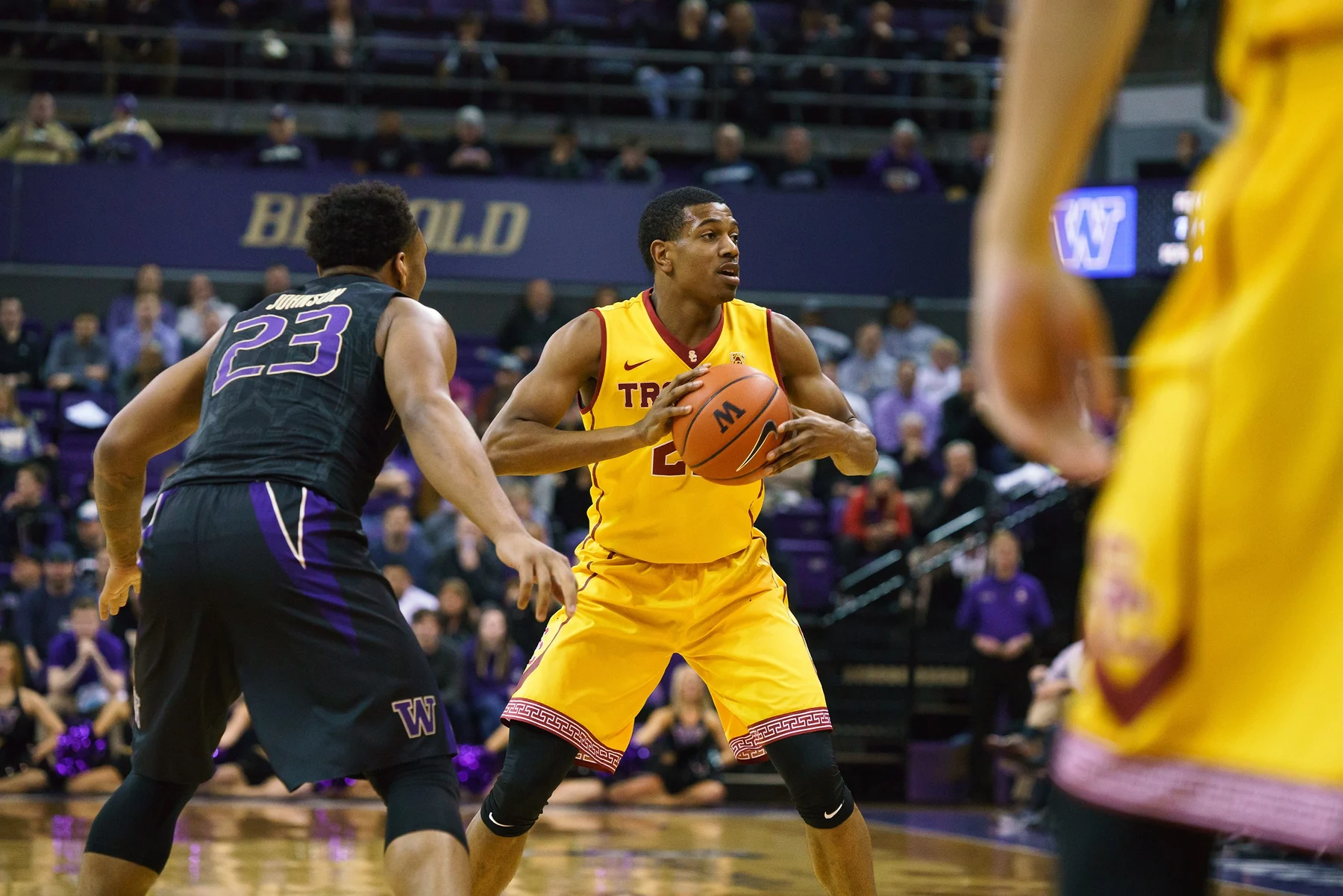
That sequence matters most for a team replacing a lead creator. A portal addition may look like a direct one-for-one replacement on a roster graphic, but his role, availability and fit in half-court offense are separate. If the new guard needs the ball and the incumbent guard also operates best on-ball, the biggest early-season question is not just who is eligible; it is how the staff distributes creation, turnover risk and late-clock decisions. A real game photograph in this section underscores that eligibility is eventually tested in live possessions, not on a transaction list.
Why court cases do not settle every basketball roster
In the summer of 2026, an eligibility headline could be accurate on Monday and incomplete by Friday. The best example is the federal Wisne litigation: a district-court preliminary injunction offered relief to a defined group of athletes, but the Tenth Circuit stayed that injunction on August 21 while the appeal continued. The public docket records both steps. That sequence does not tell a fan that every player in the high-school class of 2022 can play, nor that all players in that class are barred. It tells the fan that the scope, status and timing of a particular order must be checked before putting a name into a projected rotation.
An injunction is not a permanent rule change
A preliminary injunction is interim relief in a legal case; it is not a completed national eligibility rewrite. A stay can suspend its effect while a higher court reviews it. Other individual cases can proceed on different records or in different jurisdictions. Most importantly, the NCAA's published transition policy still says athletes who used their final season in 2025–26 do not receive automatic additional eligibility under the policy itself. If an exhausted player plays, the explanation may involve specific legal relief or another individualized route, not a blanket NCAA grant. Article dates matter: this account is a September 16, 2026 snapshot, not a claim about what an appellate panel will decide later.
For a basketball editor, a stronger formulation is “status under review” until the athlete's school confirms eligibility for competition. “Expected to return” is weaker than “eligible,” and “eligible” is weaker than “available tonight.” This linguistic care is not pedantry. A veteran who can organize a press break, communicate defensive coverages and survive foul trouble changes how a coach can use inexperienced teammates. Fans deserve to know whether that veteran is confirmed or merely being counted in optimistic offseason arithmetic.
Conference rules and school decisions remain separate
Even a favorable court order about an athlete's eligibility does not automatically decide every other question. Schools must apply academic and institutional requirements; conferences can have applicable membership or competition conditions; and teams decide who occupies roster spots and who actually plays. The post-House roster-limit framework is a separate NCAA rule area, with designated-athlete exceptions for some players whose places were affected by implementation. Such an exception does not itself grant an extra season of playing eligibility. In the other direction, an extra-eligibility claim does not itself create a roster slot or a guaranteed scholarship.
Imagine a team that expected a fifth-year center to anchor its drop coverage. If his eligibility rests on an unsettled order, the coach may rehearse a smaller lineup, more switching and a different defensive rebounding plan. That is a reasonable tactical contingency, not a forecast of the judge's next ruling. Fans should ask which decision is pending—NCAA rule calculation, court relief, academic certification, roster inclusion or game availability—before translating an eligibility headline into a win projection.
Eligibility versus a game-ready roster
Being inside the eligibility window is necessary, but it is not the same as being ready to play a particular game. The NCAA's own explanation says academic and other athletics rules continue to apply under the age-based model. Schools still evaluate current athletes, report discrepancies and certify eligibility, while the Eligibility Center handles period-of-eligibility certification for initial fall 2026 enrollees. That is one reason a school's official announcement is more useful than a speculative roster spreadsheet.
Academic clearance and roster limits
Division I academic requirements continue each term. The NCAA lists at least six credit hours in a term for eligibility the next term and an 18-semester-hour or 27-quarter-hour annual benchmark for the next academic year, along with progress-toward-degree thresholds as a student advances. A four-year transfer must also have been academically eligible at the former school to compete immediately at the new one. These requirements are especially relevant to a late portal addition whose basketball résumé may be obvious but whose academic record is not public. Fans should not infer a problem from silence; they should simply avoid calling a player cleared before the school does.
Roster limits are another separate question. After the House settlement, Division I schools in the relevant conferences and other opt-in schools operate under roster-limit rules rather than the prior sport-specific scholarship limits. NCAA-approved exceptions cover certain designated athletes whose positions were affected by the transition. Neither the roster exception nor an offered scholarship substitutes for playing eligibility. A coach could have a legal route to keep a player on a roster and still be waiting on an academic or athletics determination for games.
Rotation, conditioning and the first game
Even a fully cleared player has to earn and sustain minutes. The crucial distinction for a team preview is between “eligible,” “on the roster,” “healthy enough to practice,” and “trusted in the first eight or nine.” Those categories can separate sharply in early November. A returning forward may be eligible but not yet in game shape; a newcomer may be healthy but still learning shell-drill communication and out-of-bounds coverages. The coach can choose a smaller lineup or stagger veterans until those uncertainties settle.
Watch the basketball clues rather than the eligibility label alone. Is the potential lead guard taking first-unit reps? Does the center close scrimmages, or does the staff use a more mobile defender? Can the bench protect against two early fouls without sacrificing defensive rebounding? These observations do not replace official eligibility confirmation, but they are how confirmed players become a working rotation. The two are often conflated when a late court decision or portal commitment makes headlines.
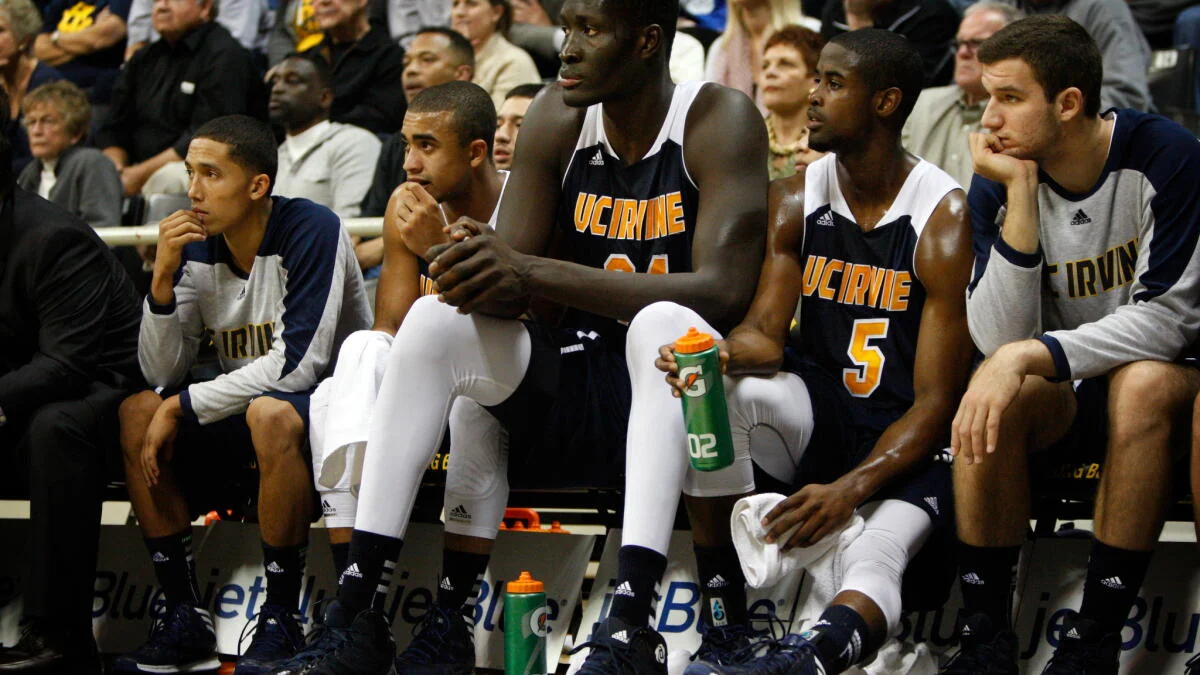
A photograph of a real arena or bench belongs here because the core question is who actually takes the floor. An eligibility ruling can open that door; it cannot choose a lineup, solve a ball-screen coverage or make a young roster perform like an experienced one on opening night.
A practical checklist for following 2026–27 teams
The most useful fan habit is to keep a small separation between what is official and what is merely plausible. Start with the NCAA's cohort rule: did the athlete exhaust his final old-rule season in 2025–26, or did he have eligibility remaining for the favorable transition comparison? For a new entrant, when did full-time enrollment begin, and when did the age-based trigger occur? Do not try to answer those questions from “graduate” or “senior” printed on a roster. The classification is a shorthand for school life, not a complete chronology for the new bylaw.
Next, look for the authority behind the claim. An NCAA rule announcement is national policy. A school statement can describe its own certification or roster plans. A court order may grant limited interim relief to named people or a defined class, and its effect can be stayed. A transfer-portal entry is a notification, not a guarantee that credits, eligibility, enrollment and competition requirements are settled. If a report omits the decision-maker or date, treat it as provisional.
Then ask the basketball question. Is the returning player a primary creator, a spot-up wing, a switchable forward or a backup center? Which possessions change if he is unavailable? A veteran guard may lower turnover pressure against an aggressive press, whereas a veteran big may protect defensive rebounds and keep a starter out of foul trouble. Those are conditional roster effects, not a prediction that either athlete will win a dispute or play 30 minutes. The same uncertainty can make a supposedly deep bench thin at one crucial position.
Finally, refresh just before the matchup. Check the school's current roster and game notes, the opponent, any publicly announced eligibility decision and the first official box score when a game is played. A preseason commitment tells you where a player intends to play; a lineup and box score show whether he actually played that night. Use the daily games page to identify the matchup, then seek team-level confirmation for the personnel question. This guide cannot replace a school's individualized eligibility review.
That habit avoids two common mistakes: treating the age-based policy as a retroactive fifth season for everyone, and treating every legal development as the last word. The 2026–27 season will be interesting enough on the court without overstating what an unsettled September roster can promise.
Sign in with Google to join the discussion.