October 2026 exhibition dates already confirmed
Men's college basketball exhibitions begin before the November regular-season openers, with Michigan State playing Incarnate Word on October 2 and several prominent programs scheduling later October tests. This is a selected watchlist checked October 1, 2026. It identifies confirmed opponents and settings; it is not a complete national calendar or a promise that every game has a published television assignment.
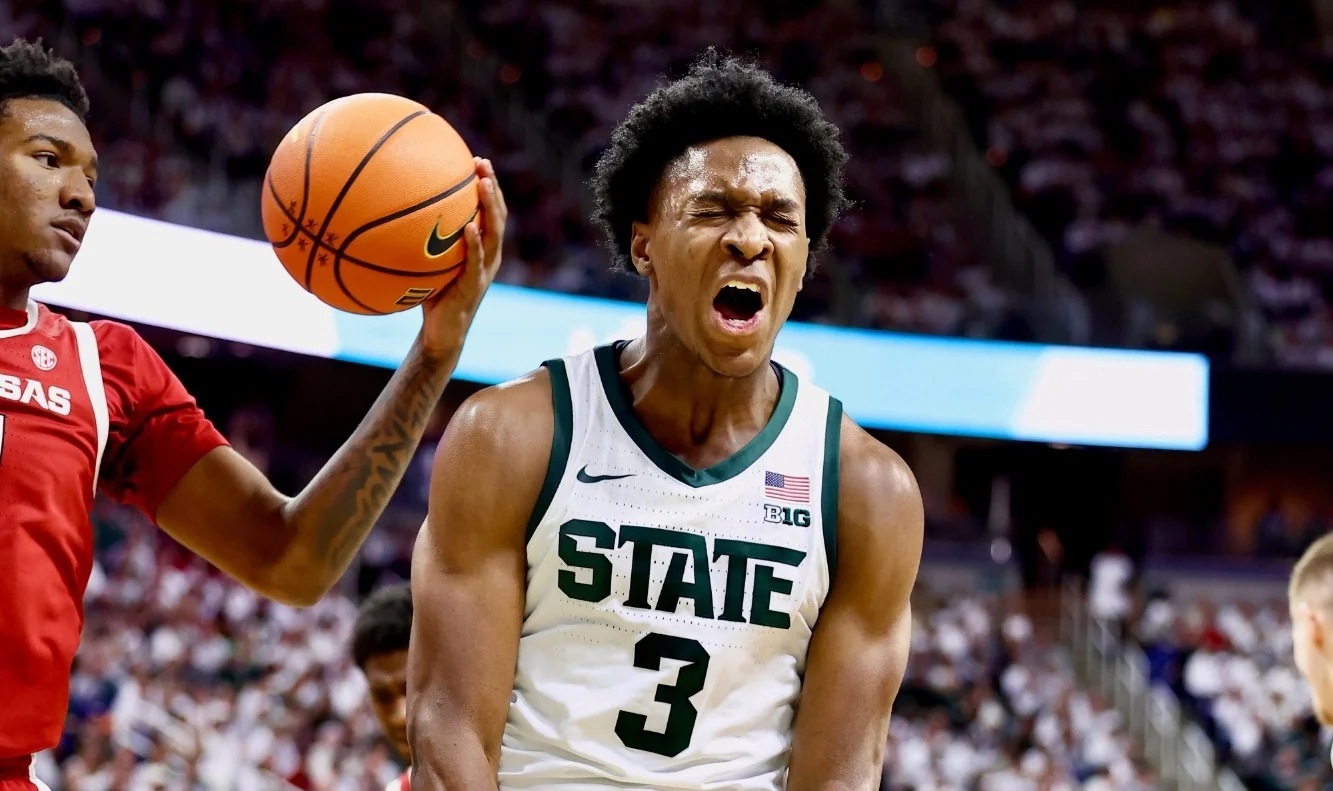
Michigan State starts on October 2
Michigan State's September schedule release confirms three exhibitions: Incarnate Word at home October 2, UConn at home October 20 and a visit to Marquette October 25. The first two take place in East Lansing; the last takes the Spartans to Milwaukee. Those settings create a useful sequence for followers who want to compare the team's preparation across more than one night.
The October 2 game also has an attendance condition that a generic ticket list can miss. MSU's specific event announcement sets a 7 p.m. Eastern start at Breslin Center and says admission is limited to 2026–27 men's basketball season ticket members and Izzone members attending the campout. Do not assume that seeing an exhibition date means general-public admission is available. The game and the surrounding campus event have their own access arrangements.
More teams and venues on the watchlist
The Hall of Fame's official exhibition event page places the men's UConn–Syracuse game on October 13 at Mohegan Sun Arena in Uncasville, Connecticut. Treat that as a neutral-site event, rather than assuming it is on UConn's campus. The same event page advertises a women's game October 12, so copying the first date you see would put the men's game on the wrong day.
Gonzaga's September 30 announcement confirms an October 24 exhibition at Arkansas in Fayetteville and an October 28 home exhibition against Lewis-Clark State at McCarthey Athletic Center. Its October 3 Kraziness in the Kennel showcase is a different kind of event; it should not be added to a list of games against another college merely because it appears on the same calendar.
For each selected game, save three fields together: opponent, date and venue. Add the time and broadcaster only after the relevant official listing confirms them. The schools' team schedules then provide the surrounding games. Following the whole sequence makes these dates useful basketball preparation, while checking the event details prevents a neutral venue, restricted ticket or adjacent women's fixture from becoming a planning mistake.
Do college basketball exhibition games count?
A preseason exhibition does not count toward the school's official won-lost record. The game may have spectators, scoring and a public box score, but those features do not change its classification. An October victory can be discussed as a performance; it should be kept out of the team's regular-season running total.
The number of permitted preseason tests has changed for this season. NCAA Division I Proposal 2026-7, final in April and effective August 1, 2026, allows up to three preseason practice scrimmages or exhibition contests against four-year collegiate institutions before the first contest date. Three is the combined allowance, rather than three exhibitions plus three scrimmages. Michigan State's announced three-exhibition sequence is a practical example of the expanded calendar.
Readers finding the NCAA's January proposal announcement should continue to the final legislative record. The January story correctly described an approval that was still pending at that time. The later record establishes its adopted status. Its preparation rationale, including adjusting to new teammates, explains why a team might value an additional test without treating it as part of its competitive record.
That distinction should shape how you record the result. Label the event exhibition, name the opponent and note whether you watched the full game, a portion or only highlights. Add a public box score when one exists. If the event was a private scrimmage and only an unofficial number circulates, mark that limitation instead of presenting it as a school-certified result. The amount of accessible evidence affects what a fan can responsibly infer.
A final margin becomes more informative when you know the combinations that produced it. Was the offense organized by one experienced ball handler throughout the period you saw? Did different units handle the same defensive pressure? Did a late run follow substitutions by both teams? These are questions to ask once footage and game information exist, rather than advance explanations for an upcoming result.
For an individual player, separate the number from the opportunity. Several made shots may have come from teammates creating open looks; a modest scoring total may accompany useful passing or defense. An exhibition can expose those relationships, but one night's shooting cannot establish a season-long percentage. Carry a specific observation into the next game and see whether it survives a different opponent.
When regular-season play arrives, begin the official record there and keep October in the preparation column. Our games today page and team calendars help place each contest in sequence. You can take a preseason performance seriously while preserving the distinction between useful early evidence and an official season result.
What an exhibition can reveal about a new rotation
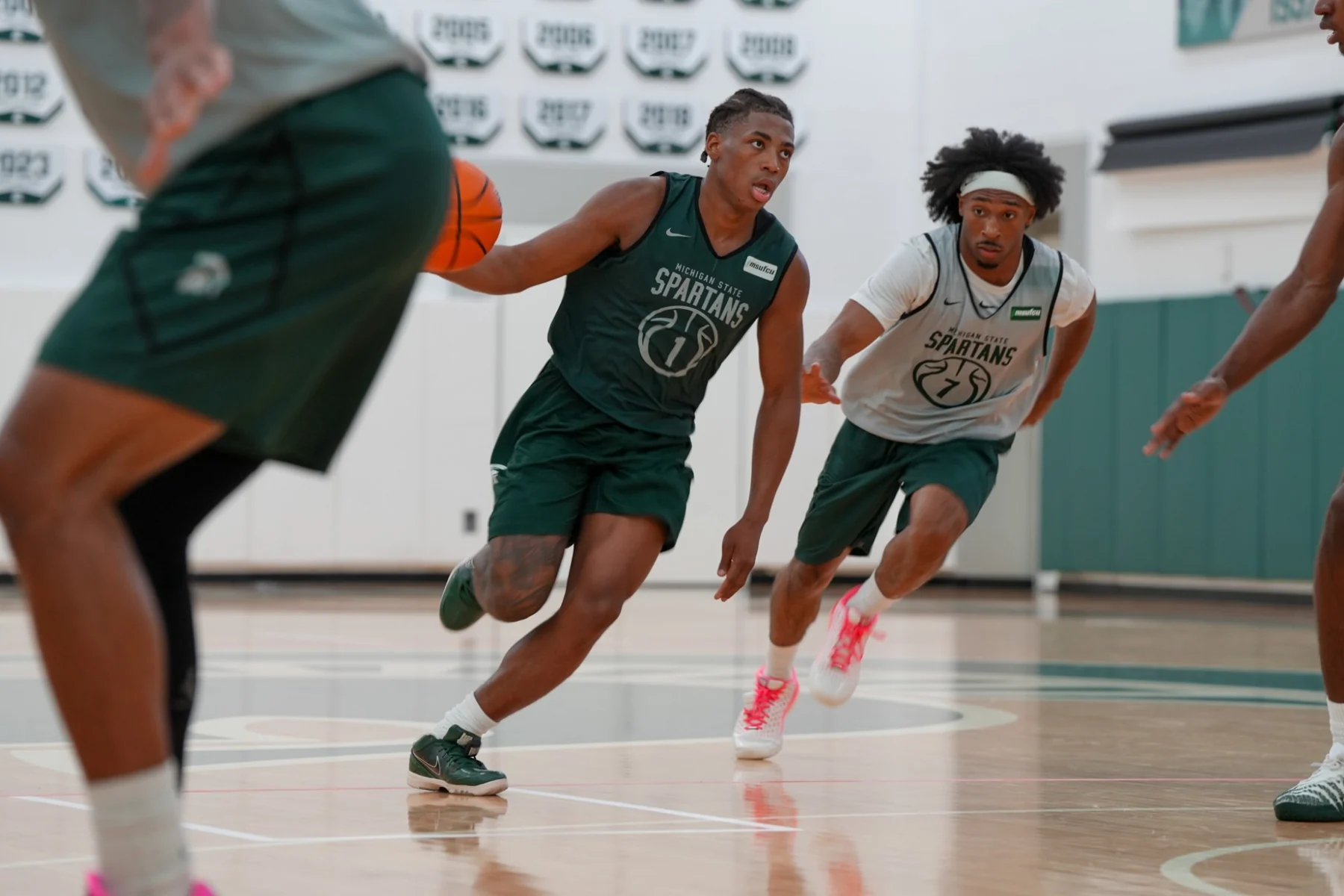
A preseason game is particularly useful for seeing the connections between returning players and newcomers. In Michigan State's September 22 practice report, Tom Izzo identifies Jeremy Fears Jr. and Coen Carr as leaders while describing a group that also includes younger players. The report supplies current roster context. The exhibitions will provide the chance to observe how those connections work against another team.
There is a concrete reference for Fears' creation role. His official school biography records 9.4 assists per game in 2025–26 and 16 assists against Louisville in the NCAA Tournament on March 21. These are historical benchmarks, rather than forecasts for October. They explain why watching the possessions around an established point guard can be more revealing than looking only at his exhibition scoring total.
Track creation, lineups and defensive assignments
Use the following as an editorial viewing checklist. When a ball handler comes off a screen, identify the defensive response: does his defender follow over the screen, duck under it or exchange assignments with another player? Then follow the ball. A pass to the rolling screener, a kick to the corner and a contested pull-up show different choices. Watch the decision and resulting chance together, rather than labeling every missed shot a failed possession.
Record the players sharing the floor. A newcomer who repeatedly receives open attempts from an experienced creator may already be fitting one useful role without showing that he can direct the offense himself. A reserve who advances the ball securely and finds the next pass may contribute despite a quiet scoring line. These are possibilities to investigate in the actual footage, not observations claimed about a game that has not been played.
The second focus is defensive connection. When one player steps toward a drive, who accounts for the opponent he leaves? If a big defender comes out to the ball screen, is the rolling player picked up behind him? After a missed shot, do defenders locate an opponent before chasing the rebound? Following these linked actions makes a lineup's performance easier to explain than describing only the final make or miss.
Allow for what the broadcast cannot show. A tight camera angle may hide an off-ball rotation, and a short highlight may omit the possession that explains the next substitution. Mark those gaps in the note. The starting five and substitution order are useful facts once observed, but they do not by themselves establish a permanent depth chart. Experiments, foul trouble and confirmed availability can all change that night's combinations.
For an efficient notebook, choose three questions before tipoff: how one unit creates a half-court chance, how it handles the first defensive breakdown and how a particular pairing shares responsibilities. Write down the possession or period where the evidence appeared, then compare it with the next game on the team schedule. A specific question you can test again is more useful than a broad verdict based on a dunk, a hot shooting stretch or a few unfamiliar bench minutes.
Find the actual broadcast before subscribing
October's viewing arrangements should be checked game by game. One confirmed option is the Georgetown–George Washington men's exhibition on October 16. GW's official announcement places the game at Charles E. Smith Center at 6 p.m. Eastern. Monumental Sports Network's release separately confirms that it will broadcast the matchup. Together, those sources establish the event details and the named viewing route.
Monumental describes access through TV providers in its coverage area and through Monumental+ with an eligible TV Everywhere login. That is a regional access description, not a claim that the broadcast is free for every viewer. Check your own provider and location before relying on the app. The release also says its full college basketball broadcast schedule will follow later in the fall; the 39-game fall-sports announcement should not be read as a list of 39 basketball games.
Other selected exhibitions have a different level of published information. Gonzaga's current official schedule, checked October 1, lists the Arkansas and Lewis-Clark State exhibitions and provides radio links, without a confirmed television assignment in those exhibition entries. A radio link gives you an audio route. It does not identify a video service, establish a tipoff time or authorize borrowing a channel from last season's corresponding game.
Before purchasing access, complete three checks in order. First match both teams, the men's competition, the exhibition label and the calendar date. Next find the named broadcaster or official watch link for that exact event. Finally verify that your provider or subscription includes it where you live. If the event listing is still incomplete, save it and return later; an unfinished listing is a reason to delay a purchase whose only purpose is that game.
Also distinguish the tipoff from surrounding programming. A broadcast can begin before the game, while an arena opens its doors earlier still. When you place the event in your calendar, use the school or broadcaster's labeled time zone and convert it to your location. A search snippet displayed in another region may show a different clock time without telling you why. The original event listing is the better place to settle that detail.
Once you have access, decide what evidence you can realistically gather. A full live stream lets you follow successive lineups and defensive possessions. Audio can establish the game's progress but usually cannot show the spacing behind a pass. Highlights favor selected successful plays. Describe your viewing sample accurately when discussing a player or rotation afterward.
Our TV schedule and live viewing guide help turn a confirmed assignment into a viewing plan. Keep the official event page as the final reference as each game approaches. That small check protects both the subscription decision and the quality of the basketball discussion that follows.
Turn October's clues into a useful November watchlist
An exhibition is most useful when it leaves you with a question that another game can answer. Keep the evidence from October, then compare it with the first regular-season opponents. Avoid carrying forward an impression without its context: the opponent, lineup, available footage and particular action explain what you actually learned.
Compare the next opponent and regular-season opener
Gonzaga's official schedule announcement places its regular-season opener against Purdue on November 2 at T-Mobile Arena in Las Vegas, followed by New Mexico State at home November 7. The two October exhibitions therefore lead into a different setting for the first official game, then a home contest. Follow that progression instead of treating the final exhibition as the last word on the team's preparation.
Michigan State also begins its regular season November 2, hosting Quinnipiac according to its school release. Its three October opponents provide several viewing opportunities before that point. For UConn's surrounding calendar, use our UConn schedule guide, which covers the broader sequence beyond the selected exhibitions here.
A useful comparison note is short and testable. For example, suppose a lineup in an exhibition creates open corner attempts when the ball handler draws a second defender. The November question is whether that group finds the same pass when a different opponent handles the screen differently. This is a hypothetical example of note-taking, not a report that Gonzaga, Michigan State or UConn has already run that sequence in these upcoming games.
Give the next performance room to change the conclusion. If the pass disappears, check whether the defense took it away, the lineup changed or the offense chose another action. If it returns, watch the quality of the chance and the frequency with which the group reaches it. A shot going in once settles less than repeatedly creating a clean look. The comparison should explain the possession rather than merely preserve the original opinion.
Keep observations distinct from explanations supplied afterward. A player sitting during a period is observable; an unannounced reason for it is speculation. A repeated turnover against pressure is an event; deciding that the team can never handle pressure is a much larger claim. When an official availability report or coach's explanation adds context, record it alongside the game evidence instead of filling the uncertainty with a rumor.
After each game, update the small watchlist: one point that gained support, one that weakened and one that needs more evidence. Our scores page and team schedules keep that process tied to actual contests. October then becomes a useful beginning to the season's basketball conversation, with verified dates to follow and specific questions that November can test.
Sign in with Google to join the discussion.