UConn's 2026–27 calendar at a glance
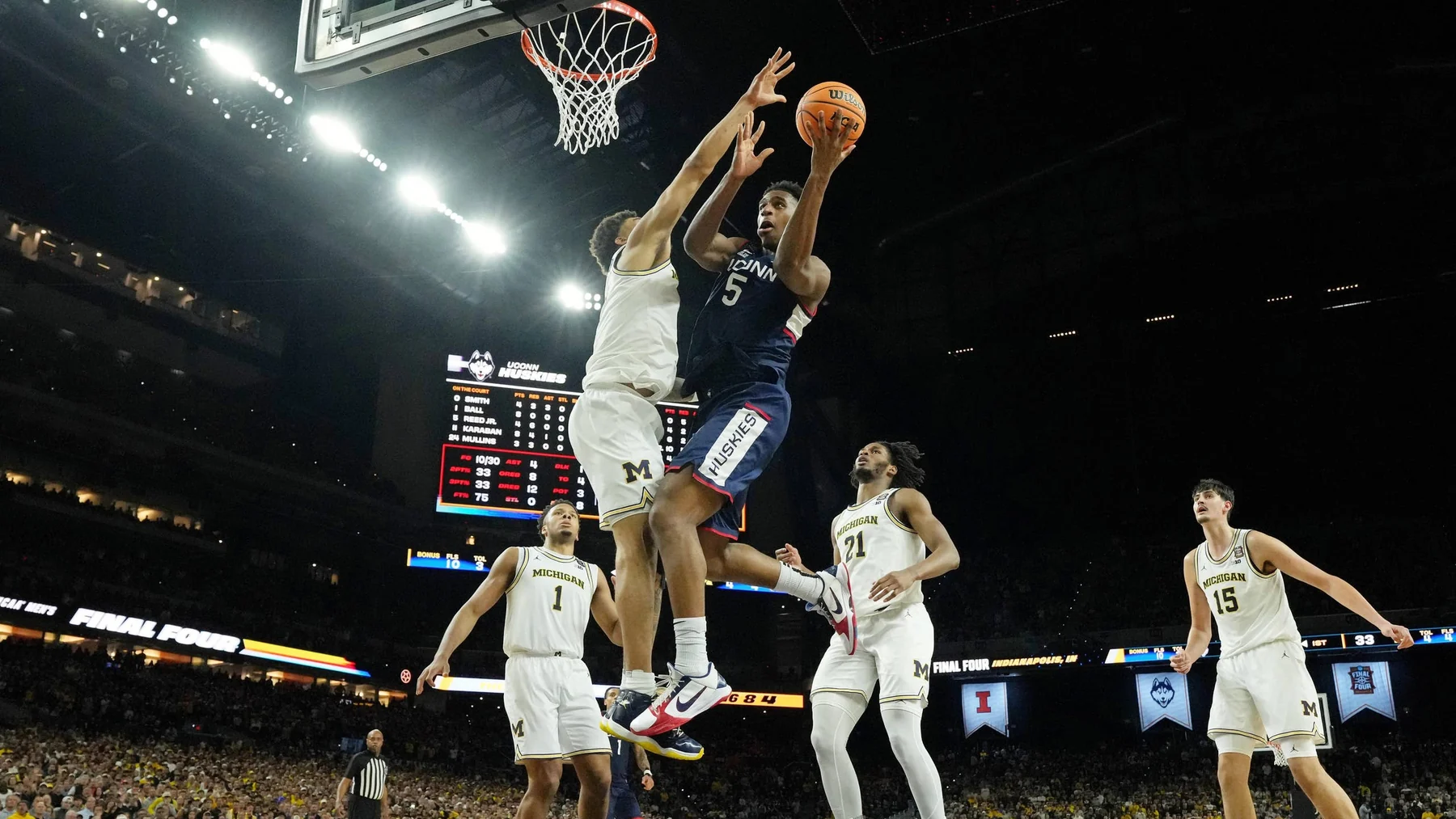
UConn's men's schedule is no longer a collection of rumored marquee opponents. As of September 16, 2026, the university has published three October exhibitions, 12 nonconference regular-season games and a 20-game BIG EAST slate. The games that count begin Monday, November 2 against Gardner-Webb. Conference play opens Wednesday, December 23 at home against Georgetown. The final listed regular-season game is Saturday, March 6 at Xavier, followed by the BIG EAST Tournament March 10–13 at Madison Square Garden.
The dates are firmer than many of the viewing details. UConn's September 14 release says home-arena designations, many broadcast assignments and tip times will be announced later. The official schedule already shows specific sites for some neutral and away games, but “home” does not by itself tell a fan whether a date will be played in Storrs or Hartford. It is sensible to reserve the date; it is premature to treat every listing as a finalized ticket or TV plan.
The headline matchups are unusually concentrated. In November UConn faces Michigan in Boston, Ohio State at home, Arizona in Tucson and Duke in Las Vegas. December adds Illinois in Chicago, Kansas at home and Virginia at Madison Square Garden before the league opener. These are real announced games, not predictions. Their basketball significance lies in how many different environments Dan Hurley's team will meet before the league's double round robin begins: a true road trip, several neutral courts and important home games.
A good reading of this schedule keeps three columns in mind: date, site category and certainty of the remaining details. The official text listing currently marks many start times TBD. It would be misleading to fill those blanks from a generic television window or an old season's pattern. A national opponent does not guarantee a particular channel, nor does a familiar rivalry guarantee a weekend tip. Use the team directory for opponent context, while treating UConn's live university calendar as the controlling source for the Huskies' exact event listing.
UConn's January and February games also deserve more than a simple win-loss forecast. Because every BIG EAST opponent appears home and away, the calendar's order can create meaningful travel and recovery questions even without knowing final tip times. The guide below separates what is confirmed from what coaches and fans will learn only as the season approaches.
The exhibitions and November gauntlet
October gives UConn a demanding rehearsal schedule before anything counts in the standings. Syracuse at Mohegan Sun on October 13, a visit to Michigan State on October 20 and Purdue on October 27 are all labeled exhibitions by UConn. The November 2 Gardner-Webb game is the regular-season opener. Mixing those categories would inflate the record and confuse fans tracking when the 12-game nonconference slate actually starts.
Three exhibitions are not regular-season games
The opponents are still meaningful as preparation. A coaching staff can test lineups, transition coverage and half-court spacing against high-level personnel without treating the result as a résumé win or loss. A player looking sharp in an exhibition may earn a larger opening-week role, but the staff will still want to see those decisions against regular-season scouting and whistle patterns. The Syracuse date at Mohegan Sun is a neutral exhibition, not a campus home game; the Michigan State game is away; Purdue is listed as a home exhibition with the exact home arena yet to be designated.
Michigan, Ohio State and Arizona arrive quickly
The first five countable games run Gardner-Webb November 2, Michigan at TD Garden in Boston November 6, Wagner November 9, Ohio State November 13 and Arizona at McKale Center in Tucson November 18. That sequencing matters more than the headline opponents alone. The Michigan game comes four days after the opener, while the Arizona trip follows the Ohio State home date by five days. The roster will have little time to hide a weakness in defensive rebounding or a loose press break before facing different styles and different buildings.
The Ohio State date is the Connecticut end of a confirmed home-and-home agreement; UConn says the return game is in Columbus in November 2027. Arizona is the lone true away game in the nonconference package, according to UConn's September release. Road-game possessions are not identical to a neutral showcase: familiar sight lines, crowd runs and officiating rhythm all tilt toward the host, even though the actual outcome remains unknowable in September. A fan evaluating the team's early offense should separate a rough five-minute stretch in Tucson from the same stretch at home.
Duke in Las Vegas closes the marquee November run
Duke arrives November 25 at T-Mobile Arena in Las Vegas, followed by Rider at home November 30. The university's live schedule currently lists Amazon Prime for the Duke game but has not supplied a tip time. The matchup is a neutral-site event, not a Duke home game or a UConn campus date. This distinction is practical for tickets and for analysis: neutral-site crowds can be partisan, yet neither team gets its normal home-court routines.
By Thanksgiving, UConn will already have seen a Boston showcase, a true road game in Arizona and a Las Vegas test. Those environments can reveal whether the Huskies' ball handlers handle pressure, whether wings finish defensive possessions with rebounds and whether the frontcourt can defend without foul trouble. They cannot by themselves prove how a team will fare in February's league rematches. The appropriate preseason view is that November offers unusually fast, varied evidence—not that it guarantees either a top seed or a bad start.
December tests before the BIG EAST grind
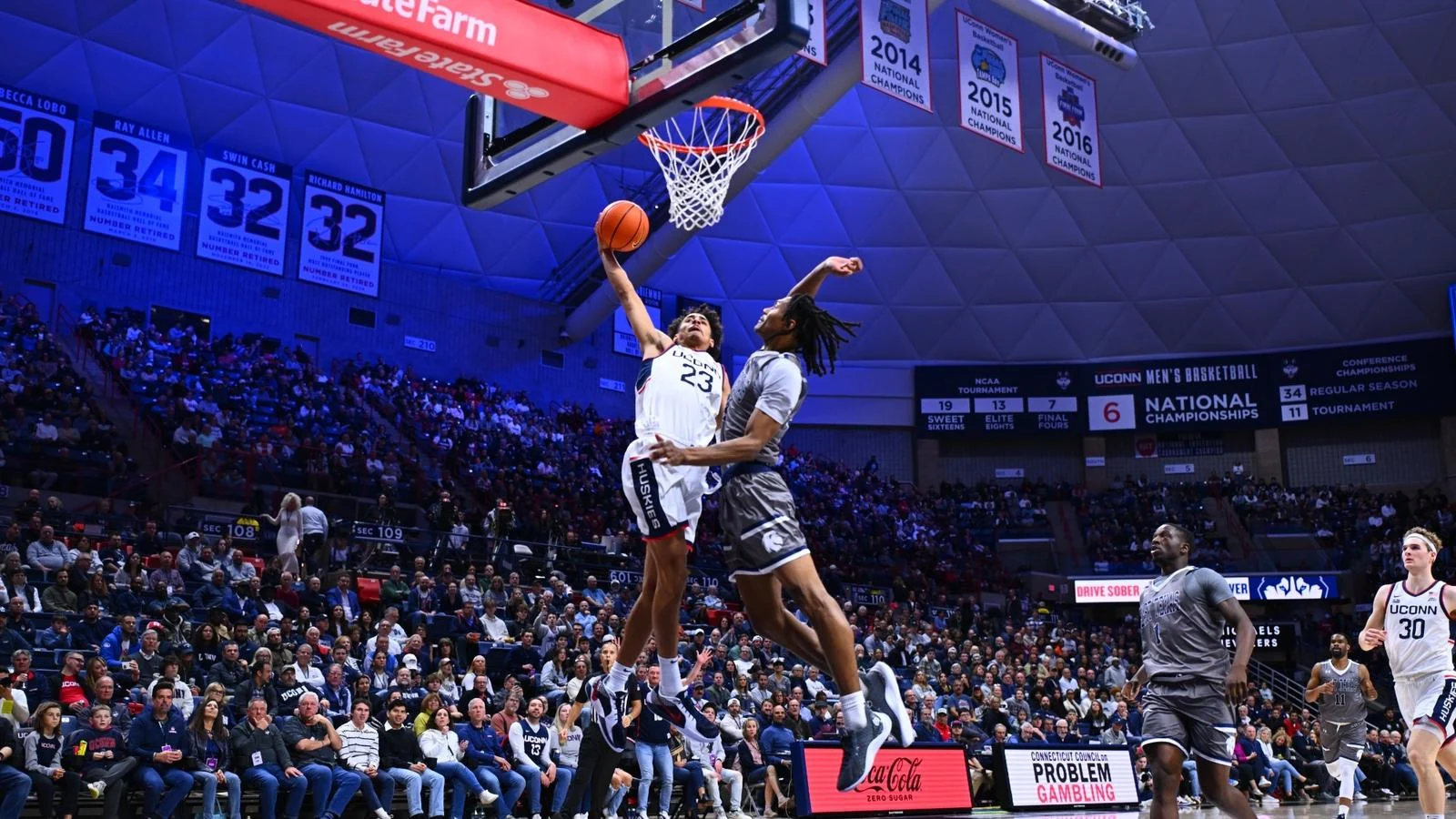
November gets the publicity, but December is the bridge that may define UConn's readiness for conference play. The official calendar lists Illinois at the United Center in Chicago on December 4, Mississippi Valley State at home December 8, Kansas at home December 12, Delaware State at home December 15 and Virginia at Madison Square Garden December 20. Georgetown then visits to open BIG EAST play December 23. That is five nonconference games followed by a league opener in less than three weeks, with three different types of venue.
Illinois, Kansas and Virginia form three different tests
Illinois is a neutral-floor game in Chicago, Kansas is a Connecticut home date, and Virginia is another neutral-floor event in New York. It would be simplistic to assign each an identical strength or tempo months before the season. Rosters and schemes change. What is established now is the scheduling problem: UConn must prepare for separate opponent personnel while alternating travel and home routines. The staff can use the intervening Mississippi Valley State and Delaware State games to refine combinations, but should not assume those dates duplicate the spacing, size or defensive pressure of the three marquee matchups.
For a fan watching the team develop, the useful questions are specific. Does UConn generate reliable paint touches when the first action is contained? Can the wings finish possessions on the glass against size? Are the turnovers live-ball mistakes that feed transition, or half-court errors that can be corrected by timing? A single game against Illinois or Kansas will not answer all of them, but the sequence offers more evidence than a schedule made only of familiar home games. The labels “neutral” and “home” also matter for any postseason résumé comparison later in the year.
The Georgetown opener comes just after New York
UConn's Virginia game at Madison Square Garden is December 20; its first BIG EAST game against Georgetown is December 23 at home. The three-day turnaround is not automatically a disadvantage, but it reduces the time for a staff to shift from one scouting plan to another. A half-court solution that worked against Virginia might not be the right answer against a different conference opponent. December 31 at Butler then opens the road side of league play at Hinkle Fieldhouse, another change of setting before the January schedule accelerates.
The official live calendar currently marks the Virginia game at 3 p.m. and ESPN. That is a confirmed listing at this check, unlike the many undecided entries elsewhere. Fans traveling to New York should still reconfirm before purchasing a trip around a specific broadcast window. UConn's September announcement itself says additional tip times, networks and home arena assignments will come later.
There is a useful bigger picture: December tests whether UConn can absorb high-profile neutral games without making the conference opener feel like an afterthought. The Huskies do not need a perfect nonconference record to learn from the stretch. They need clearer roles, sound late-clock decisions and defensive possessions that travel across buildings.
The full BIG EAST path from December to March
The BIG EAST has released a 20-game double round robin: UConn plays each of the other ten league members once at home and once away. That means a bad first matchup is not the last word, and a good one does not finish the scouting job. The conference schedule begins with Georgetown on December 23, then moves to Butler on New Year's Eve. Here is the confirmed UConn league ledger as of September 16; “at” means UConn is the visitor and an unmarked opponent is a UConn home date.
- Dec. 23: Georgetown; Dec. 31: at Butler.
- Jan. 3: at Creighton; Jan. 6: DePaul.
- Jan. 9: at Seton Hall; Jan. 12: Marquette.
- Jan. 16: Xavier; Jan. 20: at Providence.
- Jan. 23: Butler; Jan. 26: at Georgetown.
- Jan. 29: at St. John's; Feb. 3: Villanova.
- Feb. 7: Creighton; Feb. 10: at DePaul.
- Feb. 14: at Villanova; Feb. 17: Seton Hall.
- Feb. 20: at Marquette; Feb. 27: Providence.
- Mar. 2: St. John's; Mar. 6: at Xavier.
January's home-away rhythm
January contains nine league games after the Butler date. The Huskies travel to Creighton, Seton Hall, Providence, Georgetown and St. John's while hosting DePaul, Marquette, Xavier and Butler. The shape matters: there are repeated shifts between home and away, and the January 26 Georgetown trip is followed only three days later by the January 29 St. John's date at Madison Square Garden. A coach may adjust practice load, film detail and travel routines accordingly. That is an inference from the calendar, not a report of UConn's intended preparation plan.
The first and second halves of the round robin also create useful matchup comparisons. UConn hosts Marquette on January 12 and visits Milwaukee on February 20. It hosts Xavier January 16 and finishes at Xavier March 6. Once results exist, compare where shots came from, how many possessions ended with second chances and which side protected the ball better. A rematch may look entirely different if lineups, injuries or pace shift.
February's rematches and the closing week
February opens with Villanova at home, Creighton at home, then trips to DePaul and Villanova before Seton Hall visits and UConn goes to Marquette. Providence comes to Connecticut February 27. The final regular-season week brings St. John's to UConn on March 2 and sends the Huskies to Xavier March 6. The St. John's home game follows a January 29 road meeting; it is precisely the kind of second look in which adjustments to ball-screen coverage, transition defense and late-game spacing become more informative than brand names or preseason rankings.
The league tournament runs March 10–13 at Madison Square Garden. That date range is set, but UConn's specific tournament opponent and game time depend on regular-season results and seeding. It is a postseason event, not a guaranteed extra regular-season opponent. For fans considering a trip, reserve the range and wait for the bracket before treating any session as a Huskies game.
Where travel and rest could decide performance
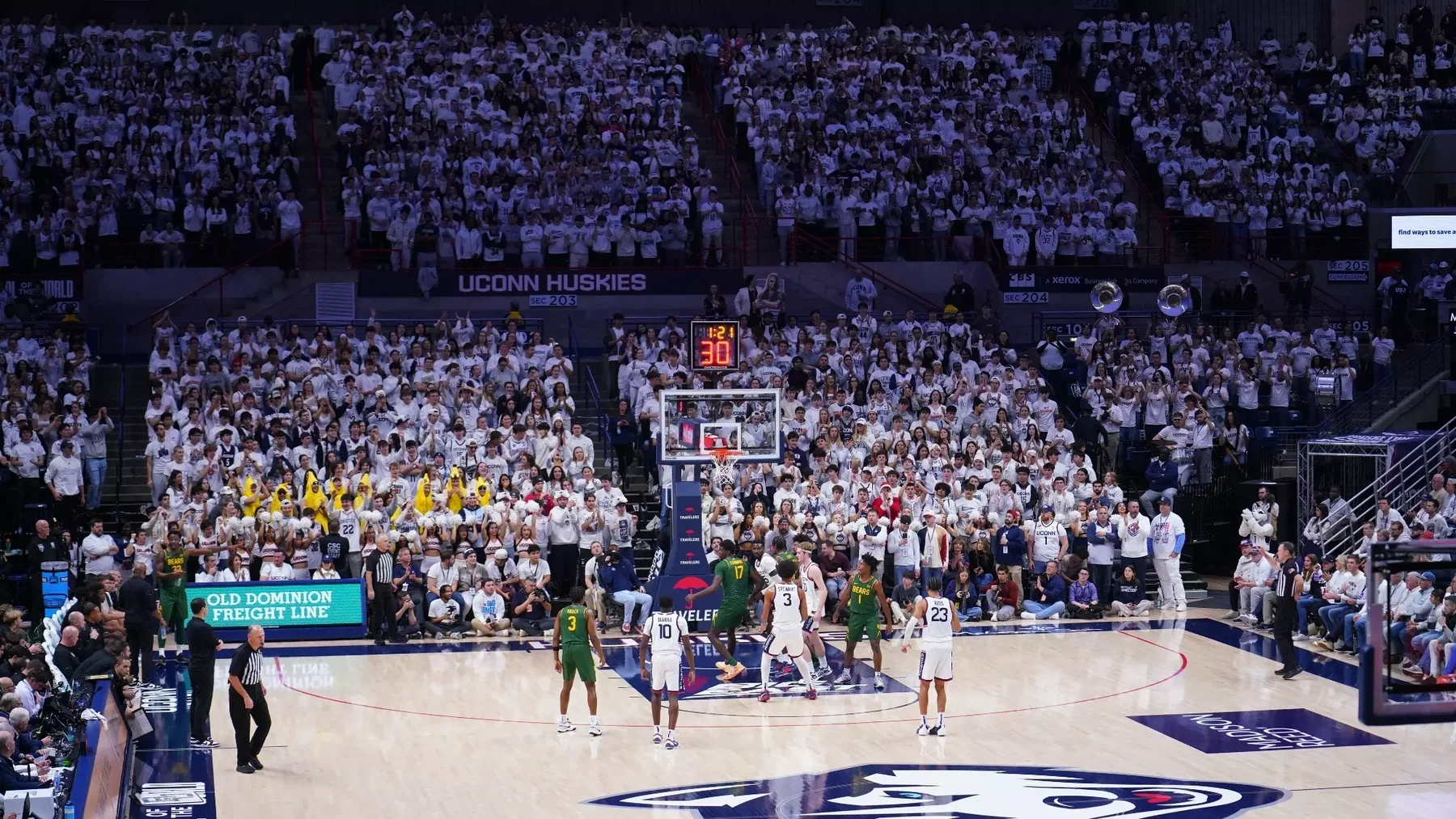
The university's nonconference breakdown is an important corrective to a marquee-game graphic: seven home games, one true road game and four neutral-site games. Those categories are not interchangeable. The Arizona contest is a visit to the opponent's building. Michigan in Boston, Duke in Las Vegas, Illinois in Chicago and Virginia at Madison Square Garden are designated neutral-site games, even if one crowd turns out much louder. A home game against Kansas creates a different routine again, and the exact Connecticut arena assignment still needs confirmation.
Road, neutral and home are not interchangeable
Compare November 13 against Ohio State at home with November 18 at Arizona: five calendar days separate them, but the team also moves from a Connecticut setting to Tucson. Seven days later comes Duke in Las Vegas. That is a stretch where a coach can learn whether offensive organization travels. Are players getting the same paint touches away from home? Are they taking the same care of the ball late in the shot clock? Those are questions to watch, not assertions that UConn has already solved or failed them.
December offers another compressed pivot. Virginia at Madison Square Garden on December 20 is followed by the Georgetown league opener on December 23. In the conference schedule, Georgetown hosts UConn January 26 and St. John's meets the Huskies at Madison Square Garden January 29. A fan can note three-day gaps, but cannot claim a particular flight itinerary or practice pattern from the schedule. The performance effect depends on actual tip times, travel plans, lineup health and opponent preparation that were not finalized in the public release.
The BIG EAST's home-and-away format also tests whether lessons carry over. A road loss to a team might reflect matchup problems, a poor shooting night, foul trouble or simple opponent quality; the return game offers a controlled but imperfect comparison because venue changes too. Useful postgame analysis should look beyond the final margin. Did the Huskies improve defensive rebounding? Did they generate free throws rather than contested late threes? Did the second unit hold the lead when the starters sat? These basketball details explain schedule difficulty better than declaring a January run “easy” or “brutal” before anyone plays it.
The schedule does support one clear September judgment: UConn will have an unusually varied set of nonconference environments before its league round robin. Whether that becomes a postseason advantage depends on performance, availability and adjustment over months, not on the opponent logos in an announcement.
TV, tip times and arena details fans must recheck
The most common schedule mistake in September is to turn a confirmed matchup into an invented viewing plan. UConn has dates for the full regular season, but its release says additional tip times, television assignments and home-venue designations are still coming. The BIG EAST has named FOX Sports, NBC Sports and TNT Sports in its 2026–27 coverage framework; that is not a promise that a specific UConn–Marquette game is on one of those networks. A conference partner list and a game-level assignment are different facts.
Confirmed listings versus TBD
The official UConn calendar currently shows Amazon Prime for the November 25 Duke matchup at T-Mobile Arena and ESPN for the December 20 Virginia game at Madison Square Garden; the Virginia entry also shows 3 p.m. Many other entries display TBD or omit the time. That is the correct state to report as of September 16. Do not backfill Ohio State, Arizona, St. John's or Villanova with last year's broadcaster or an assumed Saturday slot. Even the home games still need a confirmed arena designation if a fan is choosing between the Storrs and Hartford experience.
“TBD” is not a hidden late-night start and it is not evidence a game will be unavailable. It simply means the detail is not in the confirmed public listing yet. Broadcasters make game-specific selections, and times can be adjusted for television. Where a matchup has a named arena, such as TD Garden for Michigan or McKale Center for Arizona, the location is firmer than its start time. Where only “home” appears, a fan should wait for the university's venue update before buying nearby lodging or assuming a familiar entrance.
How to plan a game trip or viewing night
For tickets, work from the exact date and site first. A neutral-site game may have different ticketing, seat maps and entry rules from a UConn home date; a road game follows the host school's policies. If a trip depends on a same-day train or flight, wait for the announced tip time and allow realistic postgame time. This is especially relevant to the December 20 Virginia date in New York and to the January 29 St. John's meeting, also listed at Madison Square Garden. They share a building but are different events and may have different sellers and schedules.
For viewing at home, check the university's game page and the TV schedule guide on the day of the game. Confirm the named channel or service, start time and your access in your location rather than trusting a search snippet created weeks earlier. Once the league announces its per-game assignments, the same matchup may move from “TBD” to a precise network and window. A dated guide should be updated at that point, not pretend September information was final.
What a strong schedule can—and cannot—tell us now
UConn has put a rare amount of national interest into its calendar before conference play: Michigan, Ohio State, Arizona, Duke, Illinois, Kansas and Virginia all appear on announced dates. That is enough to say the Huskies will receive repeated chances to measure themselves in different environments. It is not enough to assign a number of quality wins, a NET position or a March seed. On September 16 the season has not begun, opponents' form is unknown and UConn's own rotation will still be tested in live games.
For analysis, the schedule is most valuable as a sequence. The exhibitions permit experiments; the November run tests early organization; December asks the team to reset quickly after neutral showcases; the league's home-and-away format tests whether the staff can solve an opponent twice. A good team can lose a difficult road game and still learn more about its press break than it would from an easy home win. Equally, a narrow victory over a famous brand can hide defensive rebounding or foul issues that surface later.
Watch for repeatable basketball indicators across sites: shot quality rather than a single hot three-point night, turnovers forced and committed, second-chance chances allowed, and whether the second unit protects a lead. None of these figures alone explains a result. The point is to build a fuller assessment as evidence arrives, then revisit the February rematches to see what changed. A coach's adjustment between a home and away meeting can be more informative than the preseason ranking beside either school name.
For practical purposes, keep the schedule in two layers. The date and opponent list is confirmed now; the precise time, home arena and broadcast listing for many games should be refreshed later. The daily games page becomes useful on game day, but the university's live schedule remains the best place to settle UConn-specific event details. The same caution applies to Madison Square Garden in March: the BIG EAST Tournament dates are announced, yet any particular UConn session depends on seeding and results.
The case for paying attention is already strong without an inflated prediction. This schedule will ask a talented program to adapt early, travel often enough to test its habits and then survive a complete BIG EAST round robin. How well UConn answers is the story the games, not September confidence, will write.
Sign in with Google to join the discussion.