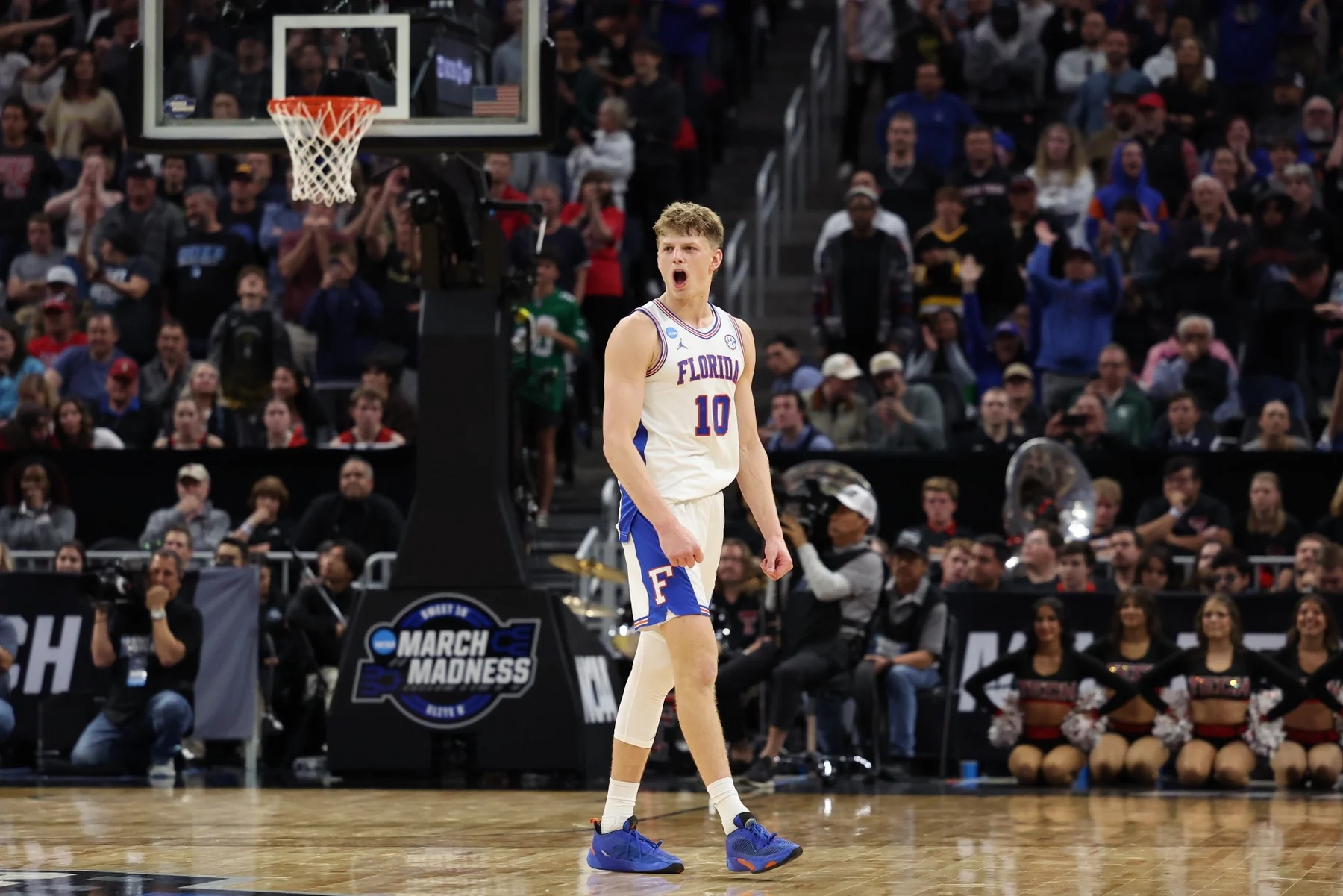
Thomas Haugh, Tyler Tanner and Jeremy Fears Jr. lead this editorial ranking of ten men's college basketball players to watch in 2026–27. The list weighs verified college production, creation, defence and current team fit as of October 14, 2026. It is a preseason assessment, with future roles still subject to evidence. The cover shows Haugh during the 2025 NCAA tournament, a historical illustration of a returning player rather than a photograph from the coming regular season.
What this preseason player ranking measures
This is an independent editorial Top 10 for the 2026–27 men's college basketball season, assessed on 14 October 2026. It ranks expected college impact: producing good possessions, helping teammates, defending and fitting a credible role. It is not an NBA draft board or an official preseason All-America team. The numbered order is our judgement, with the evidence and remaining questions explained alongside each player.
Proven college production comes first, but the production must be read in context. A creator carrying an offence deserves credit for the difficulty of his decisions, while a finisher can be highly valuable without taking the same number of shots. Defensive pressure, rebounding and the ability to keep a lineup functional matter too. No single scoring average can capture those different jobs, and a team's reputation is not enough to place its most recognisable player near the top.
Consider two of the leading candidates. Florida's current roster lists Thomas Haugh as a 6-foot-9 senior forward; Vanderbilt's roster lists Tyler Tanner as a 6-foot junior guard. They solve different problems. Haugh's frontcourt contribution should not be reduced to whether he matches a guard's assist count, and Tanner's influence cannot be assessed simply by comparing his height with a forward's.
Fit is the next consideration. Returning to a familiar system can preserve useful connections, whereas transferring can offer a bigger role while requiring new ones. This list gives neither situation automatic preference. The question is whether the player's established strengths have a plausible use in the present team, and which responsibilities still need to be demonstrated once games begin.
Finally, current college status is a condition of inclusion. Players who have left for the professional game belong to the previous season's story. A school roster helps establish where a player is, but does not by itself settle every question about health or eligibility. Our eligibility guide explains that distinction. The order below remains a preseason assessment, open to revision as actual roles and performances become clearer.
The returning leaders: Haugh, Tanner and Fears
The first three places go to returners whose college evidence already covers more than one task. Haugh offers frontcourt versatility, Tanner joins scoring to creation and disruption, and Fears can organise an entire offence. Keeping a familiar setting is useful for each, but their positions here rest on demonstrated production and its application, rather than continuity alone.
1. Thomas Haugh: scoring across frontcourt roles
Haugh tops our list because he combines a leading scoring role with the capacity to work around other frontcourt players. Florida's official profile records 17.1 points and 6.1 rebounds per game in 2025–26, along with 58 made threes. That is established production from the season just completed, rather than a projection copied from his earlier championship contribution.
The school documented his move from the power-forward position to the wing in October 2025. It described more corner positioning, ball screens and face-up opportunities, replacing some of his previous high-low work. That matters in a lineup with two other big players: a forward who can operate outside the paint gives the attack another way to arrange space without abandoning its size.
His 20-point, 11-rebound performance against Texas Tech in the 2025 Elite Eight, including four made threes, is an earlier example of contributions crossing categories. It does not establish what he will shoot this season. The reason to rank him first is the combination of a proven larger role and that versatility; the next test is sustaining it against opponents who prepare specifically to reduce his influence.
2. Tyler Tanner: creation with defensive pressure
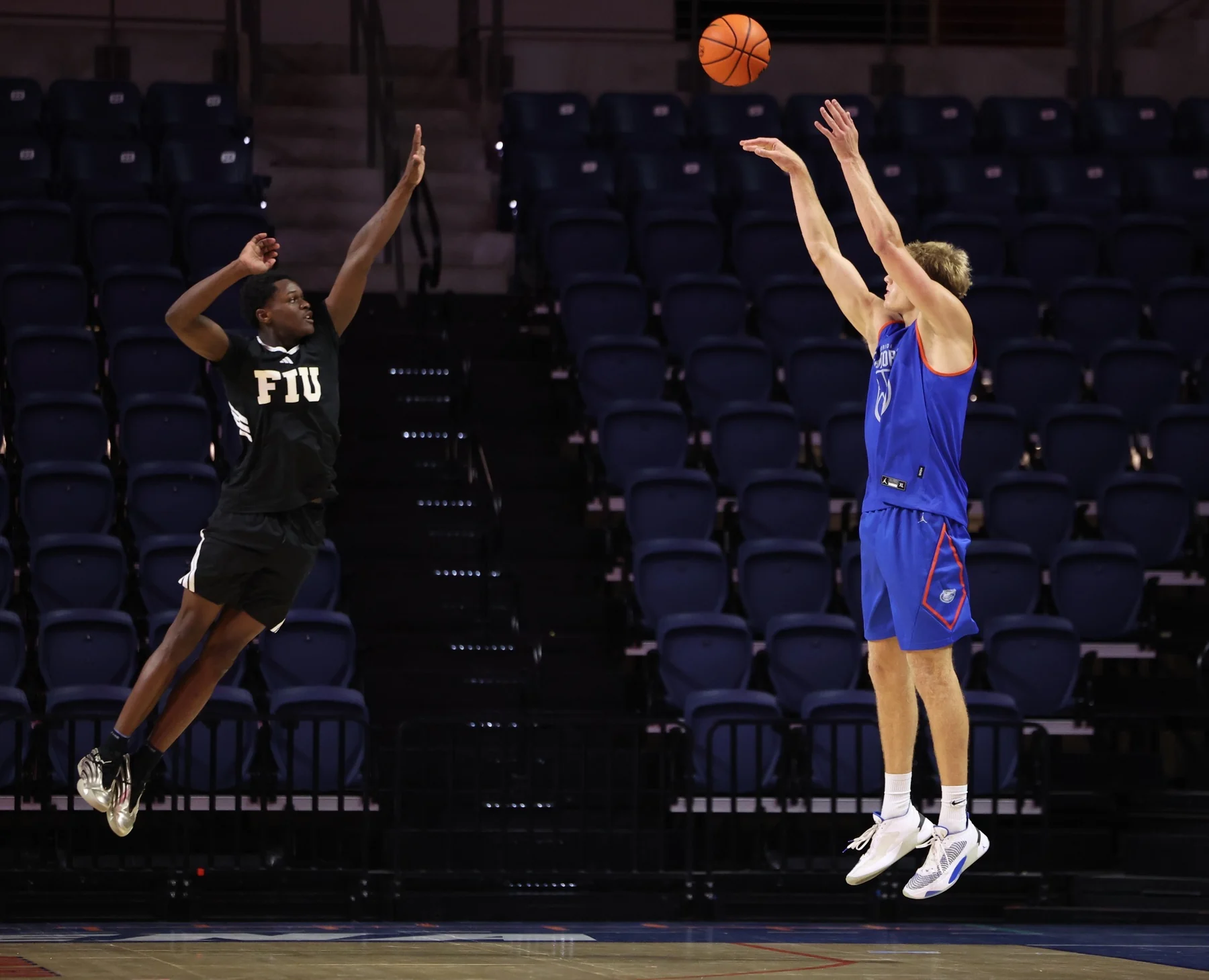
Tanner's Vanderbilt profile supplies a compelling three-part case: 19.5 points, 5.1 assists and 2.4 steals per game in 2025–26. His 184 assists and 86 steals were school single-season records. The scoring helps force defensive attention; the other figures show that his contribution was not restricted to finishing the possession himself.
A defence deciding how much help to send towards a productive guard also has to account for the pass he can deliver when it commits. That is why creation belongs next to scoring in this assessment. At the other end, steals can create possessions before a defence has to work through another full half-court sequence. They do not measure every defensive action, but Tanner's SEC All-Defensive recognition adds context to the disruption.
His school-record 14 assists in a win at South Carolina offers a concrete example of distribution, while the 37-point game against Oklahoma shows the scoring ceiling. Those are different ways to influence a result. Tanner ranks second here because he has already carried both responsibilities; the question for the new season is how consistently the surrounding attack converts the advantages he creates.
3. Jeremy Fears Jr.: the passing engine
Fears is third because his creation can shape everybody else's opportunities. Michigan State's official biography records 15.2 points and a nation-leading 9.4 assists per game in 2025–26, plus a 3.86 assist-to-turnover ratio. He started all 35 games and finished with a school-record 328 assists. The volume was accompanied by control, rather than simply a large number of risky attempts.
That combination matters when a guard is responsible for repeatedly initiating the attack. The first pass can start movement, but the valuable one often comes after a defender has been drawn away from his assignment. Fears's production gives Michigan State a proven source of those decisions. His 16 assists in the March 2026 tournament win over Louisville demonstrate that distribution on a consequential stage.
The qualification is his 32.1 percent three-point shooting last season. Opponents still have to decide which space they are willing to concede to the handler. More consistent shooting could change that decision and open another passing lane; it is an improvement to watch, not one we have already credited him with making.
Transfers who can change a contender's offence
The next three players bring established skills into new teams. Their order reflects how those skills can affect a college lineup, with an allowance for the work required to connect with new teammates. A change of school does not erase the previous evidence, but it does prevent us from treating last season's exact role as a settled description of this one.
4. Flory Bidunga: finishing and rim protection
Louisville's June signing announcement confirms Bidunga's move from Kansas and gives the basis for his place here: 13.3 points, 9.0 rebounds and 2.6 blocks per game in 2025–26, while shooting 64 percent. His Kansas season profile corroborates the figures. These describe the completed Kansas season, not production already recorded for Louisville.
Pat Kelsey's announcement identified both rim protection and a lob threat. Those strengths can influence the same stretch of floor at opposite ends. A finisher moving towards the basket gives the handler a target and asks a help defender to commit; a defender able to contest at the rim can make an opposing drive harder to complete. Rebounding then determines whether the stop actually ends the possession.
The new offensive ceiling remains a question. Kelsey expressed a belief that there is more to develop, which is a coaching assessment rather than evidence of a completed expansion. Bidunga is fourth on the established combination of finishing, rebounding and protection. A larger scoring role would strengthen the case if it preserves those contributions rather than merely adding attempts.
5. Milan Momcilovic: shooting that moves a defence
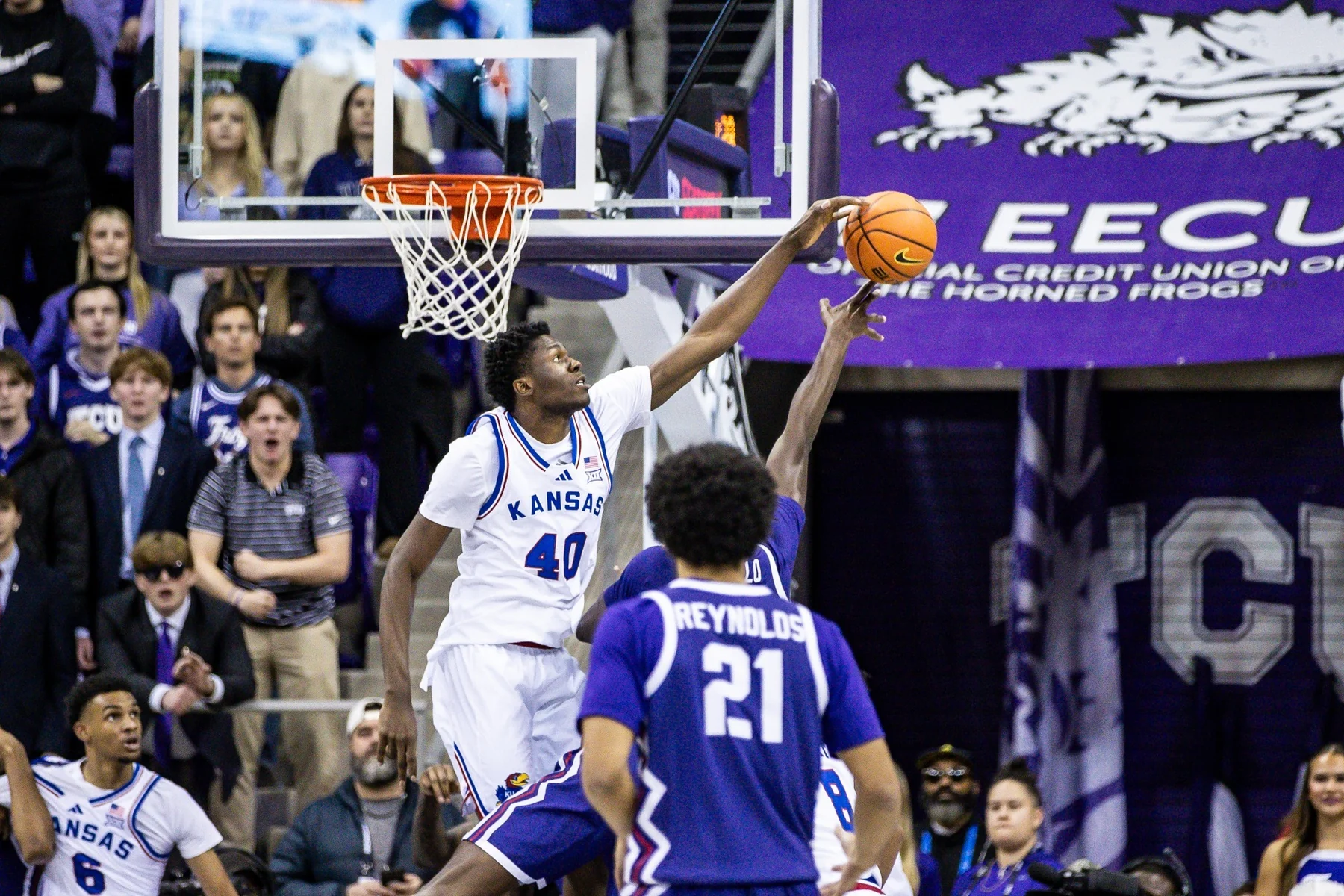
Momcilovic's Kentucky profile records 16.9 points per game and 48.7 percent three-point shooting at Iowa State in 2025–26. His 136 made threes set a school single-season record. The total matters alongside the percentage: this was a substantial shooting contribution, rather than an unusually accurate handful of attempts.
A defender who is reluctant to leave a shooter gives the rest of the offence a different map. Help towards a driver becomes more expensive, and a screen involving that shooter can require an earlier exchange of assignments. That is the basketball reason for ranking Momcilovic fifth. His value can reach beyond the points he personally scores, provided Kentucky can place him where those decisions arise.
The eight made threes against Arizona in the 2026 Big 12 tournament are a striking example of the scoring threat. They are not the baseline for every night. New teammates, opponents and shot locations can change the attempt mix, so we should assess whether the shooting continues to create useful spacing rather than require a repeat of the exact percentage.
6. John Blackwell: a scorer in a new setting
Blackwell brings Duke evidence of scoring against difficult opposition. The official transfer profile records his Wisconsin junior averages of 18.3 points, 4.8 rebounds and 2.3 assists. In the 2026 Big Ten tournament he scored 34 against Washington and 31 against Illinois on consecutive dates. Those games support his capacity to carry a significant scoring burden.
The move also asks a different question from whether he can score. Duke needs his decisions to connect to a new collection of players. A productive possession might require him to attack immediately, draw a second defender and release the ball, or let another creator begin the action. The strongest version of the transfer is a scorer whose threat improves the whole sequence, without the team depending on every difficult attempt falling.
Sixth is a judgement about that established production and possible fit, not an announcement that he owns a particular starting position or usage share. Watch the quality of the opportunities his pressure creates. That will tell us more about the new role than carrying his old scoring average unchanged into a preseason forecast.
Four more players with different paths to impact
The final four places in this Top 10 are deliberately varied. There is a passing big, a backcourt organiser, a wing scorer and an interior defender. Their strengths are not interchangeable, which is why the comparison needs more than a descending list of scoring averages. Each has a concrete college example that helps explain the ranking.
7. Alex Condon: value beyond a scoring average
Condon's official profile records 15.1 points, 7.5 rebounds and 3.6 assists per game in 2025–26, plus a team-high 48 blocks. The assists are especially useful context for a 6-foot-11 forward/centre. They identify a player contributing to the next opportunity as well as completing his own.
Against Alabama that season, he supplied 25 points, seven rebounds and six assists, with two blocks and two steals. The point is the range of responsibilities, rather than requiring that stat line every night. Passing from a big position can help an attack continue when the first guard action has been contained, and rebounding gives the lineup a way to finish defensive possessions.
Seventh recognises that breadth while leaving room to test how it works in this season's combinations. His best case is not necessarily becoming Florida's highest-volume scorer. It is maintaining the connections between scoring, distribution and defensive work while the other leading players occupy their own roles.
8. Silas Demary Jr.: connecting the backcourt
Demary's UConn biography records 6.0 assists per game across all games in 2025–26 and 7.4 in BIG EAST play. Those are separate samples. He also earned first-team All-BIG EAST and league All-Defensive recognition, giving the distribution a broader two-way context.
The 23-point, 15-assist performance in the comeback win over Providence on 7 January 2026 is an example of both scoring and connecting teammates. A guard who can keep creating after the defence adjusts helps prevent the attack becoming one isolated attempt after another. That is the reason Demary's influence can exceed the scoring column alone.
The school also describes an injury limiting his late-season tournament contribution. That belongs to the previous campaign and is not a current medical update. Eighth credits the established college role; we should judge the new season's availability and effectiveness from its actual evidence, rather than quietly treating either complete recovery or another limitation as certain.
9. Andrej Stojakovic: efficient wing scoring
Illinois's current profile records 13.5 points and 4.5 rebounds per game in 2025–26. It also gives a useful contrast in settings: 17 points on seven-of-nine shooting in the Elite Eight win over Iowa, and 22 points in 17 bench minutes against USC after returning from an ankle injury earlier in the season.
Those examples show that a valuable scoring contribution need not require the same minutes or starting assignment every night. A wing can change a spell of the game by taking the opportunities available, rather than demanding that the whole possession begin with him. The Iowa shooting line illustrates execution in one important game; it is not a season-wide efficiency estimate.
Ninth leaves him room to rise if that scoring becomes more consistent across a larger responsibility. Watch whether the attack retains useful movement when he is involved and whether he can keep converting against stronger, more attentive coverages. A bigger average would be more persuasive alongside those improvements.
10. Motiejus Krivas: controlling the interior
Krivas rounds out the list with a different kind of leverage. Arizona's official profile lists the senior centre at 7-foot-2 and records 73 blocks in 2025–26, with first-team All-Big 12 and All-Defensive honours. At Kansas on 9 February 2026, he had 14 points, 15 rebounds and six blocks.
Blocks alone do not describe every defensive possession. A useful interior defender also needs the team to recover the ball and organise the next action. The Kansas rebounding total belongs beside the contests because a difficult shot that produces another offensive opportunity has not completed the stop.
Tenth rewards proven interior influence without assuming that height settles every matchup. The next evidence should include how Arizona handles opponents who move the action away from the basket, and whether its rebounding closes the possessions its defence has disrupted. That is a more complete test of his role than expecting another six-block game.
Breakout candidates belong in a separate conversation
A preseason list becomes misleading when it treats every interesting sophomore as an established star. Braylon Mullins has a stronger foundation than that description suggests: UConn's current profile records 12.0 points per game and 72 three-pointers across 33 appearances in 2025–26. He started 29 times. Those are meaningful contributions on a major stage, rather than a projection based entirely on recruiting reputation.
His next step is nevertheless a question. A shooter can become more valuable through movement, faster decisions against closeouts and reliable defensive assignments without simply adding several points to his average. The 24-point, six-three performance against Providence on January 7, 2026 shows the damage his shooting can do in a particular game. It does not establish his future average or guarantee that opponents will allow the same looks. Mullins belongs on a watch list because a wider role could reveal more of his game; the wider role and its results still need to happen.
Robert Wright III illustrates why an omission from ten names should not be read as a lack of established quality. BYU's roster biography lists a 2025–26 season of 18.1 points and 4.6 assists per game, with 41 percent shooting from three-point range. He started all 35 games. Calling that player a breakout candidate would hide substantial production that has already occurred.
The practical distinction is between greater opportunity and greater evidence. Mullins offers a development case; Wright offers a strong alternative when scoring and perimeter creation receive more weight. Readers can reasonably move either player into their own ten. This ranking makes its preferences visible so that disagreement concerns basketball roles and evidence, rather than an implied claim that every player outside the list is inferior.
What should change the order once games begin?
The first update should follow evidence about responsibility, rather than an impressive isolated total. Duke's October 8, 2026 102–62 preseason scrimmage win over Belmont provides a useful example. Dame Sarr and Joaquim Boumtje Boumtje led the scoring with 19 apiece, while Patrick Ngongba II led the team with four assists. A transfer scorer such as Blackwell operates within that wider offence. Watch who initiates possessions and who receives the ball when the first action fails, rather than assuming his Wisconsin workload automatically transfers.
UConn's 72–52 exhibition victory over Syracuse on October 13 offers another early observation. Demary contributed 13 points, five rebounds, two assists and two steals. Na'jai Hines supplied 17 points, eight rebounds and two blocks. That distribution is a reminder to examine which teammates share creation and finishing duties. The school explicitly identifies the contest as outside the all-time series record; these numbers should not be folded into regular-season averages.
Once official games begin, look for repeated performance against different defensive schemes. A guard's productive night against passive coverage should be followed by evidence against pressure. A centre's finishing should be assessed alongside the work that creates those chances: screening, spacing and the guard's pass. Defensive value also needs context. Blocks are useful, but reliable positioning and finishing possessions with a rebound can decide whether a good first contest actually stops the opponent.
Adjust the order when those patterns persist, or when confirmed availability and roster changes materially alter a player's role. Avoid treating a short shooting streak as a new permanent skill level. This article ranks individuals through an editorial method; the college basketball rankings explainer describes the separate purposes of team polls and selection metrics. Neither a team poll nor an NBA projection can replace watching what a player contributes to his current college team.
Sign in with Google to join the discussion.