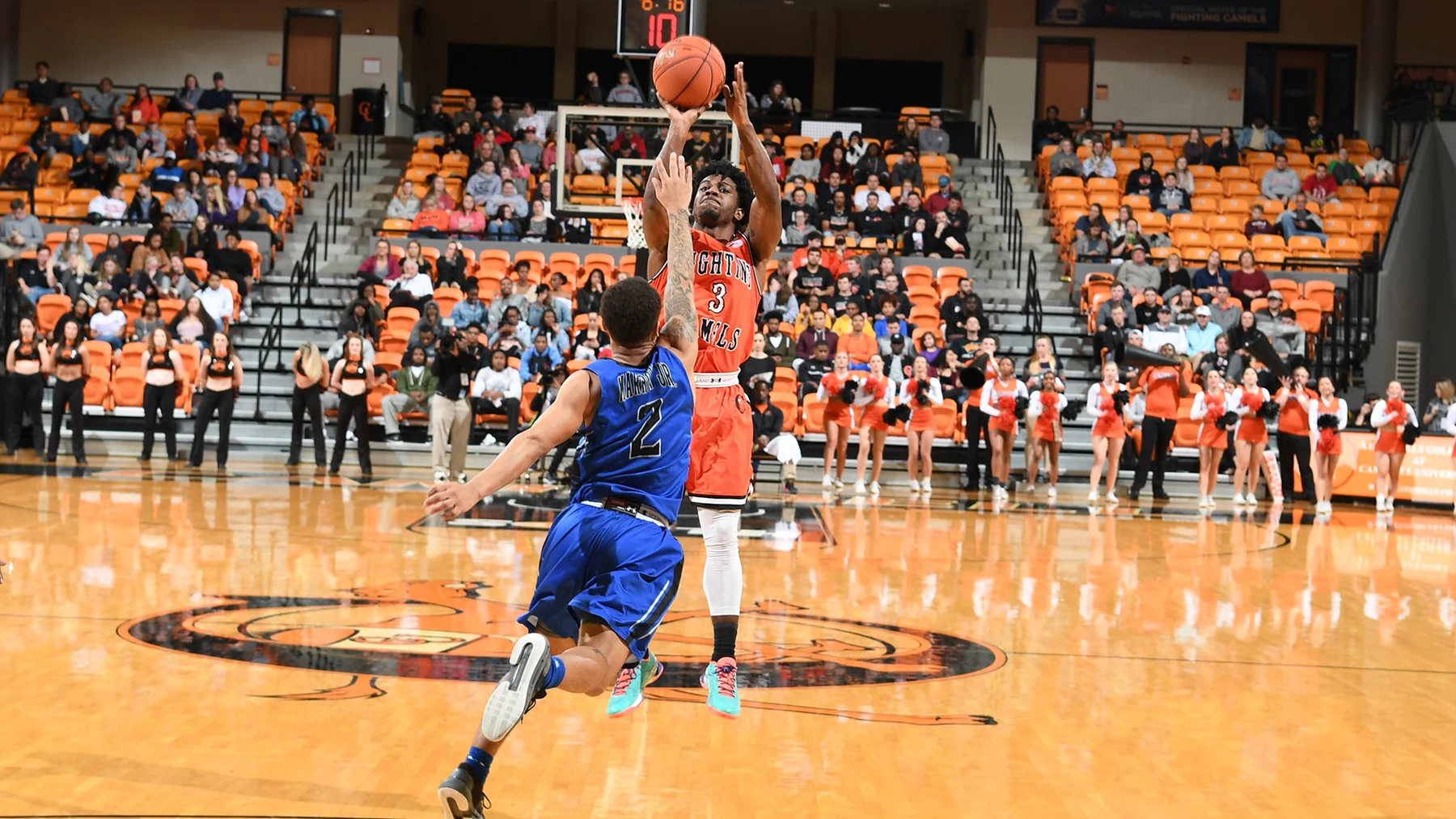
Pete Maravich's 3,667 points lead NCAA Division I men's basketball, while Travis Grant's 4,045 are the largest career total across the NCAA's three record-book divisions. This guide separates those scopes, gives the Division I top ten and explains the Division II and III leaders. Records were checked on October 14, 2026. The cover is an archival photograph from Chris Clemons' Campbell career; it illustrates a scorer in the top ten rather than the overall record holder.
Who holds the NCAA men's career scoring record?
Pete Maravich is the NCAA Division I men's career scoring leader with 3,667 points at LSU. Across the NCAA's three men's record-book divisions, Travis Grant's 4,045 points for Kentucky State are the largest total. Andre Foreman's 2,940 points for Salisbury lead Division III. Those are different answers to different questions, checked against the available official books on October 14, 2026.
| Division | Player | School | Career points |
|---|---|---|---|
| I | Pete Maravich | LSU | 3,667 |
| II | Travis Grant | Kentucky State | 4,045 |
| III | Andre Foreman | Salisbury | 2,940 |
The underlying sources are the NCAA's Division I, Division II and Division III record books. Their division headings matter. Moving Grant into a Division I table would create an incorrect answer even though his total is larger. Historical classifications also require care: Grant's championship run at Kentucky State took place in the NAIA tournament, while his career appears in the NCAA's Division II records.
Another familiar answer, John Pierce's 4,230 points at Lipscomb, concerns a broader college basketball record. Lipscomb's account of his career places his 1990–94 achievements in the school's NAIA period. The number is real; placing it at the top of an NCAA-only list would change the list's membership criteria. An institution's present conference does not retrospectively change the organisation under which an older career was played.
For a fan checking a television graphic or an online trivia answer, start with three questions: men's or women's basketball, which division or governing organisation, and which statistical sample? Career points include a player's credited scoring over the relevant college career. An NCAA tournament-only leaderboard measures a much smaller set of games. A season scoring champion is different again, and a points-per-game record can belong to someone who never accumulated the largest total. Once the heading is precise, the apparent contradiction between several record holders disappears.
Why Pete Maravich remains the Division I leader
Maravich's 3,667 points in three varsity seasons
LSU's archival biography separates Maravich's 1966–67 freshman team from his three varsity seasons, 1967–68 through 1969–70. His credited varsity career covers 83 games. Dividing 3,667 by 83 produces approximately 44.2 points per game, which makes the total particularly striking: he reached it through an extraordinary scoring rate rather than a long modern career schedule.
The freshman distinction is essential. Adding his separate freshman team's points would create a new sample that the official varsity record does not use. The same applies to imagined three-pointers. Maravich played without the college three-point shot, but nobody can simply reprice every long two-point attempt and describe the hypothetical result as an official record. A changed rule would also change defensive positioning, shot selection and the choices of everyone else on the court.
One historical game gives the numbers a human scale. LSU's anniversary account describes January 31, 1970 against Ole Miss, when he passed Oscar Robertson's 2,973-point career mark. Maravich finished with 53 points and 12 assists in a 109–86 victory. The scoring record was a moment within a basketball game, with teammates and a result still at stake.
That example also explains why a career points table is only an entry into the player's story. Passing, attention drawn from defenders and the team's ability to finish a possession matter alongside the scorer's own baskets. Maravich's enormous point total should be stated accurately without reducing every aspect of his basketball to a single number.
Antoine Davis finished three points short
Detroit Mercy's final career biography records 3,664 points for Antoine Davis across 144 games in five seasons, 2018–19 through 2022–23. His approximately 25.4-point career average follows directly from those totals. The same profile records 588 made three-pointers and double-figure scoring in all 144 games: his challenge to the record combined a high rate with remarkable persistence.
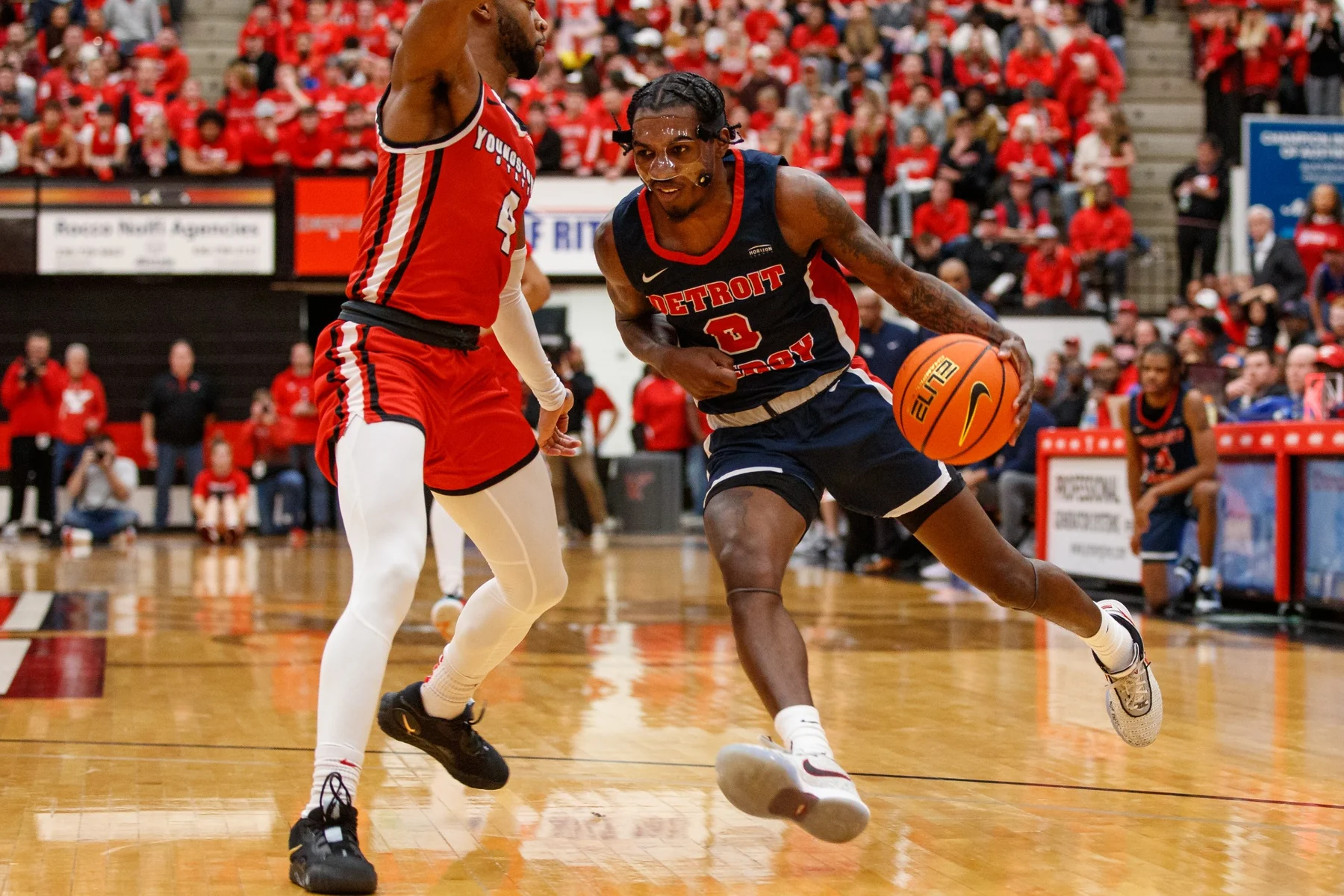
The finish is often described imprecisely. Davis ended three points short of tying Maravich and four points short of passing him. In Detroit Mercy's 71–66 quarterfinal loss at Youngstown State on March 2, 2023, he scored 22 points and missed a three-pointer at the end that would have tied the mark. The final school career total, rather than an earlier prediction of another possible postseason invitation, is the appropriate historical answer.
A missed attempt can make the gap memorable, but it cannot explain the whole career. The record chase was built over years of production. Comparing Davis with Maravich therefore requires both totals and opportunities: three extra points separate their credited scoring, while 61 games separate their career samples. Respecting both measurements is more informative than trying to declare one set of real achievements illegitimate because the careers unfolded under different rules.
The Division I career scoring top ten
The table below follows the career points order in the NCAA's record book through 2025–26. Games and last varsity season help identify the sample. They are especially useful when an older school biography gives the player's rank at graduation rather than his place in today's list.
| Rank | Player | School | Points | Games | Last season |
|---|---|---|---|---|---|
| 1 | Pete Maravich | LSU | 3,667 | 83 | 1969–70 |
| 2 | Antoine Davis | Detroit Mercy | 3,664 | 144 | 2022–23 |
| 3 | Freeman Williams | Portland State | 3,249 | 106 | 1977–78 |
| 4 | Chris Clemons | Campbell | 3,225 | 130 | 2018–19 |
| 5 | Lionel Simmons | La Salle | 3,217 | 131 | 1989–90 |
| 6 | Alphonso Ford | Mississippi Valley State | 3,165 | 109 | 1992–93 |
| 7 | Doug McDermott | Creighton | 3,150 | 145 | 2013–14 |
| 8 | Max Abmas | Oral Roberts / Texas | 3,132 | 157 | 2023–24 |
| 9 | Mike Daum | South Dakota State | 3,067 | 137 | 2018–19 |
| 10 | Harry Kelly | Texas Southern | 3,066 | 110 | 1982–83 |
For example, Campbell's Chris Clemons biography describes his third-place finish in 2019. That historical statement was accurate then; Davis subsequently moved above him. Clemons' 3,225 points have not changed simply because his position did. The profile also records double-figure scoring in 129 of his 130 games and a 30.1-point senior average, illustrating the sustained output behind the total.
McDermott represents another route. Creighton's 2013–14 recap records a senior season of 26.7 points per game on 52.6 percent field-goal shooting. It also identifies him as the team's rebounding leader across all four college seasons. His 3,150 points over 145 games produce approximately 21.7 points per game. Those details bring a forward's efficiency and broader responsibility into a table that otherwise presents only accumulation.
Abmas' row requires particular care. The current NCAA table and Texas's final college biography both give 3,132 points. His career combined four seasons at Oral Roberts with one at Texas. The school's season totals, 448, 686, 685, 743 and 570, add to that figure. A Texas-only leaderboard should therefore not credit the school with his entire college total, while the combined Division I career list should retain both institutions.
These examples make the list easier to use. A ranking can move without a statistical correction; a transfer can create a combined career across two school books; and an impressive season average describes a different interval from a career average. Check which change actually occurred before assuming a graphic or biography has contradicted another source.
The table also invites a basketball question rather than answering every basketball question. Clemons and McDermott show that prolific scoring can come from different sizes and responsibilities. Comparing their point totals establishes their places on this particular record list. It does not reveal which player faced the tougher coverage on a given night, which teammates created his opportunities, or how much value he supplied when he did not take the shot.
Travis Grant's Division II record belongs in the NCAA answer
Grant's 4,045 points exceed Maravich's total by 378. The NCAA lists the Kentucky State career under Division II, with 121 games and a 33.4-point average. That is the appropriate answer when the question explicitly includes every NCAA record-book division. It is not a reason to replace Maravich at the head of the Division I table.
Historical terminology explains much of the confusion. The current Division II book describes older small-college records and periods of dual NCAA and NAIA membership. Its introductory notes place the three-division reorganisation in 1973–74, after Grant's career. Calling him a champion of a modern NCAA Division II tournament would therefore misdescribe both the competition and the period.
Kentucky State's retrospective account identifies three consecutive NAIA championships, in 1970, 1971 and 1972. It also describes substantial scoring throughout his career, from a 26.6-point freshman average to 39.5 as a senior. The senior season's reported field-goal percentage was 62 percent. These are historical college performances, separate from his later professional career.
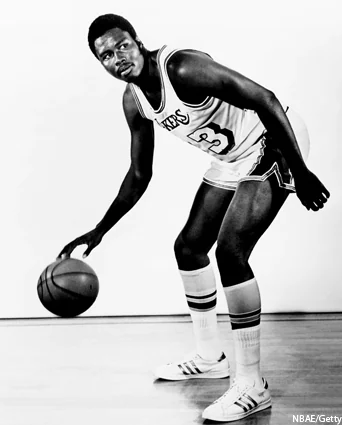
The Small College Basketball Hall of Fame profile reports 64 percent career field-goal shooting and his tournament MVP honours in 1971 and 1972. Those facts complicate the assumption that a very large scoring total must come entirely from inefficient volume. Grant combined frequent scoring with a high proportion of made attempts and championship success within his team's actual competition.
A useful basketball comparison keeps those dimensions separate. A field-goal percentage describes makes divided by attempts, while points per game also depends on attempts taken, free throws and the value assigned to each made shot. Grant's accuracy cannot be converted into a modern three-point efficiency figure without a shot distribution that the record does not provide. Equally, his smaller career average than Maravich's does not erase the greater career total. They lead different statistical questions.
Kentucky State's 2016 Hall of Fame announcement connects the individual achievements to the three championship teams. For fans learning this history, that is the stronger account: a scorer who helped a particular program win in a particular era. Keeping the organisation and division labels attached preserves the achievement instead of forcing it into a more familiar but inaccurate March Madness category.
Andre Foreman leads the Division III career list
Foreman's 2,940 points for Salisbury are the Division III career record. The current NCAA book places Willie Chandler of Misericordia next with 2,898 and John Grotberg of Grinnell third with 2,848. Foreman's advantage over Chandler is 42 points, an independently calculated difference that makes clear how close a career challenge can become without actually changing the leader.
Salisbury's career records page, updated July 3, 2025, confirms his 2,940-point total and 27.0-point average. The school gives playing periods as 1987–89 and 1990–92; the NCAA's shorthand uses the season-ending years 1988–89 and 1991–92. Read those labels as different conventions for identifying the same college career, rather than treating the date strings alone as evidence of an extra season.
The Small College Basketball profile connects his scoring to Salisbury's 28–2 senior season in 1991–92 and a 27-game winning streak. It identifies a 31.5-point junior scoring average and his 1991–92 NABC National Player of the Year honour. These details give the career more substance than an isolated entry in a trivia table: high scoring continued across seasons and accompanied a successful team.
Division III's headline single-game achievement belongs to another player. The NCAA book records Jack Taylor's 138 points for Grinnell against Faith Baptist Bible on November 20, 2012. That is a single-game record, not Foreman's career total and not evidence that Taylor must top the career list. A spectacular night can dominate popular memory while a different player holds the cumulative record.
The distinction matters when judging what persistence requires. A career scorer must continue to get useful shots as opponents accumulate film, teammates change and the season introduces different matchups. A point total cannot by itself tell us how each possession was created, but repeating production across years is a different task from reaching a remarkable peak once. Neither achievement needs to be inflated by swapping its statistical category.
For a Salisbury supporter, the local school list and the national Division III list serve complementary purposes. One describes the program's history; the other compares qualifying careers across the division. Keeping both contexts visible honours Foreman's record while leaving room for separate discussions about tournament success, rebounding, playmaking and the style of basketball his team played.
How to compare scoring records across eras
Games played and eligibility change the opportunity
The most useful companion to career points is games played. Maravich's 83, Grant's 121 and Davis' 144 describe very different opportunities to accumulate scoring. Dividing the totals by those samples adds a rate comparison, but neither calculation cancels the other. The career leader has the most credited points; the rate leader scores most per appearance under the relevant record's requirements.
Eligibility helps explain why career lengths differ. LSU identifies Maravich's freshman team separately from his three varsity seasons. At another point in the sport's history, the NCAA granted additional eligibility to 2020–21 athletes. That context explains an era of longer college careers without requiring fans to disregard points that were legitimately scored and credited.
For future record discussions, avoid assuming yesterday's eligibility structure remains universal. The NCAA's current Division I and II eligibility explanation describes an age and enrollment based period with transition rules. It explicitly rejects an automatic five-years-for-everyone interpretation. A record projection therefore needs the particular player's actual eligibility and participation opportunity, not just a year label beside his name.
The existing 2026–27 eligibility guide develops that current question further. For an historical comparison, retain the actual completed sample. Multiplying a three-year player's average by an imagined fourth season assumes his health, opponents, workload and performance would all cooperate. It can illustrate the scale of a scoring rate, but it cannot become part of his official career.
A career total does not measure every kind of value
Points are credited to the player who scores the basket or makes the free throw. They do not allocate a share to the teammate who screened, drew a second defender or delivered the pass. This is why a career scoring leaderboard and a ranking of complete college careers should not be treated as identical projects.
Consider a recent finished career. Purdue's April 3, 2026 account of Braden Smith records 1,932 career points and an NCAA record 1,103 assists across 149 games. It also identifies him as a two-time consensus first-team All-American. He does not belong in this scoring top ten, yet the assist record demonstrates an exceptional contribution to teammates' scoring.
Do not turn those assists into an invented points-created total. Assisted baskets have different values, and a box score does not assign all of an offence's success to one passer. The example instead supplies a concrete reason to consult another category. A player's absence from the career points table can coexist with leadership in another official measure and major recognition for his overall play.
When comparing scorers, place career totals alongside rates, shooting accuracy, role and the team's results in their proper competitions. Preserve the stated division and sample throughout. That approach lets a fan appreciate Maravich's intensity, Davis' persistence, Grant's total and Foreman's Division III standing without needing a fictional common era in which every career followed the same rules.
Sign in with Google to join the discussion.