
LSU's roster mystery has two different answers
As of October 1, 2026, LSU's public men's basketball roster names four players. That answers who the school has listed; it does not establish that only four people are practicing or that every unlisted player is ineligible. Will Wade has described a much larger practice group. The unresolved question for the 2026–27 Tigers is which combinations will be available when games arrive, and how long that availability will last.
The official LSU roster lists Divine Ugochukwu, Abdi Bashir Jr., Austin Nunez and Mouhamed Dioubate. In its September 23 report, Tiger Rag reported Wade's account of 15 practicing players, with eligibility work remaining for three or four. His expectation that the necessary players would be available for the opener was a coaching expectation, rather than a published clearance decision for each athlete.
Both numbers can therefore be accurate descriptions of their own evidence. A website is a public announcement. A coach's practice count describes the people he says are working with his staff. Neither, by itself, is a complete explanation of the governing rules, an individual court order or an opponent-specific game roster. Reading the smaller number as the entire team exaggerates what the website proves. Reading the larger number as a settled playing rotation exaggerates what the coach's comments prove.
The information gap is also a reasonable source of frustration. In the CollegeBasketball discussion of the comments, fans asked who the players were and why practicing did not answer whether they could suit up. Those are useful questions, although jokes and predictions in a discussion thread cannot settle anyone's eligibility. A few commenters also cannot stand in for every LSU supporter or every college basketball fan.
For basketball purposes, the best question is more specific than whether LSU has a team. Which ball handlers can create against pressure? Which big men can screen, rebound and protect the rim? Which wings can finish a defensive possession without forcing a guard into an unfavorable matchup? A headcount leaves those questions unanswered. This article separates the announced core from reported additions, explains why the uncertain names cannot all receive one label, and identifies the next evidence that would make a meaningful change to LSU's outlook.
The four players LSU has publicly listed
The announced group supplies a useful starting point because its members have school biographies and signing announcements. It should be treated as an identifiable core, without implying that LSU has announced its entire team or completed every possible eligibility review. The following measurements and class labels follow the current roster checked on October 1; they are school listings rather than independent measurements.
Three guards and one forward are an announced core
| Player | LSU position | Listed height | Class |
|---|---|---|---|
| Divine Ugochukwu | Guard | 6-foot-3 | Junior |
| Abdi Bashir Jr. | Guard | 6-foot-5 | Senior |
| Austin Nunez | Guard | 6-foot-2 | Senior |
| Mouhamed Dioubate | Forward | 6-foot-8 | Senior |
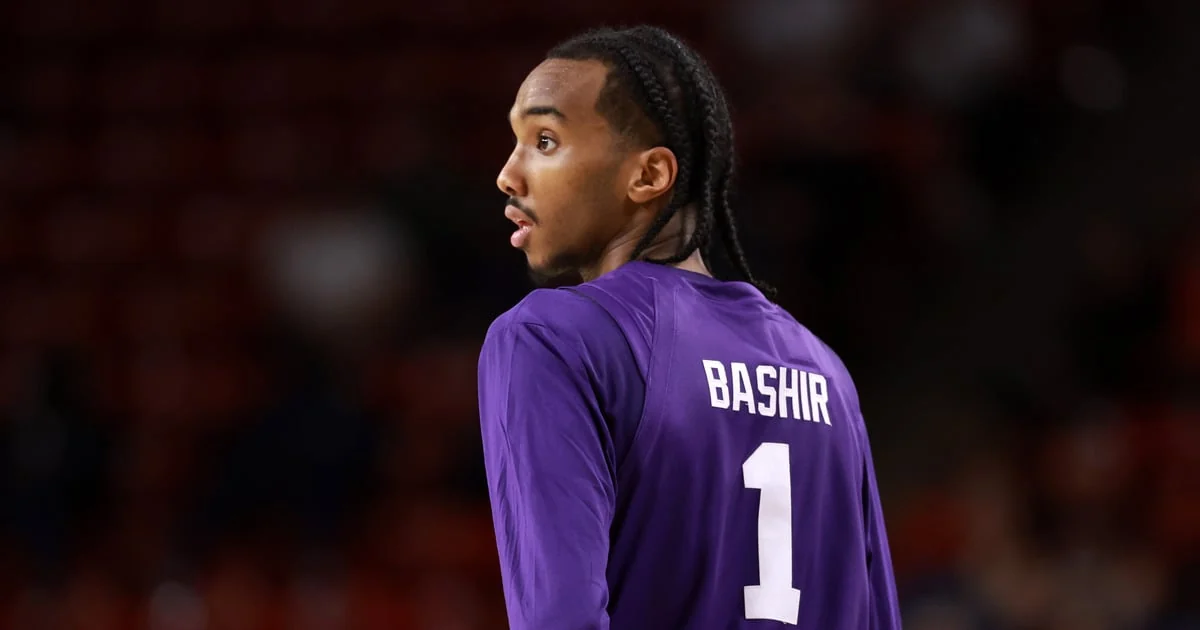
Bashir's appeal has a measurable foundation. LSU's June signing announcement records 67 made threes in 151 attempts at Kansas State in 2025–26, a 44.4 percent rate across 18 appearances. That combination of accuracy and volume gives a defense a reason to stay attached to him away from the ball. It does not guarantee that the percentage carries into a new offense, but it explains why a creator's ability to draw help could be particularly valuable beside him.
Ugochukwu offers another perimeter option with a different sample. His school biography records 22 appearances and 12 starts at Michigan State in 2025–26, with 19 makes in 43 three-point attempts. The latter is promising shooting evidence, but 43 attempts cannot carry the same certainty as a much larger sample. Fans should watch the role he earns, rather than assume two good percentages describe two interchangeable players.
Dioubate's LSU announcement reports 8.8 points and 5.5 rebounds per game in 31 Kentucky appearances, including 10 starts. It also records 17 points, eight rebounds and three blocks in Kentucky's NCAA tournament victory over Santa Clara. That is a concrete example of frontcourt contribution in a high-stakes game, rather than proof that he will fill every interior role for LSU.
Why the listed group cannot define a starting five
Three guards and one forward tell us something about the publicly announced skill pool. They do not tell us who opens at center, which player controls the last possession or how Wade will divide minutes. A starting lineup is a five-player relationship: adding a rim finisher changes the passing angles; adding another shooter changes where help comes from; adding a bigger defender changes which matchups a wing must absorb. Filling the missing space with a rumored name would make the table look complete while weakening its reliability.
There is also a measurement wrinkle worth handling honestly. Some June announcements list heights different from the current roster. Using the current roster consistently avoids mixing dated listings into a supposedly precise lineup graphic. More consequential than an inch on a biography is the job each player can perform against live opposition. The announced core makes LSU's perimeter shooting and experienced forward play identifiable. It leaves the full distribution of creation, interior size and defensive assignments open until the broader available group is confirmed.
Why the other names need different eligibility labels
“Not on the website” is a publication label, not an eligibility category. LSU's reported additions involve different questions about college participation, professional contracts and individual relief. Treating them as one batch of pending paperwork misses the reason this roster has become so difficult to assess. It also encourages the false assumption that one favorable decision automatically settles everyone else's case.
Fifth-year guards and RJ Luis raise different questions
Wade discussed Donovan Dent and Skyy Clark as backcourt pieces in the published coach Q&A. That confirms his discussion of those players, rather than serving as a school eligibility certificate. Their additional-season questions should also be separated from RJ Luis's professional-contract history. A fan asking whether a guard has time remaining in college is asking something different from whether prior professional participation prevents his return.
The NCAA's current age-based eligibility explanation describes a continuous five-year period beginning with the earlier of initial full-time college enrollment or the applicable academic year following an athlete's nineteenth birthday. It warns that the framework does not guarantee five years for everyone and that other eligibility requirements still apply. The transition also does not automatically restore eligibility already exhausted under the previous framework. Consequently, a slogan about everyone getting a fifth year is an inadequate explanation of LSU's individual cases.
For Luis, On3 reported an August 24 injunction opening a route to LSU after his college career and a two-way NBA contract. That is dated reporting about interim relief. It should not be rewritten as a final, season-long resolution of every NCAA and conference question. Wade said LSU would work through the SEC process, which is another reason to keep the relevant authority and scope attached to any claimed approval.
The practical difference is durability. A player may have a path to participation while litigation continues, yet still face another hearing or a changed order. A reporter's conditional description, a school's game announcement and a final judgment answer different questions. None should be silently promoted into a stronger assurance. For wider context, the site's 2026–27 eligibility guide explains the broader landscape; LSU's actual lineup still requires athlete-specific confirmation.
International experience is not a single eligibility category
Saliou Niang, Brice Dessert and Michael Ruzic were among the international players discussed in Wade's comments. Their presence in that conversation gives fans identifiable names to follow. It does not establish one shared clearance status. Nationality alone says nothing about when someone enrolled in college, what agreements he signed, which competitions he entered or what relief has been granted. The relevant history belongs to the individual player.
Márcio Santos illustrates why old projected lists need dates. On September 29, Kosner Baskonia announced his signing through 2028. Its statement identifies a two-season agreement with the Spanish club. Whatever a previous LSU projection contained, Santos should not now be counted as a settled LSU frontcourt option merely because his name remains in an older article or social graphic.
That leaves a useful, deliberately limited classification: the official four are publicly listed; additional names are supported by dated coach comments or reporting; the remaining competition questions need individual answers. Avoid filling a fifteen-row chart with guessed identities and guessed clearance. A shorter table that states what is known is more useful than a comprehensive-looking table that blurs old recruitment, current location and legal availability.
What roster uncertainty changes on the basketball floor
The uncertainty has a basketball cost even before a game result can be judged. A coach can teach an action in practice, but its competition value depends on the players allowed to execute it together. If the preferred creator, screener or defensive big is unavailable, the replacement changes several teammates' responsibilities. That is why a preseason roster story should eventually move beyond the names and toward the combinations those names permit.
In the published September comments, Wade identified defensive rebounding as a concern and mentioned turnovers while increasing pace. These are the coach's observations, not statistics from a public LSU game. They nevertheless point to useful questions for the first available film and box scores. The school's press conference page confirms the media session's date.
Ball handling, size and rebounding depend on available combinations
Start with the first pass after a defensive stop. A transition attack needs possession secured before it can exploit an unset defense. If the guard must stay behind to help finish a rebound, he cannot also be the early receiver upcourt. If the forward is occupied with a larger opponent, another player has to supply the board. Those are possession-level relationships, not a prediction that LSU will play fast or slow. They explain why uncertain interior availability can affect an apparently guard-driven offensive plan.
Next watch what happens when the first drive is contained. A shooter such as Bashir benefits from a teammate drawing help, but a defense can remain closer to shooters when it has no reason to fear the screener or finish at the rim. The relevant question is whether the available lineup presents two credible threats in the same action. A collection of good career scoring averages cannot answer that. Nor can an attractive projected lineup tell us how LSU will handle possessions when one of its projected pieces is missing.
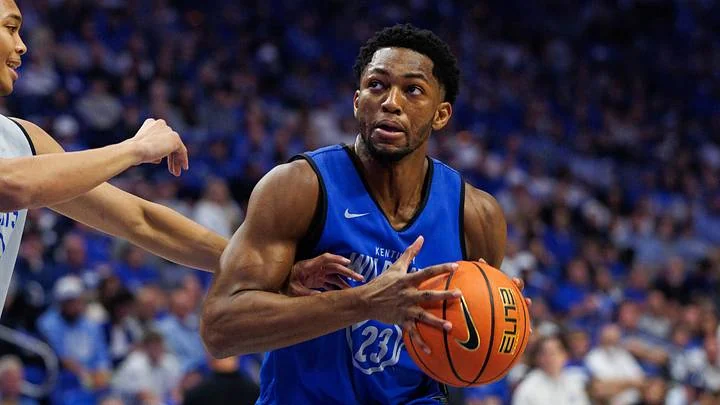
Dioubate gives the announced group an experienced frontcourt contributor, supported by the school's account of his Kentucky production. The point is not to ask him to solve every rebounding problem. It is to watch how his assignment changes beside different players: whether he can attack a rebound, must contain a drive, or has to cover the opposing team's primary interior scorer. Requiring one forward to perform all three jobs in the same possession is a construction problem.
Finally, separate a thin exhibition rotation from the intended regular-season team. A shortened group can increase fatigue and foul pressure, while a fuller group can test more roles. Neither situation makes one October performance a reliable season forecast. The most informative evidence will be repeatable choices across available lineups: who initiates under pressure, who screens into useful space, who ends defensive possessions and who remains trusted when the opponent changes its coverage. Until that evidence exists, describing LSU's upside is a conditional basketball argument.
What fans should check before exhibitions and opening night
LSU's next useful checkpoints are games with published opponents, followed by fresh school or case-specific information about who can participate. The official schedule gives fans three October exhibitions before the November 3 regular-season opener. These dates create opportunities to assess the available group; they are not deadlines after which all uncertainty must disappear.
| Date | Opponent and location | October 1 listing |
|---|---|---|
| October 8 | At McNeese, Lake Charles | Exhibition; 6:30 p.m. Central |
| October 14 | UCF, Baton Rouge | Exhibition; 7 p.m. Central; SEC Network+ |
| October 24 | At Florida State, Tallahassee | Exhibition; time TBA |
| November 3 | LSU New Orleans, Baton Rouge | Regular-season opener; time TBA |
The exhibition designation also appears in LSU's July schedule announcement. A televised exhibition can provide meaningful basketball evidence without becoming a regular-season result. Conversely, an omitted player may be unavailable for that occasion without having permanently left the team. The useful game-night question is who actually dresses and enters, followed by what the school says about anyone absent.
Before buying a subscription for a particular exhibition, check its specific viewing assignment. The UCF listing names SEC Network+; the other entries above should not inherit that designation by association. A streaming service carrying one LSU game does not prove it carries the entire preseason. Use the site's men's basketball TV schedule alongside the current school listing, especially when a game still shows TBA. A blank broadcast entry is unresolved information, rather than a promise of a free stream.
For roster updates, look for a named athlete and a clear description of the decision. Was the announcement about signing, enrollment, practice or competition? Does the statement apply to one exhibition, to the upcoming season or to a court order that can still change? The point is not to turn fans into lawyers. It is to prevent a stronger claim from being attached to a weaker announcement. When a report says a ruling opens a path, retain that conditional meaning until an authoritative update supplies more.
After games, use the current scores page for results and the school's box score for participation and minutes. The box score reveals who played that night; it does not independently explain every absence. Over several appearances, minutes and combinations can begin to show the team's basketball identity. A single exhibition's shooting percentage or margin is a small sample influenced by opponent, experimental rotations and availability.
The most meaningful October development would be clearer names and roles, supported by durable participation information. Fans can reasonably want that transparency while recognizing that unresolved individual cases may limit public detail. LSU's announced players provide a real starting point, and the broader practice group provides a reported ambition. The gap between them is the story to follow until the Tigers put a confirmed competition group on the floor.
Sign in with Google to join the discussion.