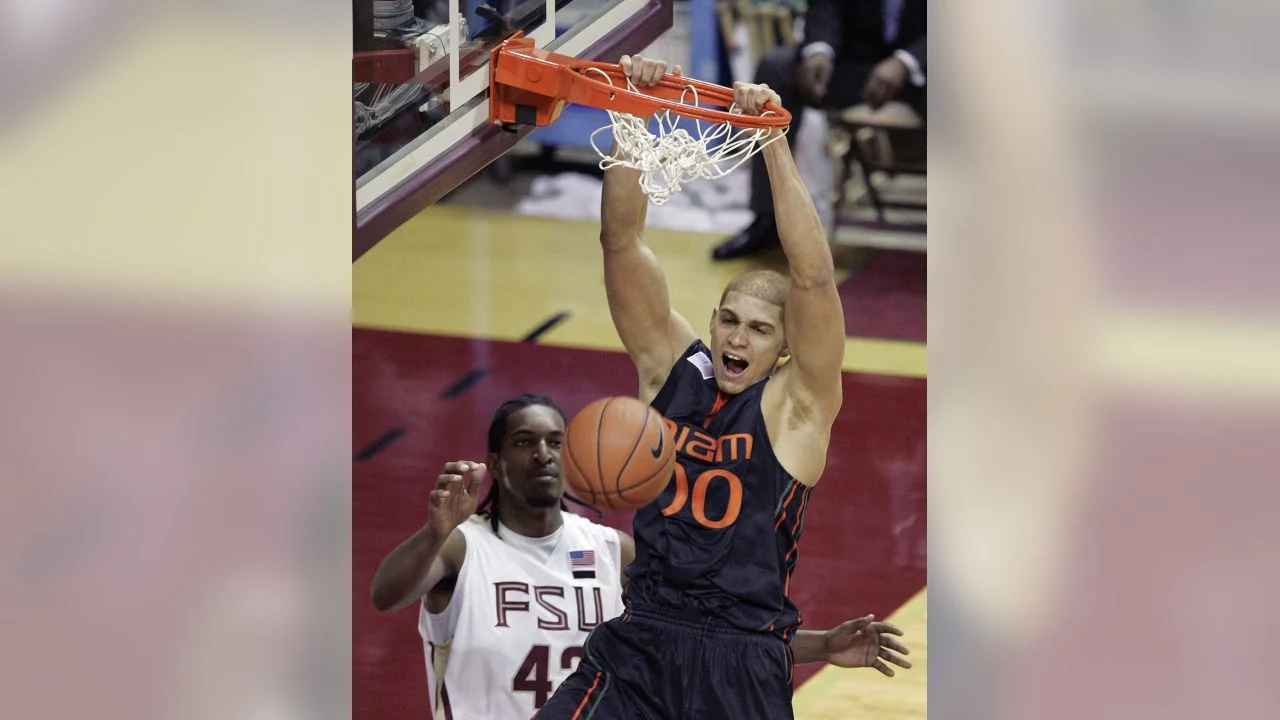
Antonio Gates shows why the college basketball story matters
Antonio Gates is a compelling starting point for a college basketball fan because his basketball record stands on its own. This was not a famous football player who occasionally joined a campus pickup game. Gates helped Kent State reach the 2002 Elite Eight, an achievement that remains central to the Golden Flashes' basketball story. His later football career adds a second chapter; it does not erase the first.
Kent State's account of his Hall of Fame selection recalls a tournament run through Oklahoma State, Alabama and Pittsburgh before a loss to Indiana. Those opponents matter because they place Gates in meaningful NCAA competition. He was contributing to a team that won successive elimination games, not merely collecting statistics in an isolated exhibition. If the round names are unfamiliar, our men's NCAA bracket guide explains how the tournament path narrows.
The Pro Football Hall of Fame biography identifies the unusual break in his route: he did not play college football, then signed with the Chargers as an undrafted free agent in 2003. The same biography records senior-year basketball averages of 20.6 points, 7.7 rebounds and 4.1 assists. Taken together, those numbers describe more than someone who could jump. Scoring, securing possessions and finding teammates were all part of his college workload.
For a basketball viewer, that background suggests useful questions when watching his football highlights. How does he establish position before the pass arrives? When does he use his body to keep a defender away from the receiving space? Those are observation prompts, not proof that a particular college possession produced a particular NFL touchdown. Football technique, coaching and years of professional development still belong in the explanation.
Gates is also a historical example. The Chargers' official announcement records his January 2020 retirement, and the Hall of Fame lists him in its 2025 class. A current Chargers schedule therefore lets you follow the franchise associated with his career, not watch Gates play again. Keeping that distinction clear makes this kind of crossover guide useful: begin with an authentic college basketball connection, then decide whether the football team or the position interests you enough to follow now.
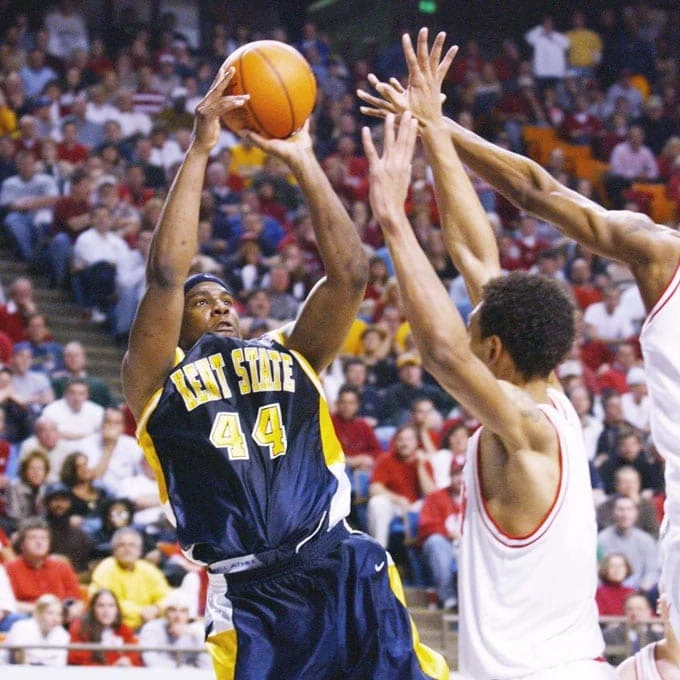
Tony Gonzalez followed a different two-sport route
Tony Gonzalez belongs in the same conversation as Gates, but grouping them under an identical conversion story hides an important difference. Gonzalez played both college football and college basketball at California. When he entered the NFL, evaluators already had a substantial college football record to study. Basketball was part of a two-sport college career rather than a replacement for college football experience.
California's official biography records 82 basketball appearances and a 23-point performance against Villanova in the second round of the 1997 NCAA Tournament. Cal reached the Sweet 16 that year. That is a useful basketball-specific reference: a player whose career average was 6.4 points could still make a decisive scoring contribution in a high-stakes game. A modest scoring average does not make the college connection superficial, just as one outstanding tournament game does not turn a player into his team's full-season offensive centerpiece.
The Hall of Fame's draft retrospective follows his development through three college football seasons before the Chiefs selected him 13th overall in 1997. His final college football season was in 1996; his final NCAA basketball tournament followed in March 1997. Reading those dates as one academic-year sequence avoids the mistaken impression that he abandoned one sport years before taking up the other.
For a men's basketball fan, the more interesting question is how to assess a player who carries different responsibilities in different settings. A forward can help a basketball lineup by screening, rebounding, maintaining spacing and finishing selected chances without taking most of its shots. A football role asks different questions about alignment, assignments and execution. The relevant connection is that a useful athlete can contribute within a team's structure; raw scoring totals are only one way of noticing that contribution.
This is also a reason to resist treating every large college forward as the next Gonzalez. The documented career combines college football performance, college basketball participation and a long professional development process. Removing the football evidence produces a much weaker comparison. Enjoy the parallels in movement, but do not turn a television observation into a prediction about a current student's professional future.
Gonzalez's NFL career ended after the 2013 season, according to Cal's biography. Kansas City and Atlanta provide historical team connections for someone exploring his highlights, but neither current team listing is a promise to see him in uniform. His story works best as a bridge between sports histories, with current fixtures serving a separate purpose.
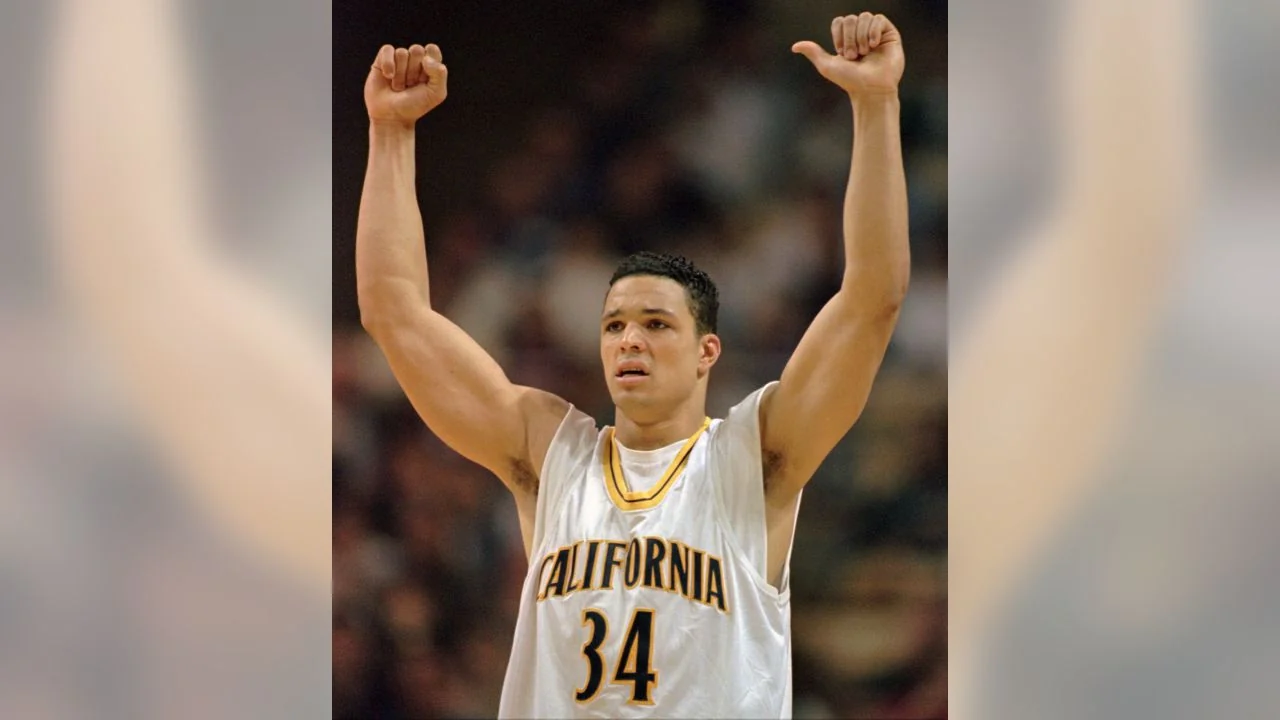
Jimmy Graham made the transition after four basketball seasons
Jimmy Graham supplies a third pathway. He completed four basketball seasons at Miami before playing one season of college football. That sequence differs both from Gates's move without college football and from Gonzalez's overlapping two-sport career. If an article compresses all three into “basketball players who switched,” it loses the experience that made each transition distinctive.
In a 2015 interview published by the Seahawks, Graham's basketball background is documented as 120 college games, with approximately four points per game. Miami's 2009–10 football roster places him in the subsequent football chapter. A four-year basketball participant had time to work within different lineups and game situations even without becoming a high-volume scorer. Basketball experience is not synonymous with leading the scoring column.
Graham's own explanation makes the connection more useful than a generic claim about athleticism. In that Seahawks interview, he compared the crowded passing windows around the basket with receiving opportunities near the football goal line. He also connected pursuing rebounds through traffic with competing for the ball in a congested area. These are his descriptions of his experience, not a universal scientific claim about how playing one sport changes performance in another.
That distinction should guide your viewing. Watch when the receiver establishes his route and when he turns to find the ball. Compare the timing of his movement with the defender's position. In a basketball possession, the passer and cutter need a shared window; on a football play, the quarterback and receiver also need to arrive at the intended moment. The resemblance can help you notice the action, while the different rules and physical demands prevent a direct one-for-one translation.
For a Miami basketball fan, there is value in revisiting the college footage as well as the professional highlights. Ask what the basketball team needed from Graham on that possession. Was the important contribution a finish, a rebound, a defensive contest or simply creating room for someone else? This keeps the college player visible rather than treating his entire basketball career as a footnote to football.
Graham is another historical example, not a current player to add to a 2026 watchlist. The Saints' July 2025 news roundup records his retirement news after his final playing season in 2023. Use his career to choose a question you want to explore in today's football, then check the present roster independently. An old team profile can be excellent evidence about a past interview and still be the wrong place to establish who will play this weekend.
What basketball eyes can notice in a football game
Start by watching the action before the catch. Basketball fans already know that a good passing opportunity can be created before the ball leaves the passer's hands. The receiver's angle, the defender's balance and the timing of the movement all affect what happens next. That habit of looking away from the ball is useful when learning football, even though the assignments and rules are different.
A Hall of Fame retrospective on Gates describes his use of pivots and changes of direction to create space. It also records how difficult the transition initially felt to him. Both parts belong in the story. The appealing footwork analogy should not obscure the need to learn a new position, coordinate with a quarterback and execute against a different kind of defense. Seeing a recognizable movement is the beginning of understanding the play, not its complete explanation.
Choose one question for a sequence of plays. Where does the tight end begin? Does he immediately release into a route, stay to help block, or contribute without receiving the pass? The NFL's terminology guide describes both blocking and receiving responsibilities for the position. A television highlight package dominated by catches cannot show the entire role. This is similar to evaluating a college basketball forward only from made shots while overlooking screens, defensive rotations and rebounds that end an opponent's possession.
Then watch the defender. A receiver's movement makes more sense when you see the space the defender is trying to protect. In basketball, a cut that creates an open catch depends partly on how the defense responds; a football route also takes place against an opponent making decisions. Treat the comparison as a way to organize your attention. Do not assume a basketball screen and a football block permit the same contact, or that occupying similar-looking space makes two plays tactically equivalent.
Gates at Kent State, Gonzalez at Cal and Graham at Miami also remind us to notice different kinds of basketball contributions. Their college scoring profiles were not interchangeable. When watching a present-day forward, record what he actually does rather than attaching a famous NFL comparison to his height. Can he receive the ball cleanly under pressure? Does his positioning help a teammate? Those questions improve basketball viewing on their own.
Finally, accept the camera's limits. A broadcast may follow the ball and omit the start of a route or an off-ball assignment. If the angle does not show it, leave the judgment open. A full drive, a replay from a wider angle and an explanation from the broadcast can teach more than repeatedly watching a spectacular catch without its setup.
Choose a team and a game without confusing past and present
The easiest first choice is a connection you already care about. A Kent State supporter might begin with the Chargers because of Gates. A Cal fan could explore Gonzalez's Chiefs or Falcons years before choosing which franchise to watch now. A Miami fan might start with Graham's Saints footage. None of those choices requires you to claim a permanent new allegiance. They are simply ways to make an unfamiliar game less anonymous.
Separate three questions: which college program interests you, which historical player provides the connection, and which current NFL game fits your week? Our college basketball team directory helps with the first. The biographies above establish the second. For the third, the NFL team schedule directory is a useful companion for finding opponents, dates, kickoff times and announced television information. NFL-Schedule.com is part of the same project as this site; this recommendation reflects a practical connection between our schedule tools.
The directory is a planning resource, not a live stream or a promise about the lineup. If a particular current player becomes the reason you want to watch, confirm his team and status separately. Use the club's current roster and game-week updates, including its official injury information; the Chargers injury-report page is an example. An archived biography or an old highlight title cannot answer whether someone will appear in the next game.
Choose one matchup that leaves enough attention for a full sequence of play. If your college team has an important game at the same time, compare it with the week's men's basketball schedule before committing. A football replay, when offered by your viewing service, may serve the learning goal better than splitting every possession between two screens. Verify replay availability rather than assuming it comes with a broadcast subscription.
Give the football game a simple purpose: follow the tight end's alignment for one drive, notice how the defense changes near the goal line, or compare a routine completion with the spectacular highlights that first caught your interest. Then let the game develop. You do not need to evaluate every position or understand every formation immediately.
This approach also protects the basketball connection from becoming a marketing claim about today's players. The fact that Gates, Gonzalez and Graham had college basketball backgrounds is well documented. Whether a current NFL player shares that history is a new factual question that requires its own evidence. A team schedule can help you find the game; it should never be used as proof of a player's college biography.
Keep the college basketball thread in your viewing routine
The best result of this crossover is a richer appreciation of the basketball you already follow. Revisit a college game or an extended sequence with a specific question, then compare it with a football sequence without insisting that the two sports must work the same way. You might focus on how a player finds space, protects possession or reacts when the initial plan breaks down. Keep the observations specific enough that another viewer could locate the moment you mean.
Preserve the team context. Kent State's retrospective on the 2002 run names Trevor Huffman, Andrew Mitchell, Demetric Shaw and Eric Thomas alongside Gates. Remembering those teammates prevents a famous professional career from swallowing an entire college team's achievement. If you watch an old Golden Flashes game, follow the guard play and collective execution as well as Gates. A later Hall of Fame career does not mean every successful college possession revolved around one player.
Apply the same care to Cal and Miami. Gonzalez's tournament scoring and Graham's four seasons become more interesting when viewed within their basketball roles. Look for what happens when the ball goes elsewhere. A screen that allows a guard to turn the corner or a rebound that gives the offense another chance can explain a player's value better than a short scoring montage. Then return to the present program with fresh questions rather than expecting today's roster to reproduce an earlier era.
For live games, put your college team's appointments into a realistic routine. Use the men's basketball TV schedule to identify the announced channel, then verify access with your provider. The basketball calendar offers subscriptions and downloadable files; choose the method you understand and recheck game-day details. Leave enough time for a close finish instead of assuming the next event will begin precisely when your current game ends.
One basketball game and one carefully chosen football game are enough to begin. Afterward, write down a useful similarity and a clear difference. Perhaps both sports rewarded a well-timed change of direction, while the football play depended on a blocking assignment that had no equivalent in the basketball sequence. That small exercise is more revealing than collecting another list of athletes who played two sports.
Gates, Gonzalez and Graham provide documented entry points, each with a different college history. Let their stories direct your attention toward the game itself: the teammates, the decisions before the catch, and the work that a box score does not fully capture. The next schedule lookup then serves an actual curiosity about sport, rather than turning an old biography into an unsupported claim about who is playing today.
Sign in with Google to join the discussion.