
The bracket at a glance—and the 2027 format change
The NCAA men's basketball bracket is a single-elimination map: survive your assigned path and advance; lose once and the season ends. Teams are ranked on a national seed list, placed on seed lines 1 through 16 in four regions, and funneled toward four regional championships. Those four winners reach the Final Four, where two semifinals and the national championship decide the title.
The format changes in 2027. The field expands from 68 to 76 teams, and the four-game First Four used through 2026 becomes a 12-game March Madness Opening Round. Twenty-four teams play at campus sites on the Tuesday and Wednesday after Selection Sunday. The 12 winners join 52 teams already placed in the familiar 64-team bracket, which begins later that week. The four-region structure and standard first-round pairings—1 versus 16, 2 versus 15 and so on—remain intact after the opening stage.
76 selected
The complete men's field beginning in 2027.
24 open
Twelve matchups at campus sites.
64 remain
The familiar four-region bracket.
That distinction prevents the most common reading error. A 76-team field does not create a 76-slot symmetrical bracket. It creates a qualifying layer feeding a balanced 64-team core. An opening-round winner must manage an extra elimination game, a short recovery window and travel into a first-round site; a team placed directly into the round of 64 still needs six wins to become champion.
Fans following the current season can pair this structural guide with the site's men's college basketball schedule. The bracket will not reveal every tip time or channel by itself, but it establishes the route: opening round where applicable, first round, second round, Sweet 16, Elite Eight, Final Four and national championship.
How teams earn places in the NCAA tournament
Automatic qualifiers and at-large selections
The 2027 men's field contains 32 automatic qualifiers and 44 at-large teams. In the NCAA's current procedure, the automatic places go to conference-tournament champions. Everyone else needs an at-large vote from the Division I Men's Basketball Committee. There is no rule capping the number of at-large teams from one conference, so a deep league can place many teams if the committee believes their full bodies of work belong in the field.
The committee does not copy one ranking. NET organizes results and supplies the quadrant framework, but the NCAA explicitly calls it a sorting tool. Members can compare game location, opponent quality, strength of record, Wins Above Bubble, predictive efficiency ratings and injury or availability context. A road win over a top-five opponent and a road win over No. 75 can both sit in Quadrant 1, yet the committee is expected to distinguish their value.
That is why “better record” is not a complete bubble argument. A 25-6 team may have played fewer tournament-level opponents than a 20-11 team, while the latter may also carry damaging losses. Fans can track the league paths that produce automatic bids through the conference schedule directory, but the at-large comparison remains national.
Selection is not the same decision as seeding
The NCAA separates the work into three phases: select the at-large teams, seed the entire field and place those teams into the bracket. Selection answers “in or out.” Seeding ranks the teams from strongest to weakest on a true seed list. Bracketing then converts that order into four regions while following geography, conference-separation, rematch and venue rules.
Those distinctions explain outcomes that appear contradictory on television. A committee can believe Team A clearly deserves a bid but rank Team B several places higher. A team's true-seed position can also differ from the number beside its name in the bracket if placement constraints require a move. Neither situation means the committee forgot its earlier judgment; it means the questions changed.
For basketball analysis, the split is valuable. Results-based measures describe what a team earned, while predictive measures estimate how strong it may be tonight. Tournament selection has to weigh accomplishment; bracket picks can care more about present matchup quality. Treating those as identical is how a fan ends up arguing past the committee—and past the games.
What NCAA tournament seeds actually mean
The true seed list becomes four regional seed lines
After the field is selected, the committee ranks every team nationally. The top four positions form the four No. 1 seeds; the next four form the No. 2 line, and the pattern continues. That national order is the “true seed” list. The number printed beside a team is its regional bracket seed after placement rules have been applied.
The distinction is small at the top and can be meaningful farther down. Geography, conference conflicts, rematches and venue restrictions can force the committee to move a team away from the exact line suggested by its true-seed position. The committee may move a team one seed line, or two in extraordinary circumstances, to complete a legal and reasonably balanced bracket. In 2027, the top 16 receive special protection: the NCAA says those teams are placed solely by true-seed ranking across the top four lines.
Once the 64-team core is set, the first-round pairings are fixed by line: 1-16, 8-9, 5-12, 4-13, 6-11, 3-14, 7-10 and 2-15. Each pair feeds the next matchup in its pod. A No. 1 cannot drift into a different opponent after Selection Sunday because another region produced an upset.
A seed is a committee rank, not a win probability
A No. 5 is judged stronger than a No. 12 on the committee's list, but the bracket does not say the favorite has an 80% or 90% chance to win. Matchup-specific probabilities depend on pace, turnover pressure, shot distribution, defensive rebounding, foul risk, player availability and venue. The seed is a compact summary of season evaluation, not a prediction model.
History makes the point. Through 2026, No. 12 seeds had won 58 of 164 games against No. 5 seeds since the field expanded in 1985—a 35.37% win rate. That is too common to call impossible and too infrequent to pick blindly. At the other end, No. 8 Villanova's 1985 championship remains the lowest seed to win the men's tournament. Winning one upset and solving six rounds are different challenges.
A smart fan therefore uses the seed as the opening prior, then studies the teams. Can the underdog keep the favorite out of transition? Can it finish possessions with defensive rebounds? Does it have two ball handlers against pressure? The answers sharpen what the seed starts; they do not erase the season of evidence that produced the line.
How regions, pods and geography shape the bracket
First-weekend sites and regional destinations are different layers
A region is the competitive lane that ends in one Elite Eight game. A first-weekend site is simply where two four-team pods play the first and second rounds. The pods at the same building can feed different regions, so seeing two teams in the same arena does not mean they could meet in the Sweet 16.
The committee assigns bracket groups rather than isolated teams: 1-16-8-9, 4-13-5-12, 2-15-7-10 and 3-14-6-11. Each group forms a four-team pod, with the first-round winners meeting in the second round. That keeps the route fixed and lets the committee place a higher seed closer to its area of interest when possible.
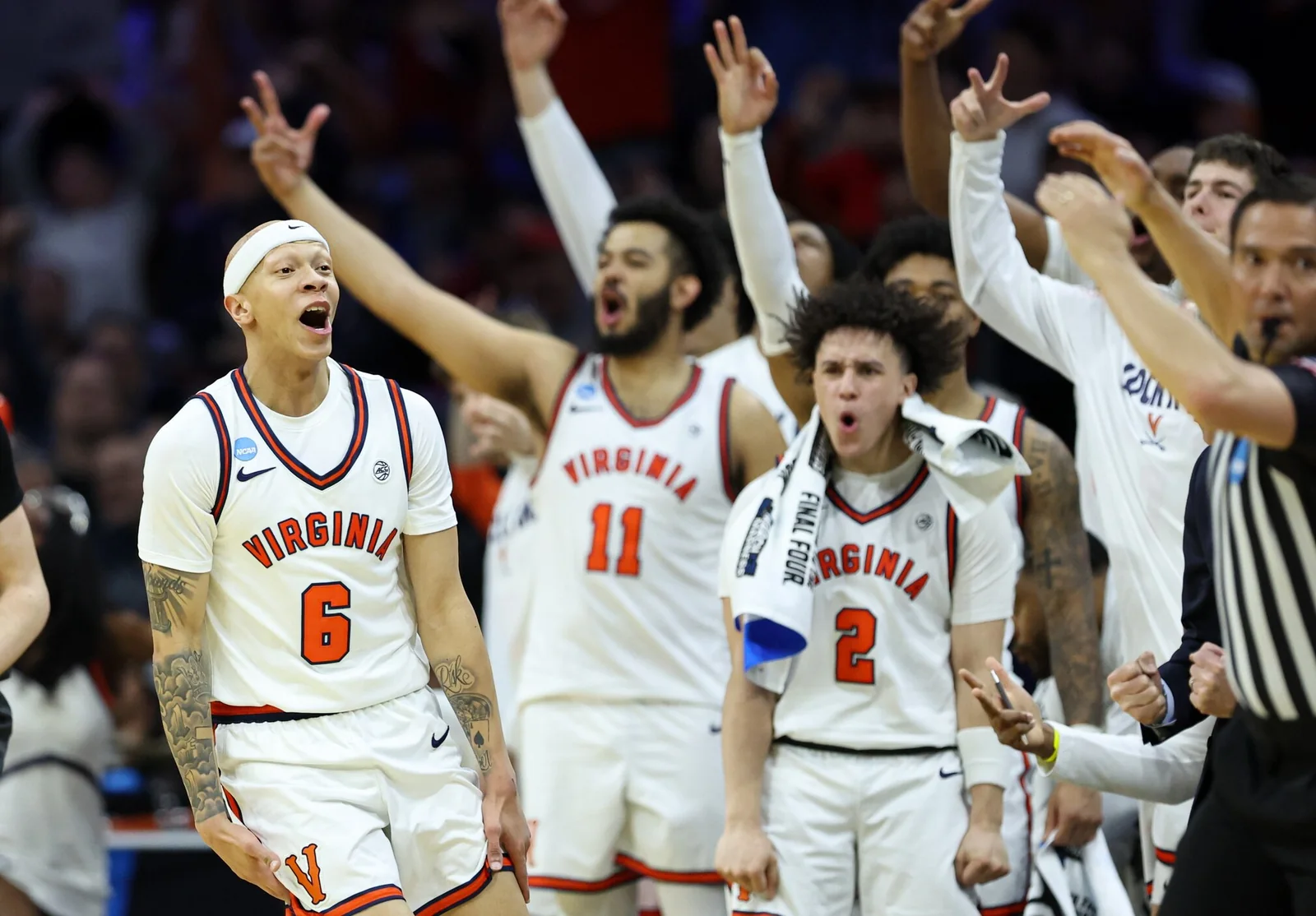
“Closer” still does not mean a campus home game. Men's first- and second-round contests are generally neutral-site events, even when one fan base can drive and the other must fly. Proximity can shape crowd share, sleep and travel recovery; it does not change the court dimensions or award the host school's regular home setup.
Balance and rematch rules can move a team off its ideal line
The cleanest bracket would follow the true-seed list without adjustment. The real bracket must also separate certain conference opponents, avoid early nonconference rematches where possible, respect venue restrictions and prevent a top seed from facing a severe home-crowd disadvantage. A team cannot be placed at a facility where it played more than three times that season, excluding exhibitions and conference tournaments.
Conference restrictions depend on familiarity. Under the published men's procedure, teams that met three or more times cannot meet before the regional final; teams that met twice cannot meet before the regional semifinal; teams that met once or not at all may meet as early as the second round. Exceptions can become necessary when a conference sends a very large group.
The committee also compares the true-seed values of the top four lines across regions to limit severe imbalance. If satisfying those principles requires a shift, a team may move one seed line, and two in extraordinary circumstances. That is why the bracket number can differ from the exact national rank without implying a hidden reevaluation. Placement solved a map problem after seeding solved a ranking problem.
Fan takeaway: geography is worth noting as a marginal edge, not a substitute for basketball. A short trip cannot fix weak ball security against pressure or a poor defensive-rebounding matchup. It can, however, reduce disruption and turn a neutral building into a more comfortable environment.
From the First Four to the 2027 Opening Round
How the 68-team First Four worked through 2026
From 2011 through 2026, the 68-team men's field opened with four games involving eight teams. Two games matched the lowest-seeded automatic qualifiers, usually feeding No. 16 slots. The other two matched the last four at-large selections, often feeding No. 11 or No. 12 slots. The winners advanced into the round of 64; they were not reseeded after the result.
“First Four” sometimes sounded like a preliminary event outside the real tournament, but those were official NCAA tournament games. Their winners could keep advancing through the same regional path as everyone else. The extra game created competing effects: a team gained immediate tournament rhythm and proof that its rotation worked under pressure, yet lost recovery and preparation time before facing its next opponent.
The correct interpretation is matchup-specific. A deep, physical team winning Tuesday may handle the turnaround better than a short rotation surviving overtime on Wednesday. Momentum is real as an experience; it is not a magic statistic that cancels fatigue, travel or a poor style matchup.
What the 76-team bracket changes in 2027
The 2027 field moves from four First Four games to 12 March Madness Opening Round games. The 12 lowest-seeded at-large teams play one another, and the 12 lowest-seeded automatic qualifiers do the same. That means 24 teams—nearly one-third of the field—must win before entering the traditional 64-team bracket.
The NCAA procedure pairs adjacent teams near the bottom of each group when other principles allow: the last at-large team against the second-to-last, then the third-to-last against the fourth-to-last, and so on. The automatic-qualifier games similarly work upward from seeds 75-76, 73-74 and the other bottom pairs. Travel can influence placement along the same line.
The winners' next destinations are built into the bracket. There is no fresh draw, and the opening result does not earn a more favorable seed. An advancing team inherits the printed first-round slot and opponent. That makes the opening games part of one continuous map, not a qualifying tournament whose survivors are later added by hand.
For a bracket player, the added stage creates 12 more decisions and more uncertainty in the printed first-round field. For a team, it creates an extra elimination test. The main 64-team geometry remains unchanged, but more participants must pay an additional game, scouting and recovery cost to enter it.
The round-by-round path to the Final Four
First round through the Elite Eight
Once 64 teams remain, the bracket halves the field with every round. The first round cuts 64 to 32. The second round cuts 32 to the Sweet 16. Regional semifinals reduce that group to the Elite Eight, and each regional final produces one champion. The “Elite Eight” is therefore not a separate eight-team mini-bracket; it is four regional championship games played within the lanes already printed on Selection Sunday.
A team placed directly in the round of 64 must win four games to become a regional champion: first round, second round, Sweet 16 and Elite Eight. An Opening Round participant needs a fifth victory before that sequence. Fans can use the site's today's college basketball games page to translate the static bracket into the actual daily slate.
The workload changes after the opening weekend. The first two games arrive quickly at one site, often forcing a staff to prepare for two opponents with limited live turnaround. Sweet 16 teams receive a longer scouting window, but the average opponent quality rises and weaknesses are easier to target. A shallow backcourt that survived one press or a small front line that conceded offensive rebounds can expect the next staff to test the same seam.
How four regional champions become one national champion
The four Elite Eight winners are the Final Four. They do not receive new seeds and they are not redrawn. The semifinal pairings were determined when the No. 1 seeds were assigned to regions during bracket construction. Each regional champion carries its original path into the national semifinal, regardless of whether it was a No. 1 seed or a lower-seeded survivor.
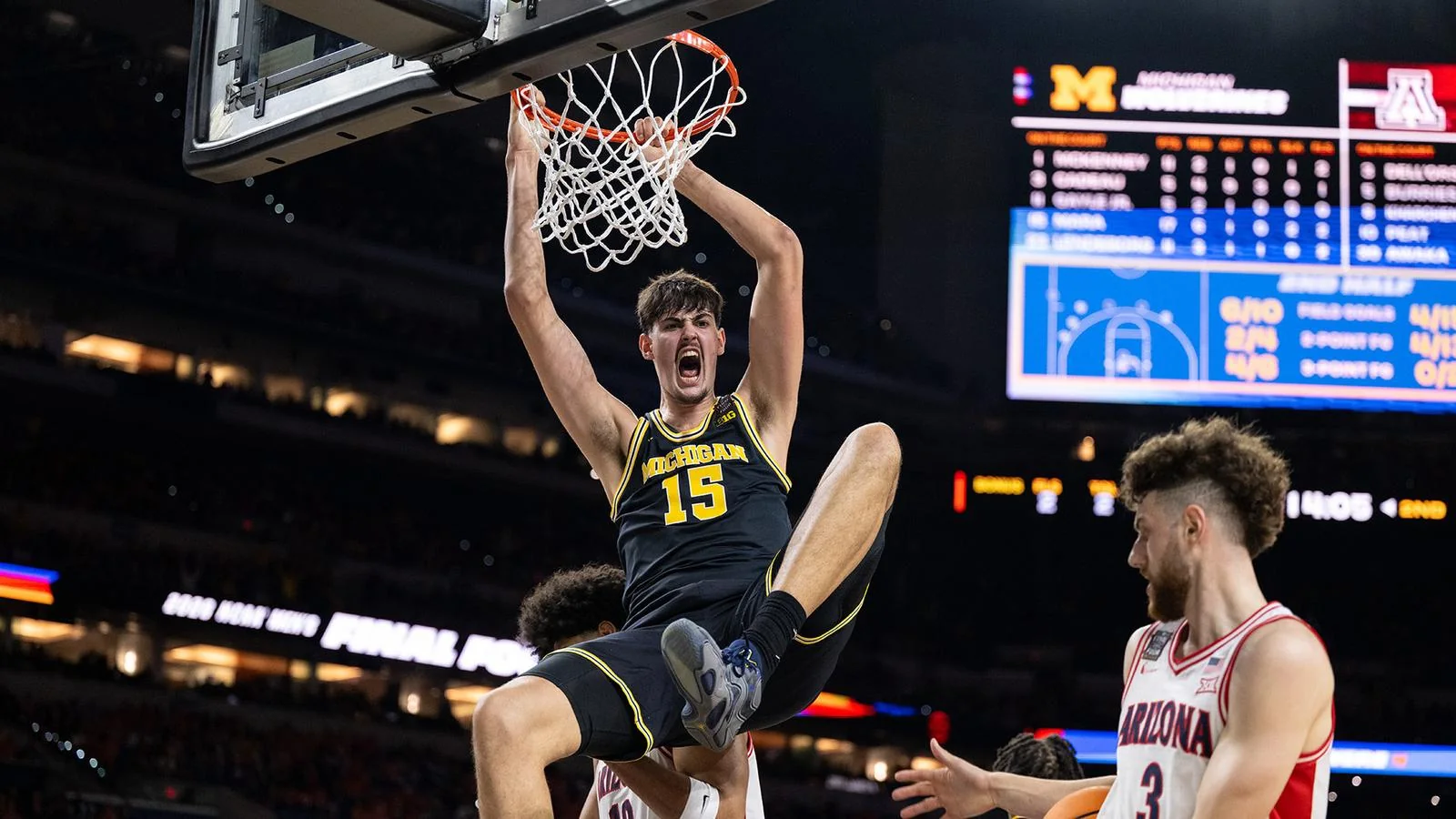
Two semifinal winners meet in the national championship. A team that entered the 64-team bracket directly needs six consecutive victories; an Opening Round team needs seven. That arithmetic explains why a plausible upset team is not automatically a plausible champion. Each additional round demands another matchup answer, another healthy rotation and another night of shot-making under pressure.
For 2027, the official schedule sends the Final Four to Detroit on April 3 and April 5. The location changes by year; the competitive funnel does not. Four regions create four champions, the semifinals create two finalists, and the title game leaves one team standing.
How a serious fan should read and fill the bracket
Start with possession matchups, not seed-line folklore
Use the seed as a starting estimate, then ask how possessions will be decided. Per-possession offensive and defensive efficiency travel better across tempos than points per game. A team scoring 82 while playing fast is not automatically a stronger offense than one scoring 74 in fewer possessions. The same adjustment applies to defense.
Next, test the four pressure points that repeatedly end tournament games: turnovers, shot quality, offensive rebounds and free throws. A pressing underdog needs live-ball mistakes, not merely a season turnover rank. A small favorite must finish defensive possessions against a strong offensive-rebounding frontcourt. A team built around rim attacks needs enough spacing to reach the paint against a compact defense. A high three-point attempt rate creates comeback power and miss-driven volatility.
Historical seed patterns are useful priors. No. 12 seeds won 35.37% of their games against No. 5 seeds from 1985 through 2026. That supports looking for a credible 12-over-5 pick; it does not require selecting one in every region. The actual teams still decide whether the old pattern fits.
Separate upset potential from six-game championship viability
An upset candidate needs one favorable path. A champion needs several. A lower seed with one elite guard and a difficult zone may be ideal against a particular first-round opponent, then run into a second-round team with patient ball movement, offensive rebounding and multiple zone shooters. Picking the first upset does not obligate you to carry that team to the Final Four.
For title choices, look for multiple methods of winning. Can the offense score when transition disappears? Can the defense survive five-out spacing and a post mismatch? Is there enough ball handling to protect a late lead, and enough lineup depth to absorb foul trouble? A team does not need to be perfect in every category, but a single narrow identity becomes easier to scheme against over six games.
Finally, accept uncertainty. The longest publicly verifiable perfect men's bracket opened with 49 correct picks in 2019; perfection is not a reasonable standard for analysis. Record why you prefer a matchup, distinguish confirmed availability from rumor, and update your understanding with the site's men's college basketball scores as games finish. A good bracket is an evidence-based forecast that understands its own risk, not a promise that March will cooperate.
Sign in with Google to join the discussion.