First identify the recruiting list you are reading
College basketball recruiting rankings describe incoming talent. An individual prospect list evaluates players; a team recruiting list evaluates a school's collection of recruits. Neither automatically tells you which college team will win the most games. Before comparing two numbers, identify the sport, men's or women's competition, recruiting class, publisher and type of ranking. Those labels establish what the number can reasonably answer.
This distinction matters when searching ESPN recruiting rankings. A boys' player board, a school-class article and a college preseason poll can appear together, although they count different populations. Read the page heading and active filters rather than relying on the search headline. A familiar school logo beside a prospect usually describes his listed destination, while the row still belongs to the individual player.
Class years are not college season rankings
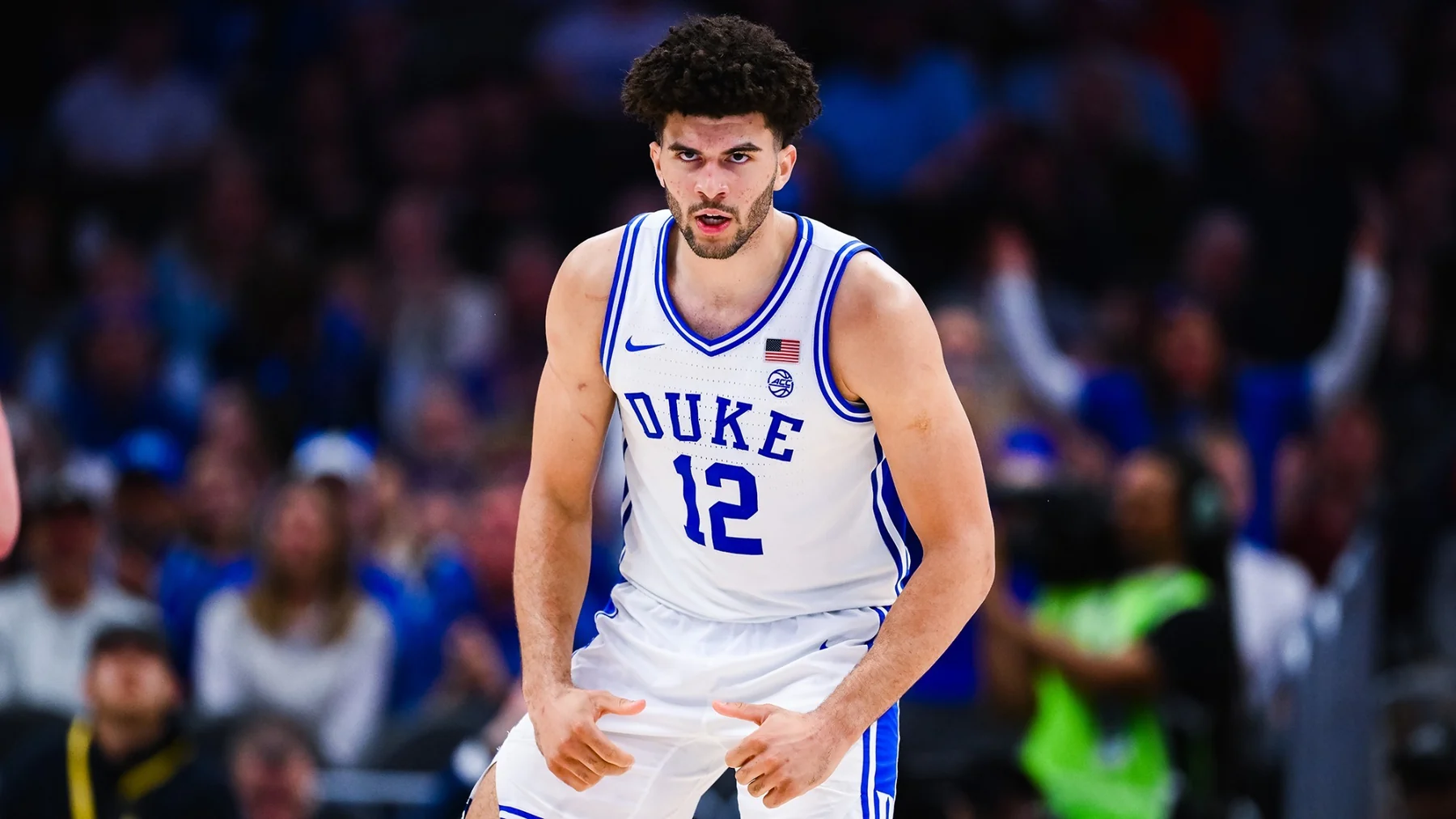
A recruiting class year labels the prospect cohort. A college season spans two calendar years. Duke's September 2024 announcement, for example, described Cooper Flagg as a freshman entering 2024–25 and the top-rated player in the 2024 recruiting class according to ESPN and 247Sports. His recruiting label and his college season were compatible, but they were not the same date field.
For a future class, confirm the intended college entry year before imagining the player in next season's starting lineup. A reclassification can change that timetable, and the published profile needs to reflect it. Comparing a current college roster with a future recruiting board without checking the year can make a team appear to have added someone who is still in high school.
Individual and team boards count different things
An individual board orders prospects within its chosen population. Position and state ranks narrow that population further. The Rivals 2027 basketball industry comparison page, checked October 20, 2026, displays national, position and state placements separately. A guard's position rank therefore cannot be substituted for his national rank when describing a school's class.
A team-class list instead groups incoming prospects by school. Its score needs a definition: high-school recruits only, transfers only, or an explicitly combined product. Do not assume every page with a college name includes the same additions. The label beside the ranking matters as much as the school beside it.
For rankings of teams already playing college basketball, use the separate guide to college basketball ranking systems. Recruiting evaluation is useful background for those teams, but a prospect board cannot replace evidence about their current offense, defense or results. Establishing that boundary makes the rest of a recruiting discussion much more useful.
Stars summarize an evaluation; they do not explain a player's game
A star label compresses an evaluation into a broad category. The numerical rating provides another expression of the grade, while the national ranking gives the player's place relative to other prospects. These fields are connected, but they are not interchangeable. A player can change places because another prospect rises, even when the original player's own game has not suddenly deteriorated.
Keep the publisher attached to the label. Rivals' published industry methodology explicitly distinguishes basketball from football and says its final industry distribution reaches 14 five-star basketball prospects. That is a definition of its product, rather than a universal rule for every scouting service. Importing a football star count or assuming every publisher uses an identical cutoff creates a misleading comparison before any basketball has been discussed.
The timing also matters. An early evaluation has less evidence than a final assessment after additional competition and development. A rating change can reflect new information, a revised projection or a changing comparison group. It does not automatically mean a college coach discovered something everyone else missed, and an old screenshot cannot establish a prospect's current place.
To make a star label useful, translate the scouting report into possessions. Can a guard create an advantage against a set defense, or is most of his production coming in transition? Does a wing's shooting make defenders stay attached away from the ball? Can a center defend ball screens without opening the rim? These questions describe possible college responsibilities; a single category cannot tell you which assignment a coach will trust immediately.
Flagg provides a concrete example of the value beyond the label. Duke's completed 2024–25 statistics list 19.2 points and 7.5 rebounds per game, plus 156 assists in 37 appearances, or 4.2 per game. Those college results demonstrate scoring, rebounding and creation together. Calling him a former five-star prospect alone would leave out much of the basketball explanation for his impact.
That successful transition does not make every highly rated forward an equivalent player. One might need the ball to create; another might finish plays, screen and protect the rim. Two recruits with the same star category can therefore require very different teammates. The useful follow-up is to name the skill that should survive against older, stronger college opponents and the skill that still needs proof.
When watching an early college game, test that specific expectation. Track the quality of the decisions after a second defender arrives, the ability to finish defensive possessions with a rebound, or whether the shot remains available against a closeout. A few makes or misses are a small sample. Repeated possession-level responsibilities provide a better bridge between a recruiting assessment and an actual rotation role.

How a team recruiting ranking combines individual prospects
A team recruiting ranking takes a collection of individual evaluations and produces a school-level comparison. That extra step matters. The number of additions, their ratings and the publisher's treatment of class size can produce a different ordering from simply sorting schools by average prospect grade. Read the score column separately from the average column, and retain the name of the product you are comparing.
Quantity and elite talent can move the score differently
The Rivals 2025 basketball team page offers a clear historical illustration. Its displayed table, carrying a February 3, 2026 update, places Arizona above Duke on score despite Duke's higher displayed average rating. These are figures from that specific recruiting-class page, checked October 20, 2026; they are not a prediction for the 2026–27 college season.
| 2025 class | Listed commits | Displayed average rating | Displayed score |
|---|---|---|---|
| Arizona | 7 | 94.14 | 97.500 |
| Duke | 5 | 96.60 | 97.250 |
The comparison demonstrates why “higher average” and “higher class score” cannot be used interchangeably. It does not, by itself, prove that adding any extra recruit always improves a score. Nor should a fan reverse-engineer an entire formula from two rows. Use the publisher's definition when describing how its calculation works; different services and different products need their own explanation.
For a basketball judgment, add a second question: how many jobs must this class fill? A school replacing several rotation players has a different need from a school retaining its main creators and adding one elite center. The class table compares the incoming group. It cannot measure the value of every player who stayed, and it does not assign the newcomers their eventual minutes.
A service ranking is different from an industry blend
ESPN's evaluation is one service's assessment. A blended industry product combines outside evaluations according to its own method. Rivals explicitly says its basketball industry ranking gives equal weight to Rivals, ESPN and 247Sports, describing each as 33 percent. That is separate from claiming all three services agree on each prospect.
Darrell Davis illustrates the difference. His 2027 industry comparison profile, checked October 20, 2026, displayed national placements of No. 55 for Rivals, No. 61 for ESPN and No. 31 for 247Sports, alongside an industry rank of No. 44. These are the service values shown on Rivals' comparison page, rather than independently reproduced live lists. The spread is more informative than treating one number as an undisputed official position.
Do not average the three rank integers and present the answer as a reconstruction of the proprietary industry calculation. Ratings and ranks have different roles, and displayed precision does not remove evaluation uncertainty. When arguing that a school landed a top-50 prospect, specify the service and date; when discussing the player, explain which basketball tools make the evaluation interesting.
Why a better recruiting class is not automatically a better college team
Recruiting success adds options, but the college team includes more than that year's newcomers. Duke entered 2024–25 with a six-player freshman class, returning starters Tyrese Proctor and Caleb Foster, and four transfer additions. Its school preview identified Sion James from Tulane, Maliq Brown from Syracuse, Mason Gillis from Purdue and Cameron Sheffield from Rice. A freshman-class ranking could describe the first group without fully describing the team Jon Scheyer had to assemble.
The distinction is especially useful when two schools recruit different numbers of freshmen. The school with a smaller high-school class might be retaining established starters or adding experienced transfers. Conversely, a high class ranking might accompany substantial losses. To judge improvement, compare the expected incoming responsibilities with the responsibilities that disappeared, rather than treating every addition as pure gain.
Fit, returning players and transfers change the roster
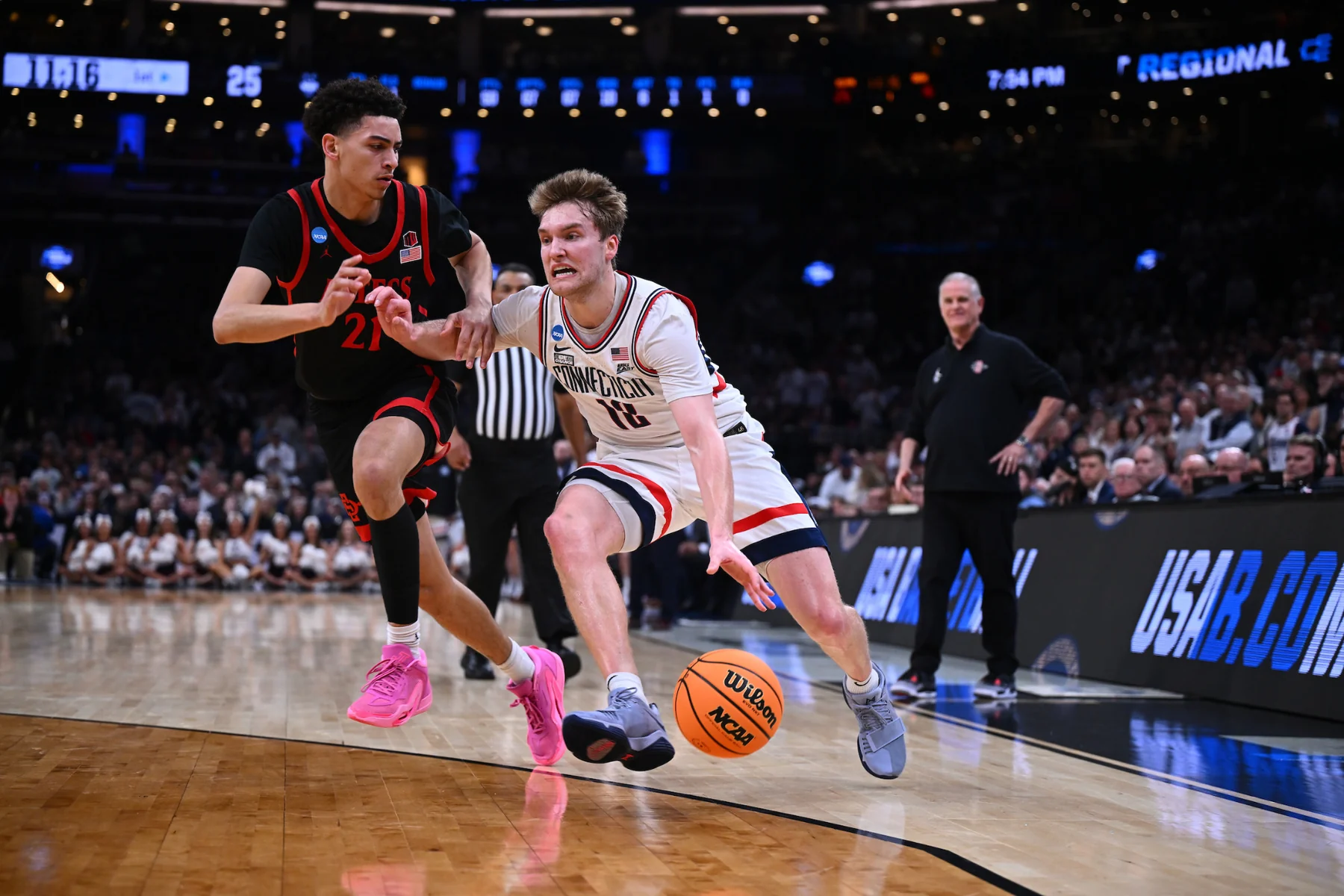
UConn's 2023–24 team supplies a different example. The school's March 2024 feature described freshman Stephon Castle and experienced transfer Cam Spencer fitting alongside Tristen Newton, Alex Karaban, Donovan Clingan, Hassan Diarra and Samson Johnson. Their arrival years and experience levels differed. The Huskies subsequently beat Purdue 75–60 in the 2024 championship game. One year's freshman score alone could not summarize that collection.
That history supports a practical reading method, rather than a universal claim that transfers beat freshmen. Begin with the players who can initiate offense against pressure. Then identify reliable shooting around them, the players who create second chances, and the defenders who can protect the rim without sacrificing every perimeter matchup. An elite freshman may solve one of those needs immediately. A returning player may already solve another.
Consider a hypothetical class containing two highly rated centers who both operate near the basket. Their individual talent can raise the class's reputation while leaving a lineup question: who stretches the defense if both play together? A lower-rated perimeter addition might offer a more natural fit around an established interior scorer. That is a tactical possibility to investigate, not proof that the less celebrated prospect is more talented.
Available minutes sharpen the analysis. A recruit joining a veteran backcourt may have a narrower opening role than a similarly rated player joining a rebuilding roster. Limited early scoring can reflect opportunity, defensive assignments or the coach's rotation choices. Evaluate whether the player is handling his actual task before treating his box-score average as a verdict on the original scouting report.
Finally, separate projected fit from confirmed availability. A roster still needs eligible players who can participate when the games begin. The existing 2026–27 eligibility guide addresses that additional question. Recruiting rank is a starting estimate of talent; the complete roster, its complementary skills and its available rotation determine what a fan can reasonably expect to see.
Read commitments, signing news and roster arrivals separately
A recruiting ranking can move before the corresponding college roster exists. Treat a prediction about a destination, a reported choice, an official signing announcement and a later roster listing as separate pieces of information. They may eventually describe the same player at the same school, but they were produced at different stages and do not establish identical facts.
The NCAA's current recruiting information discusses signing periods for written offers of athletics aid and notes that signing rules vary by sport. For a fan, the practical implication is to read what a report actually confirms. A recruiting prediction describes an expectation. A school's signing release documents its announced addition. Neither should be silently rewritten as a guarantee that a player will start the first conference game.
Duke's November 21, 2024 announcement makes the timeline tangible. It announced a signed class of 2025 that included Cameron and Cayden Boozer. The subsequent 2025–26 official roster listed both as freshmen. The first page supported a statement about the recruiting class at that date; the second supplied later evidence of their place on the college roster. A reader checking arrivals should look for that later evidence rather than stopping at an old recruiting headline.
Keep the ranking's timestamp as well. The same Duke signing report used conditional language about where the class would finish the cycle. That is a useful editorial habit: a class can lead during one stage without every remaining decision and evaluation having been completed. An early lead is evidence of recruiting progress, not permission to erase the rest of the calendar.
- Confirm the population: men's basketball, the correct class year and the intended individual or school-class product.
- Record the evaluation: service, rating, national rank and the date; retain position rank as a separate field.
- Check the destination: distinguish a prediction from a player announcement and a subsequent official school update.
- Check the roster: use the relevant season, then look for current availability information before projecting minutes.
- Explain the basketball task: identify the creation, shooting, rebounding or defensive responsibility the newcomer could actually fill.
The men's college basketball team directory helps you move from recruiting discussion to the program you intend to follow. Once games begin, the useful comparison becomes more specific: is the recruit earning the expected role, and how does that role work with the other four players on the floor? Stars and class scores provide context for that question. Actual possessions supply the next evidence.
Sign in with Google to join the discussion.