Where the 2027 player-of-the-year race stands
The 2027 men's college basketball player-of-the-year race is an open 2026–27 competition. As of November 13, 2026, the useful official starting points are preseason watch lists, not a winner or a final ballot. The Atlanta Tipoff Club published its 50-player men's Naismith Trophy watch list on November 2. NABC announced its separate 20-player Division I preseason list on October 29.
Those announcements establish who received early recognition from each organization. They do not attach winning probabilities to candidates or put the players in a predicted finishing order. An athlete appearing on both lists has recognition from two award processes; he has not earned two extra wins in a common standings table.
The season label matters because the calendar can make an older story look current. A national award presented in April 2026 belongs to the previous 2025–26 campaign. A candidate named in November 2026 is building a case for an award presented in 2027. Old scoring averages remain useful background only when their season and team stay attached.
This early watch concentrates on the basketball that can turn recognition into a convincing candidacy: responsibility within a strong offense, reliable decision-making, creation of extra possessions and defensive influence. It uses official candidate status and clearly identified season evidence. It is an editorial guide to what deserves attention, rather than a live statistical leaderboard or an assertion that every candidate has already supplied the same amount of evidence.
That gives the race a different purpose from a general talent list. The preseason player feature discusses ten prominent players and their roles. An award watch must also track the organizer, the stage of selection and whether a player's case survives new opponents and a changing role. An impressive first week can identify a compelling question; it cannot answer an entire season's award debate.
The confirmed field and the names shared with NABC
The ten players below are the focus of this article's comparison. They are a selected group, not the complete field and not a ranked Top 10. Each appears on the official men's college Naismith list. Nine also appear on the published NABC preseason list; Arkansas freshman Jordan Smith Jr. illustrates that the two initial fields are not identical.
- Thomas Haugh
- Florida; Naismith and NABC
- Alex Condon
- Florida; Naismith and NABC
- Rueben Chinyelu
- Florida; Naismith and NABC
- Jeremy Fears Jr.
- Michigan State; Naismith and NABC
- Tyler Tanner
- Vanderbilt; Naismith and NABC
- Flory Bidunga
- Louisville; Naismith and NABC
- John Blackwell
- Duke; Naismith and NABC
- Joaquim Boumtje Boumtje
- Duke; Naismith and NABC
- Tyran Stokes
- Kansas; Naismith and NABC
- Jordan Smith Jr.
- Arkansas; Naismith
The school column is part of the information, especially for transfers. A familiar name in an older Kansas or Wisconsin story cannot establish where he plays now. Use the current announcement's school and class when evaluating a new role. An earlier season's production can explain expectations, but it must not be pasted onto a different team as if it already happened there.
Recognition is not a ranked ballot
Appearing on both lists strengthens the statement that a player entered the season with national recognition. It does not say the organizations have assigned him the same weight, or that he leads someone named by only one. A preseason omission likewise does not establish a final eligibility ruling. Read each later announcement on its own terms rather than inventing a shared elimination bracket.
The name Naismith can introduce another confusion. The Naismith Basketball Hall of Fame's Julius Erving Award recognizes the men's small-forward position. The overall college Naismith Trophy discussed here comes from the Atlanta Tipoff Club. A player may attract attention in both settings, but a position-award watch list is not the overall trophy's finalist ballot.
For the full initial population, consult the official 50-player Naismith watch list. Keep team rankings separate too: the team rankings guide explains why a school's poll number cannot be substituted for an individual award vote.
Florida's three-player case starts with shared responsibility
Florida offers a useful early test of how to separate an individual's case from a productive frontcourt. Thomas Haugh, Alex Condon and Rueben Chinyelu are all confirmed candidates. Their familiarity helps create a credible team setting, but their award arguments cannot simply be bundled into one claim that Florida has three equally advanced contenders.
Haugh and Condon: measuring the offensive job
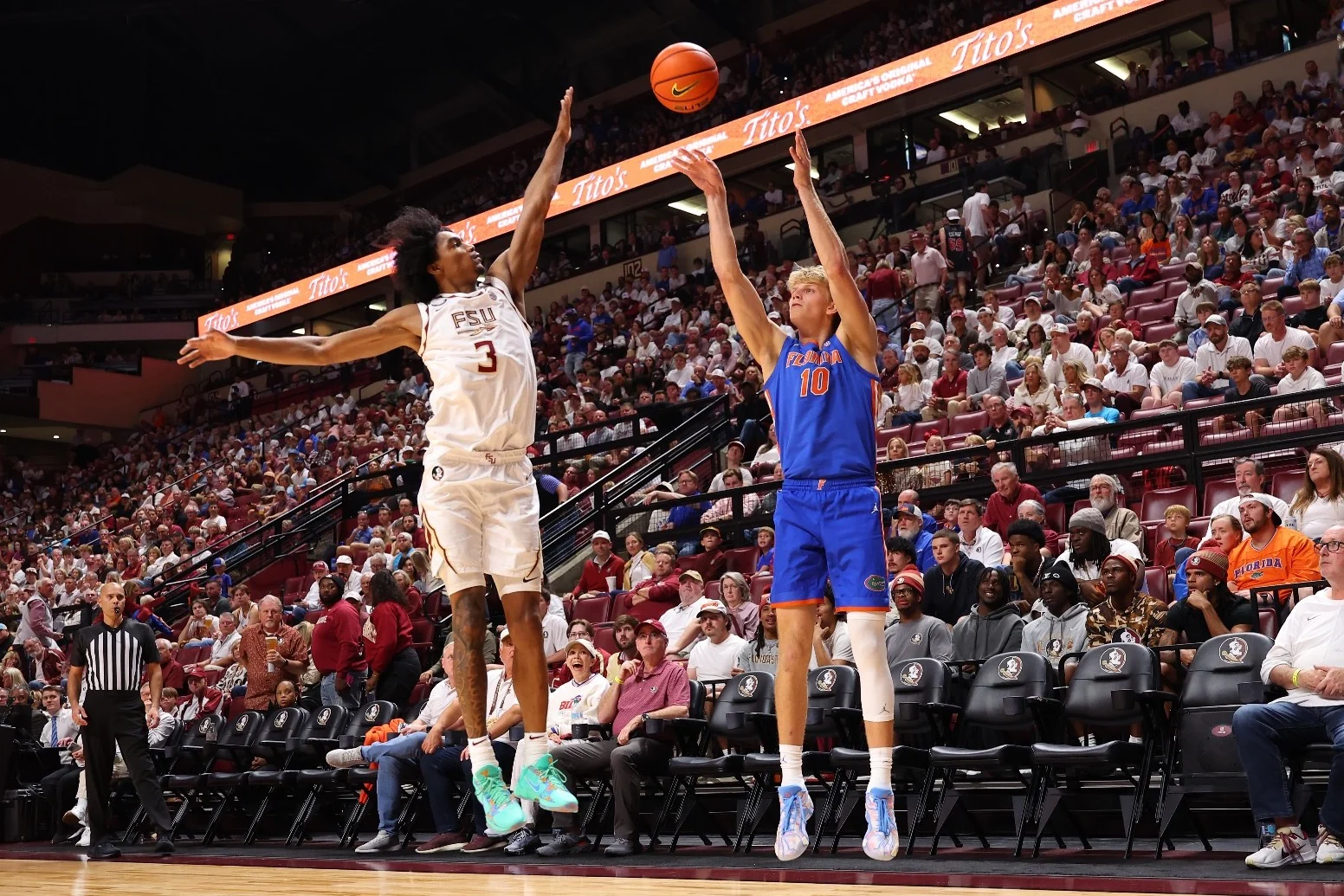
Through Florida's first three games, ending with the November 10 visit to Florida State, Haugh averaged 18.0 points and 9.0 rebounds. Condon stood at 10.7 points and 9.7 rebounds. Those are early 2026–27 figures, not their previous-season averages. The small sample is a starting description, not a dependable estimate of where either player will finish.
Haugh supplied a more revealing road example in the 81–72 win at FSU: 21 points, 10 rebounds, no turnovers and 10 makes in 12 free throws. The combination matters more than the headline total alone. Protecting possessions and converting at the line can sustain an offense when the opponent disrupts easier shots. His nine makes in 18 season three-point attempts are encouraging, but eighteen attempts cannot establish a lasting 50-percent shooting expectation.
Condon's line in that same game was nine points, ten rebounds and five turnovers. The rebounding contribution remains real; the lost possessions remain relevant too. For his award case to strengthen, watch how effectively he connects actions against pressure and whether his creation outweighs the mistakes. That is a basketball question about responsibility, rather than a conclusion drawn from one low-scoring night.
Chinyelu: turning defensive influence into an overall case
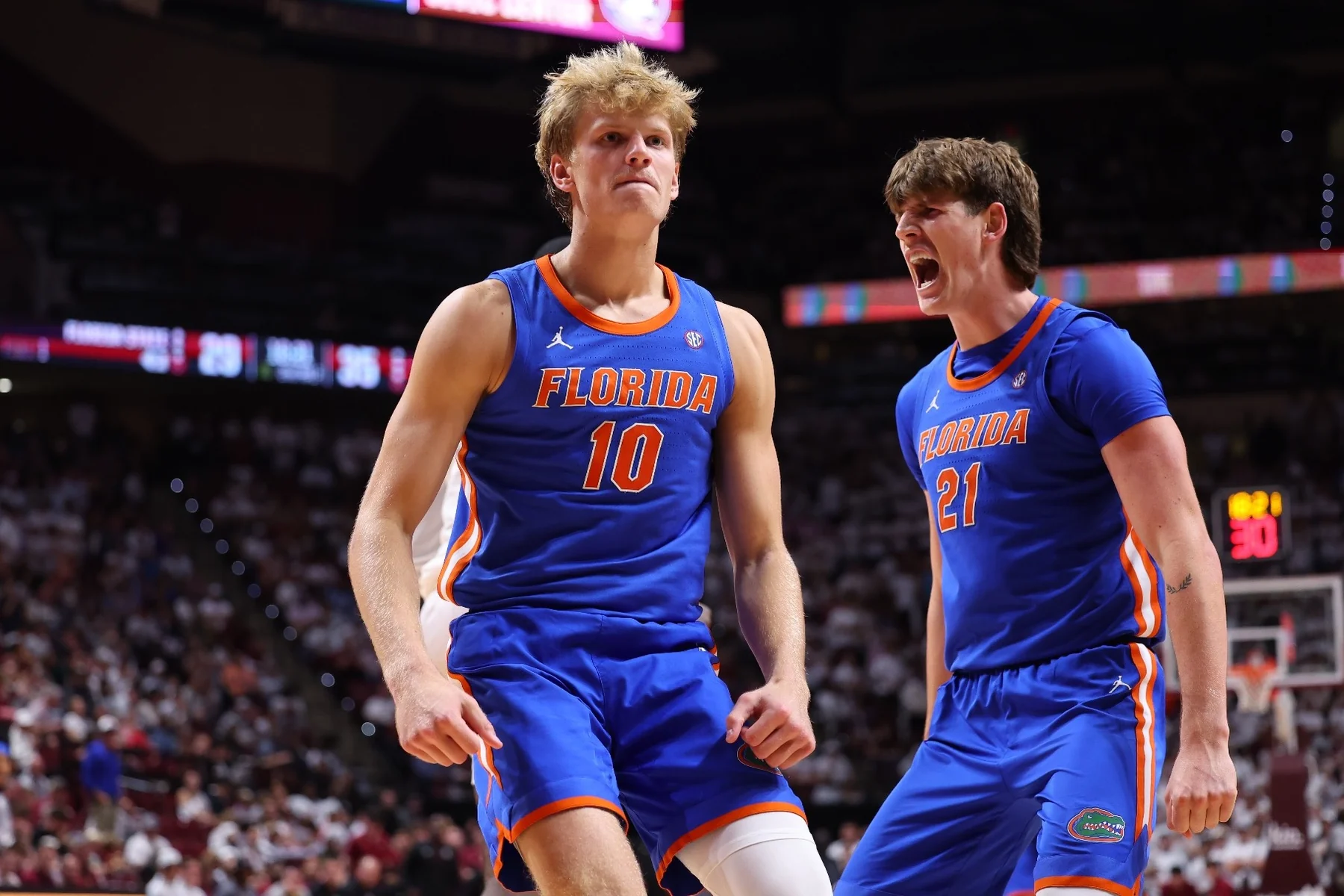
Chinyelu entered this season as the 2026 Naismith men's defensive player of the year, an award from the completed 2025–26 campaign. That establishes a substantial prior achievement, not an already-won 2027 honor. His first-three-game averages of 11.7 points and 9.3 rebounds describe the new campaign separately.
His overall-player argument requires attention to possessions the scoring column cannot explain. Watch whether he finishes defensive stops with rebounds, protects the rim without avoidable fouls and creates useful scoring opportunities around the basket. A specialist honor can bring those actions into the conversation; it does not automatically supply an overall award vote.
My early Florida priority is Haugh's offensive responsibility, with Chinyelu's defensive value and Condon's all-around connection work as different cases to test. That is an editorial watch order, not a claim about the organizers' private ballots. There is also no published automatic penalty for teammates sharing a list. The question is which contribution becomes clearest as the games get harder.
Lead guards have a different route to the award
A lead guard can advance an award case without leading every game in made field goals. The question is how often his decisions produce a useful possession, especially when a defense has prepared to stop the first action. Getting the ball to a teammate on time is different from accumulating a pass after the difficult work is already done.
Jeremy Fears Jr. and Tyler Tanner
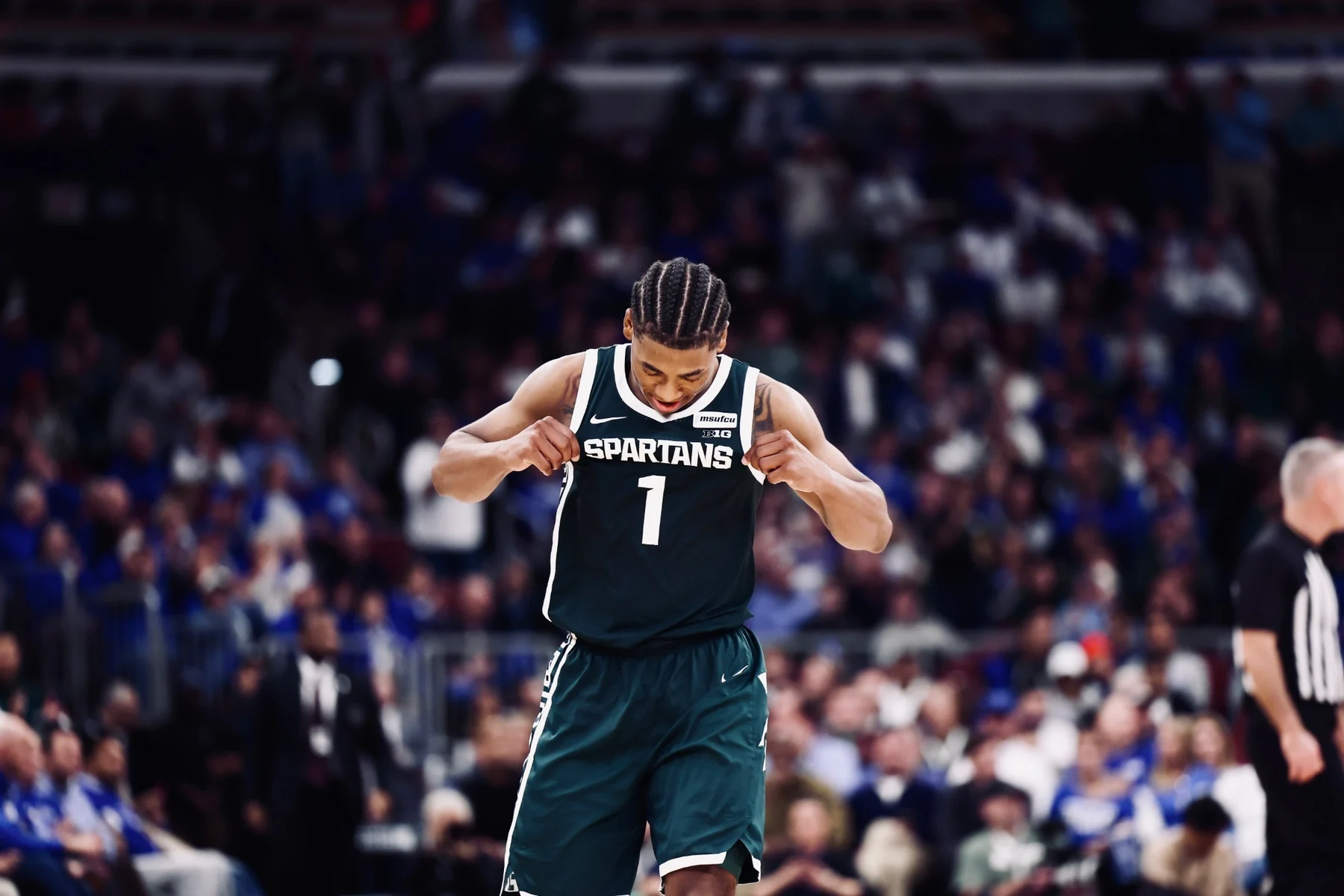
Jeremy Fears Jr. provided a concrete early example in Michigan State's 79–73 win over Duke at Chicago's United Center on November 10. The Spartans' official box score gives him 18 points, 11 assists, seven rebounds and four turnovers. He made three of nine field-goal attempts and twelve of seventeen free throws. This was a neutral-site 2026–27 game, not a recycled result from an earlier meeting.
The line explains why his case deserves attention beyond the shooting column. Eleven assists describe a substantial role in teammates' scoring, while repeated trips to the line offered another way to produce points. Four turnovers and five missed free throws remain part of the account. A strong creation game can contain correctable costs; ignoring them would weaken the evaluation rather than strengthen it.
For me, that makes Fears one of the most useful early candidates to watch against another prepared defense. The next test is whether the same command produces good attempts when the opponent changes its coverage or prevents easy transition chances. One prominent win establishes evidence, not a national award lead that the organizers have confirmed.
Vanderbilt junior Tyler Tanner offers another guard case. His official biography records 19.5 points, 5.1 assists and 2.4 steals per game in 2025–26; those are last season's averages. In a current-season example on November 5, he scored seventeen points and collected ten rebounds in a 74–51 win over Wake Forest. The two descriptions serve different purposes: one establishes the returning body of work, while the other shows a specific new-season contribution.
When watching Tanner, ask how his pressure affects an opponent's initiation and whether he still makes sound choices after creating a turnover. Steal totals do not reveal every missed gamble or off-ball assignment. His route to a compelling overall case is sustained influence at both ends, rather than treating a defensive statistic as a shortcut around the rest of the possession.
Transfers and freshmen need a season-specific reading
The national field contains established college production, production earned at a different school and players still building their first collegiate sample. These are different starting points. The reward for evaluating them carefully is a clearer prediction; the cost of mixing them is a list that sounds current while describing a roster that no longer exists.
A new school changes the comparison
Flory Bidunga is a Louisville junior in the 2026–27 candidate announcements. Louisville's award release describes his previous 2025–26 season at 13.3 points, 9.0 rebounds and 2.6 blocks per game, alongside the Big 12 defensive player award. Those numbers help explain the attention. They do not describe games already played for Louisville this season.
His case should be tested through the new possession environment. Rim protection depends partly on what penetration the perimeter allows; finishing opportunities depend on the timing and quality of the pass. Watch how often he creates a defensive stop without a foul, completes it with a rebound and supplies an efficient target at the other end. His former numbers establish ability, while current games must establish how that ability operates within this team.
John Blackwell supplies a perimeter version of the same problem. Duke's current biography identifies him as a senior transfer from Wisconsin and records 19.1 points per game in his junior season there. A Duke award case cannot simply inherit that scoring average. His shot volume, decision-making and spacing must be interpreted alongside the Blue Devils' current players. A smaller scoring total can accompany valuable work, while a larger total still needs an account of the possessions required to produce it.
First-year candidates have to establish their roles
Duke freshman Joaquim Boumtje Boumtje enters with official watch-list recognition and the ACC's preseason rookie selection. Those labels describe expectations. They do not remove the need to observe his offense, defensive positioning and ability to contribute when the game becomes more physical or the first scoring option disappears.
Arkansas freshman Jordan Smith Jr. already has a specific collegiate example: the school's game notes credit him with twenty points, four rebounds, three steals and two assists in his debut against UAPB, on seven makes in eleven field-goal attempts. That is useful evidence of a productive opening appearance. It is not an established season-long rate or proof that the same opportunities will remain available against every opponent.
For these candidates, the most useful next step is repetition across different settings. Does a freshman make the same sound decision when a defense takes away the preferred hand? Can a transfer maintain his defensive contribution when asked to cover a different action? Those questions can change an early award prediction more meaningfully than either a recruiting label or a single scoring peak.
The checkpoints that can change the race before April
The Naismith organization's published 2026–27 calendar supplies the next formal checkpoints. These are scheduled announcements, checked on November 13, 2026. A future date on that calendar does not establish that the corresponding selection has already happened, and another award can follow a different schedule.
- November 2, 2026
- Initial watch list: 50 players; already announced
- February 11, 2027
- Midseason team: 30 players
- March 19, 2027
- Semifinalists: 10 players
- March 25, 2027
- Finalists: 4 players
- April 4, 2027
- Winner announcement
Before the midseason announcement, a candidate will have encountered more settings than the opening schedule supplies. Nonconference matchups can reveal whether a guard handles a different kind of pressure or a big man remains influential against another style of frontcourt. The appropriate response to a difficult game is to examine what changed, rather than automatically discard the entire case after one result.
Conference play adds repeated scouting. An opponent may have more familiarity with a preferred action, and a second meeting can ask whether the player has an effective response. That is why a current award watch should record more than a sequence of point totals. The quality and repeatability of the contribution matter when judging what the next list could reasonably reflect.
Do not treat all award calendars as a common bracket. NABC says its 2027 head-coach vote follows the regular season and its result arrives during Final Four week. Wooden publishes a separate progression involving candidate lists, certification and a national ballot. Its stated process also permits a player absent from earlier lists to reach the final ballot.
Fan participation needs the same annual precision. A date for the Naismith winner announcement is not a fan-voting opening date. Wait for the specific 2027 instructions before assuming last season's window or rules will apply. The useful record keeps three things distinct: what has happened, what the organizer has scheduled and what your own basketball assessment predicts next.
Making an early prediction without pretending the race is settled
Among the candidates examined here, Fears is my early performance-based lean, with Haugh another immediate watch priority. That judgment rests on specific new-season evidence: a major creation role in the neutral-site Duke win, and Haugh's productive, low-mistake road game at Florida State. It does not claim either player leads a private award ballot or has already separated from every member of the national field.
The useful prediction is one that can change for a stated reason. Fears' ability to create good attempts must persist when opponents vary the coverage. Haugh's scoring efficiency needs a larger sample than his hot opening three-point run. Tanner's two-way activity, the Florida frontcourt's different jobs, and the adaptation of transfers and freshmen all supply reasons to keep the wider field in view.
Four questions that should change your pick
- Who creates the advantage? Identify the decisions that generate a good shot or force a difficult defensive choice. Separate the primary creation from the eventual finish.
- What does the contribution cost? Include turnovers, fouls and the attempts needed to generate a scoring total. A highlight can be excellent while the full game's possession balance is less convincing.
- Does it survive another setting? Look for evidence against different opponents and away from a comfortable home environment. One result is a test passed, not a universal answer.
- Has the pattern lasted? A large enough set of games can distinguish a developing role from a brief shooting spike. Keep the dates and season consistent when making comparisons.
Put that approach into a viewing plan. Find candidates through today's games, look ahead on the weekly schedule, and confirm the announced carrier on the TV guide. After watching, record one reason the case strengthened and one question still unresolved. That produces a more defensible award opinion than repeatedly sorting familiar names by reputation.
When the official field narrows, compare your assessment with what was actually announced. A credible November watch starts with real candidates, identifies a reason to prefer one case and leaves room for the season to supply a better answer.
Sign in with Google to join the discussion.