UNCW's 2026–27 men's basketball schedule starts at home against Mount Olive on November 2 and opens CAA play against Campbell on December 31. The Seahawks also host the Live Oak Bank Holiday Classic, with fixed games against St. Thomas, Princeton and Liberty. Those dates offer several distinct ways to evaluate the team: early road execution, consecutive-day adjustments and a league schedule with six repeat opponents.
This guide separates confirmed dates from basketball interpretation using official information checked on October 14, 2026. It explains what to watch as the rotation takes shape, rather than attaching predicted wins to an unpublished starting lineup. Where a time or broadcast remains unconfirmed in the relevant listing, check the specific matchup before making plans.
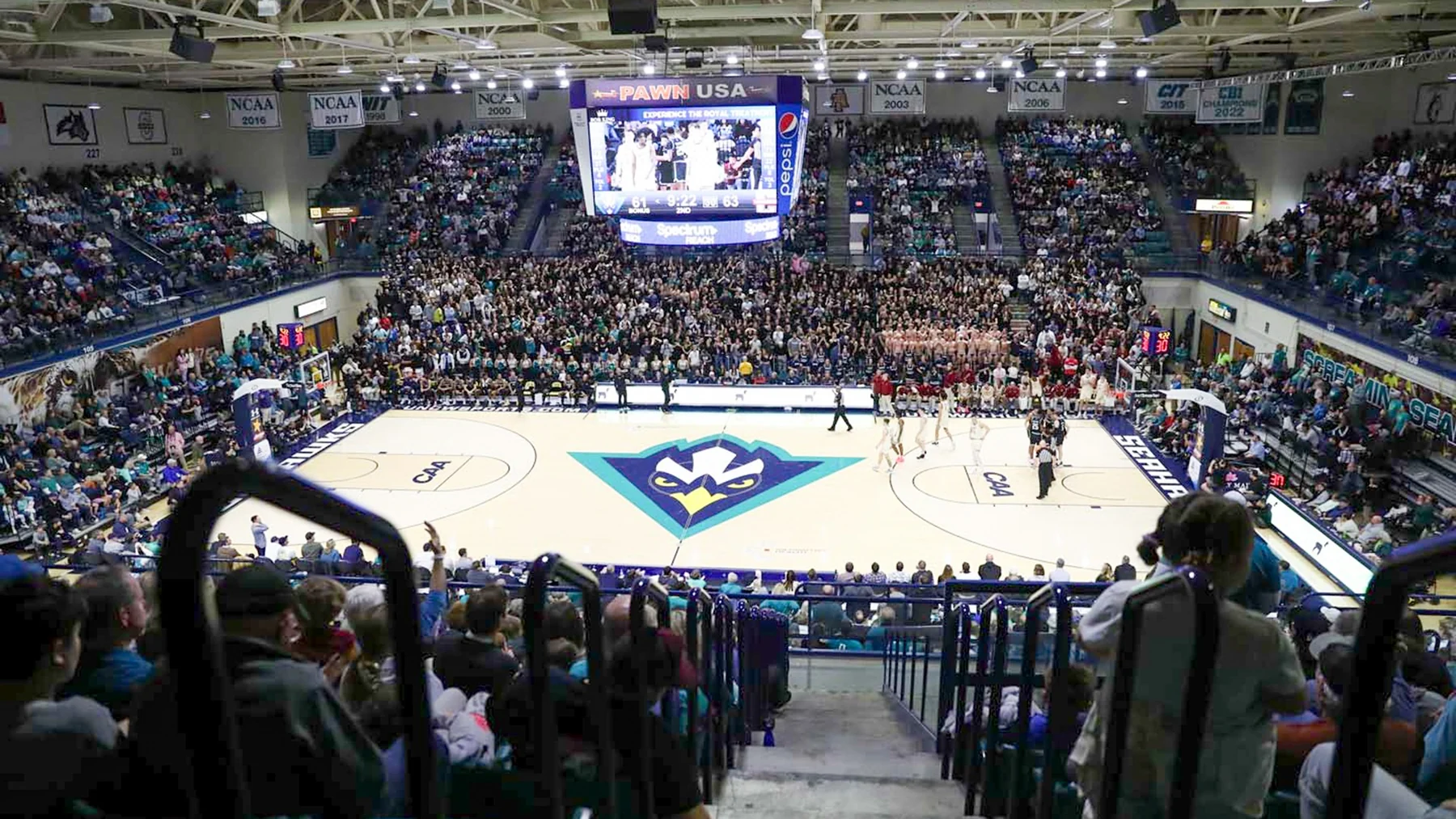
The cover shows an archived Trask Coliseum crowd photograph by John Crouch from UNCW's 2024 image collection, later used in a November 2025 announcement. It illustrates the home venue; it does not show an upcoming 2026–27 game or establish a result. The historical match examples below are also labelled separately from this season's schedule.
How to read UNCW's 2026–27 calendar
UNCW opens its regular season against Mount Olive at Trask Coliseum on Monday, November 2, at 7 p.m. Its first CAA game is also at home: Campbell visits on Thursday, December 31. Those dates establish the two separate questions a schedule analysis should answer. The November and December games show how the Seahawks develop their rotation; the conference games determine their position within the league.
The official UNCW calendar also includes October exhibitions. Lees-McRae on October 11, the trip to High Point on October 17 and UNCG on October 24 belong to that preparation period. They should not be counted as regular-season wins or losses. This guide uses the published schedule available on October 14, 2026; it does not turn an exhibition listing into a result.
| Stage | Published landmark | What it means |
|---|---|---|
| Regular-season opening | November 2: Mount Olive at UNCW | First regular-season home game |
| Home tournament | November 25, 27 and 28 | Three UNCW games in the Holiday Classic |
| Conference opening | December 31: Campbell at UNCW | Start of the CAA record |
| Regular-season finale | March 2: Elon at UNCW | Last scheduled game before the conference tournament |
Another important distinction concerns the Holiday Classic. Trask hosts games between visiting teams as well as UNCW's own matchups. A fixture appearing on a host's calendar does not necessarily mean the Seahawks are playing. Their three opponents are St. Thomas, Princeton and Liberty; the other tournament fixtures describe activity in the building.
The CAA's conference announcement places the final home date against Elon on Tuesday, March 2. Between the opening and closing dates, the useful unit of analysis is a sequence of games rather than an isolated opponent. Home and road combinations, recovery days and repeated league matchups will reveal more about UNCW's consistency than the name on one November ticket.
The Holiday Classic is a home tournament with a fixed slate
The Live Oak Bank Holiday Classic gives UNCW three games in its own building during Thanksgiving week. The Seahawks face St. Thomas on Wednesday, November 25, Princeton on Friday, November 27 and Liberty on Saturday, November 28. The published home calendar lists those starts at 7 p.m., 3 p.m. and 3 p.m., respectively, in Wilmington's Eastern time zone. There is no UNCW game on Thanksgiving Thursday.
The host's event announcement describes a round robin. Every team has a fixed slate against the other three participants. Winning the opening game does not send UNCW to a newly determined semifinal, and losing it does not change the Friday opponent. That certainty matters for preparation: the coaches can distribute opponent work across the week before the first tip rather than wait for a bracket result.
It also changes how supporters can follow the event. Watching Liberty play Princeton on Wednesday supplies a preview of two upcoming UNCW opponents. That is a useful opportunity to observe personnel and substitution choices, although one afternoon's shooting percentage should not become a forecast. The opponents will also have time to study UNCW, so the hosts do not possess an exclusive scouting advantage.
Princeton and Liberty create consecutive-day preparation
Friday and Saturday provide the most compressed stretch. The practical questions concern how UNCW completes possessions and how quickly its players absorb corrections. If a missed box-out or an uncertain ball-screen assignment appears repeatedly against Princeton, there is limited time to practice the solution before Liberty. A clean first defensive action is less valuable if it produces an offensive rebound and another shot.
Liberty's tournament release provides useful historical context: the Flames finished 2025–26 at 26–8, won the CUSA regular-season title and reached the NIT's second round. St. Thomas finished that season 24–10 and also reached the NIT. Those are completed achievements by the previous teams, not promises about the current players or the outcome in Wilmington.
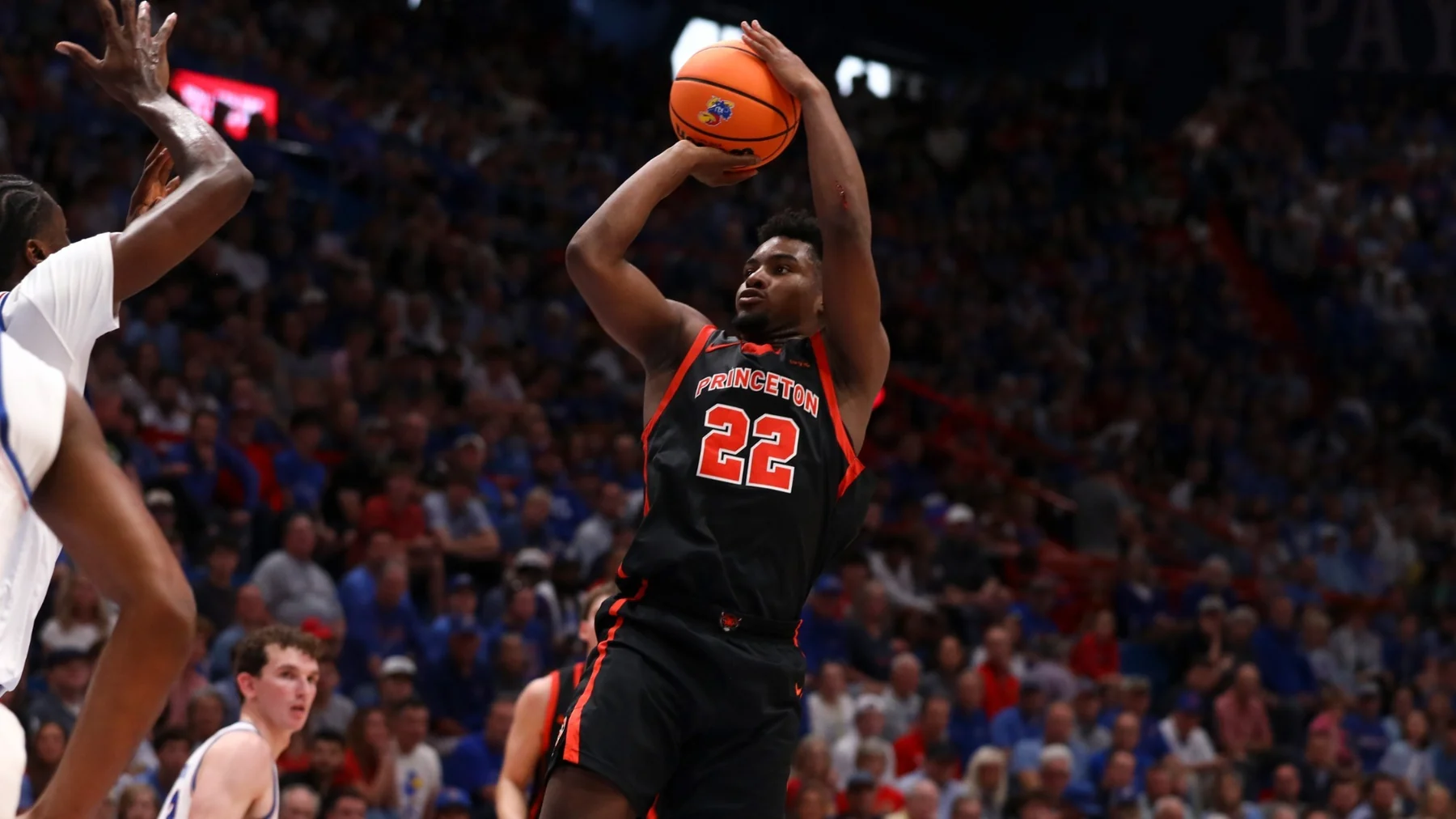
The Princeton announcement notes that its most recent meeting with UNCW was in 1998. That historical record explains why this matchup feels unusual; it tells us little about a possession in November 2026. A stronger evaluation follows the current guards' decisions under pressure, the quality of shots after the first pass and whether the bench maintains defensive communication. Three games in the same venue make those comparisons easier without eliminating the effects of fatigue or opponent quality.
The non-conference road games offer a different test
The first away game arrives quickly. East Carolina hosts UNCW on Saturday, November 7, at 2 p.m. The Pirates' official schedule identifies Williams Arena at Minges Coliseum in Greenville as the venue. With that game following the November 2 opener, the Seahawks get an early opportunity to compare their execution at home with their execution in another team's building.
UNCW then visits LIU in Brooklyn on November 18 and Norfolk State in Norfolk on November 21. That Wednesday–Saturday sequence differs from the Holiday Classic: the opponent and location both change. The test is whether the team can retain its defensive assignments and offensive spacing across those changes. The schedule alone cannot tell us how the staff will arrange travel, and it does not establish that one game is automatically harder because it is farther from Wilmington.
Marshall on December 2 offers a particularly useful historical comparison. The teams' previous meeting took place at Trask on December 3, 2025, when UNCW won 70–69. The official box score shows that the Seahawks made only 18 of 55 field-goal attempts but converted 29 free throws. That completed game illustrates how a team can survive a difficult shooting night by creating other scoring opportunities. It does not imply that the current group will draw the same number of fouls in Huntington.
For the return trip, look beyond whether UNCW shoots a better percentage. Are its drives forcing defenders to move, or ending in contested attempts without a passing outlet? Can the ball arrive inside before the defense is set? When the first action fails, do the guards preserve enough time to organize a second one? These observations distinguish repeatable offense from a result sustained by unusual free-throw volume.
The final non-conference road date is December 12 at Georgia Southern in Statesboro. The host's current calendar lists 5 p.m. at the Jack and Ruth Ann Hill Convocation Center, while UNCW's listing had not supplied a time when checked. That is a reason to recheck the matchup before traveling, rather than fill an empty time field from a previous season.
Together, these five away games provide a broader sample than one early upset or one poor shooting performance. Compare the Seahawks' turnovers that give away immediate transition chances, their defensive rebounding and the quality of late possessions. If those habits travel consistently, that evidence will be relevant when CAA play sends UNCW through paired road dates. If they fluctuate sharply, the calendar identifies the problem early enough for the staff to work on it before the league record begins.
The CAA race combines repeat opponents and paired road trips
The CAA's 18-game format gives UNCW nine home games and nine away games against all 12 other members. It is not a complete home-and-away league schedule. The league's opponent announcement divides the slate into six opponents played twice, three hosted once and three visited once. Those differences matter when comparing records across the standings.
UNCW hosts Hampton, Northeastern and Stony Brook without making return visits. It travels to Drexel, Hofstra and Monmouth without hosting them. A team with the same number of wins can therefore have reached that total through a different mix of venues and repeat opponents. Our guide to college basketball rankings explains why a raw record and an assessment adjusted for opponents answer different questions.
Campbell and Charleston are permanent repeat opponents
Campbell and Charleston are UNCW's permanent home-and-away opponents. Elon, North Carolina A&T, Towson and William & Mary complete the six repeat pairings for this season, according to the Seahawks' opponent release. Permanent status applies to the first two programs; it should not be extended to every team UNCW sees twice.
The Campbell return game on January 30 comes a month after the December 31 home opener. Charleston visits January 28, with the return meeting on February 27. Those gaps give both teams opportunities to change. The second matchup is a useful test of whether UNCW can respond to something the opponent exposed earlier, such as an uncomfortable switching assignment or a passing angle that repeatedly produced a turnover.
Towson's announcement confirms that UNCW returns to its home-and-away group after the programs met once in 2025–26. That adds another direct comparison across venues. A sweep would have a different meaning from two unrelated wins, but the schedule cannot establish who will earn either result.
The January and February trips compress preparation
| Away sequence | Published dates | Question to follow |
|---|---|---|
| North Carolina A&T; Elon | January 7; January 9 | Can early league habits travel? |
| Monmouth; Hofstra | January 21; January 23 | How quickly can the defense adjust? |
| Drexel; Towson | February 18; February 20 | Does possession quality hold late in the season? |
These sequences come from the published conference calendar. Their Thursday–Saturday rhythm leaves one intervening day. That does not prove a particular travel itinerary or fatigue level, but it does reduce the space for long practices between opponents. Clear defensive communication becomes especially valuable: an opponent should not need several possessions to discover that two Seahawks have interpreted the same coverage differently.
The January 21–23 trip follows home games against Towson on January 16 and William & Mary on January 18. Four games across eight calendar days ask the rotation to sustain its responsibilities through several scouting plans. Watch whether a reserve can complete an ordinary defensive possession and keep the offense organized, not simply whether he produces a spectacular scoring burst.
February's Drexel–Towson trip arrives closer to the end of the regular season. By then, repeated evidence matters more than an opening-night impression. A strong finish should include control of possessions when shots are not falling, reliable defensive rebounding and players who recognize the next action before the bench has to correct it. Those are the habits this calendar gives UNCW repeated chances to demonstrate.
What should change your view of this Seahawks team?
UNCW's previous postseason supplies two contrasting examples. On March 17, 2026, the Seahawks overcame a 14-point second-half deficit to beat Yale 68–67. The school's Yale recap describes Christian May's winning three-pointer with 34 seconds remaining. Four days later, Dayton's 16–2 run early in the second half helped turn the home second-round game into an 80–61 defeat.
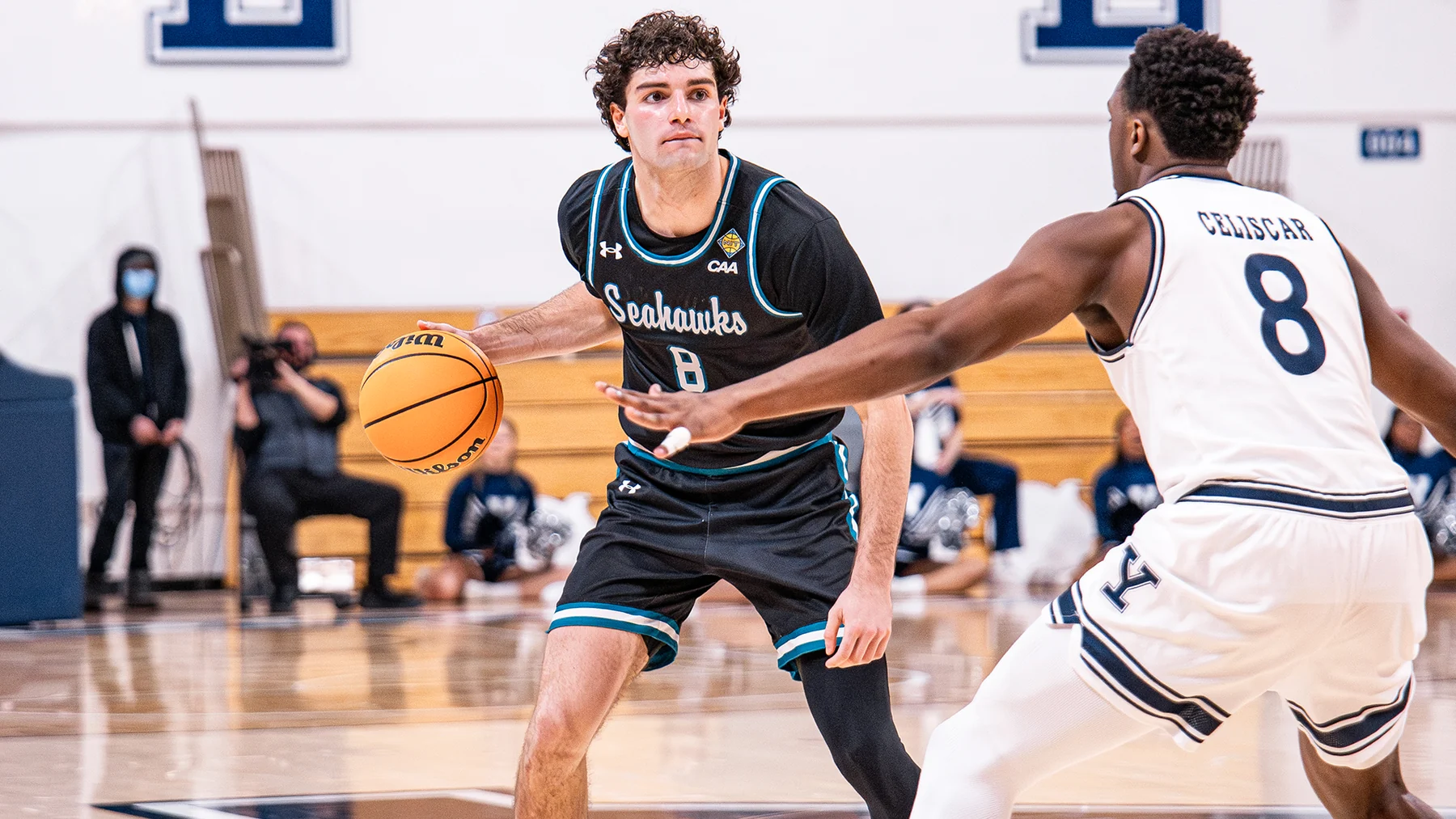
Those results resist a simple label. Calling the program a comeback team overlooks the Dayton loss; treating that loss as its permanent ceiling overlooks the Yale response. The more useful question is which mechanisms the new team can reproduce. Can it keep creating a usable shot after conceding several baskets? Can it stop a run with a completed defensive possession instead of depending on a difficult three-pointer?
Patrick Wessler offers an established point of continuity. The April returning-player announcement records his 13.6 points and 9.5 rebounds per game in 2025–26, with starts in all 34 contests. A returning center gives the staff a known reference inside. For observers, the relevant question is how the perimeter players deliver the ball to him and what happens when a defender helps away from another Seahawk.
CJ Luster II presents a different kind of evidence. The same announcement records 42.1 percent three-point shooting on 102 makes in 242 attempts at Stony Brook in 2024–25. He missed UNCW's 2025–26 season because of injury. That earlier shooting sample establishes a demonstrated skill; it does not establish his present availability, workload or percentage. Watch how comfortably he moves through live possessions and whether his presence creates a useful passing option around Wessler.
The current roster also lists Gavin Walsh and Jahnathan Lamothe alongside additions such as Xavier Brown and Tyler Nelson. The names confirm who belongs to the current group, without supplying a guaranteed starting lineup. May, whose shot decided the Yale game, should not be carried into that lineup simply because he appears in a memorable postseason photograph.
Use the November road games and the Holiday Classic to judge these connections. A guard who can recognize help early allows the next receiver to attack before the defense recovers. A forward who finishes a defensive rebound gives that guard a chance to push without collecting the ball from the net. These linked actions are more informative than counting how many names returned. By the December 31 league opener, several different opponents will have tested whether UNCW's new combinations can perform them consistently.
Watching games and planning a visit to Trask
UNCW's schedule is useful for both watching the team's development and choosing an outing, but those tasks need different details. A basketball observer needs the opponent and enough video to follow complete possessions. A visitor also needs the confirmed time, the correct venue and a ticket covering that particular event. A season announcement can establish the date without resolving every broadcast or ticket question.
Use the matchup's actual watch listing
The school's conference framework identifies FloCollege, CBS Sports Network and local television partners as CAA distribution options. That framework does not put every UNCW game on all three. Use the watch link associated with the specific game on the official schedule, then confirm the event inside the provider's listing. An older season's local television announcement should not be used to assign a channel to a November 2026 matchup.
For home games, interpret published times in Wilmington's Eastern time zone. November and winter dates fall in Eastern Standard Time. If a conference game's time remains blank, the useful answer is that the tip has not been supplied in that listing. It is better to leave a reminder to recheck than organize a trip around the time of last year's meeting.
For a quick daily overview, use our men's college basketball games today page and cross-check the official matchup listing when access details matter. A score feed can help identify a completed game, but it cannot show whether a good defensive sequence ended with an avoidable offensive rebound. When judging UNCW's preparation, watch the full possession and the next one after a substitution.
Match the ticket and venue to the date
The September 10 ticket announcement makes an important counting distinction: UNCW has 18 regular-season home games and two home exhibitions, giving Trask 20 men's dates. The announcement also introduced non-conference single-game tickets and a four-game Hawk Plan covering Radford, Columbia College, Campbell and Elon. Verify the current package and seat availability through the official men's ticket portal; an announcement that sales opened does not establish today's remaining inventory.
The basketball A–Z guide gives Trask's address as 679 Wagoner Drive, Wilmington, North Carolina 28403. It also describes clear-bag limits, including a clear tote no larger than 12 by 6 by 12 inches and a small clutch no larger than 6.5 by 4.5 inches. For an accessibility arrangement, contact the school's event staff before the visit rather than assume that every entrance or upper seating area offers the same access.
The March 5–9 CAA Championship is scheduled for CareFirst Arena in Washington, D.C., rather than Trask. UNCW's March 2 home finale against Elon therefore should not be mistaken for the start of a home postseason series. The Seahawks' tournament position and subsequent postseason opportunities remain unresolved. Use the regular-season calendar to choose confirmed games, then follow the official championship bracket when it is actually available.
Sign in with Google to join the discussion.