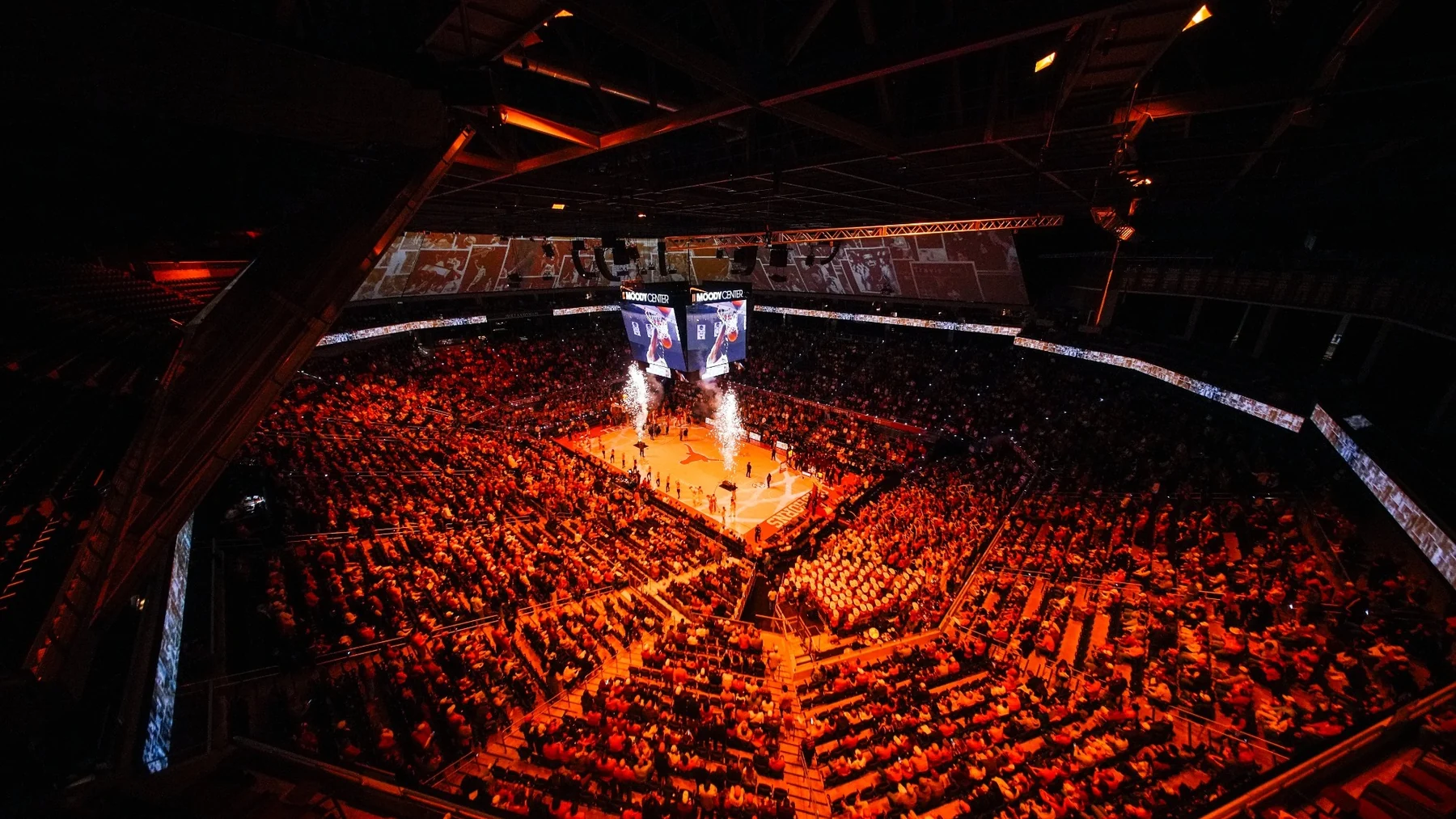
The Texas season starts at home before the SEC arrives
Texas opens its 2026–27 men's basketball regular season against Chicago State at Moody Center on November 2. The current official listing has an 8 p.m. Central tip on SEC Network. Conference play starts at home against Florida on January 2. Between those dates, the Longhorns move through a mix of Austin games, Texas neutral sites, a Thanksgiving tournament and a true road trip.
This is the University of Texas at Austin schedule. Searches that include “UT basketball” can also return Tennessee, while broad Texas searches can surface Texas Tech or UTRGV. The Longhorns' league is the SEC. Checking the school, opponent and venue together prevents an apparently useful schedule result from sending you toward the wrong team.
The university's season announcement identifies 18 home games at Moody Center, including nine SEC dates. That gives local supporters several ways to follow the team without making every marquee event a trip. For the full changing list, use the Texas team schedule. This guide focuses on how the important stretches fit together, rather than repeating every fixture.
Keep the St. John's exhibition separate
Before the opener, Texas has an October 25 exhibition against St. John's at Madison Square Garden. The live school schedule lists 11 a.m. Central, noon Eastern. The original exhibition announcement did not yet provide all event details, so the current listing is the better reference for time. Recheck near the event before traveling.
The exhibition belongs on a viewing calendar, but it should not be counted as a regular-season result. It can reveal which combinations Sean Miller wants to examine and how new players respond to a different environment. It can also involve experimental minutes that do not become the normal rotation. Treat what you see as evidence to follow, rather than a final verdict on the team's order.
The opening home games then offer a baseline for evaluating improvement. Watch whether Texas gets an organized first action, whether the forwards finish defensive possessions and whether a second unit can protect the quality of the offense. Those questions remain useful even when the final margin looks comfortable. The point of the early schedule is not merely to accumulate a record; it is to establish habits that remain available when the venue and opponent change.
For planning, keep three categories on your calendar: exhibition, regular-season nonconference and SEC. They carry different competitive meaning, and separating them makes later discussions about Texas' record and conference position much easier to follow.
Neutral-site games make the nonconference schedule distinctive
Several important Texas games are neither Moody Center home dates nor trips to the opponent's campus. Their neutral designation matters for understanding the season, but it does not promise a neutral crowd. A game within Texas can attract a strong regional following, and a tournament can produce a different environment from either team's usual arena.
Baylor in San Antonio and Miami in Houston
The Longhorns face Baylor on November 15 at Frost Bank Center in San Antonio and Miami on December 12 at Toyota Center in Houston. They are two separate event trips, not additional Austin home games. The current Texas schedule lists 2 p.m. Central for Baylor and 4:30 p.m. Central for Miami, both on ESPN. Check the current school and event listings again near the date, particularly before buying nonrefundable travel.
For a fan attending, venue identity comes before assumptions based on the team name. Your usual Moody Center entry route, parking plan or ticket account may not apply. Houston Hoopfest is advertised as a two-day showcase, but Texas plays on the Saturday program. Inspect exactly which day and session your ticket covers instead of treating the event's full weekend heading as one admission.
On the court, the attraction is a different competitive setting early in the year. Texas has to create organized possessions away from its home routines, while still having a substantial in-state audience available. That is a useful test of communication and role clarity. It should not be preassigned a particular postseason value before the opponents' seasons develop.
The San Diego bracket has a conditional second opponent
The Rady Children's Invitational sends Texas to Jenny Craig Pavilion on the University of San Diego campus for November 26–27. Georgetown is the first opponent, with an 11:30 a.m. Pacific, 1:30 p.m. Central tip on Thanksgiving on FS1. The second game is against UCLA or Saint Mary's, depending on the first day's results.
Friday's two branches also have different start times. The third-place game is at 11:30 a.m. Pacific, while the championship is at 2 p.m. Pacific, both on FOX. For Texas viewers those translate to 1:30 p.m. and 4 p.m. Central. Keep both slots open until the bracket is resolved; do not put one opponent or one tip into your calendar as though it is already settled.
This is also a basketball test that a one-game showcase cannot reproduce. The second opponent arrives with very little preparation time. Watch whether Texas can adjust its guard decisions and defensive assignments without needing several full practice days. That adaptability is part of the event's value, whatever the final bracket pairing becomes.

The San Diego-to-Louisville stretch tests preparation and depth
The sequence from Thanksgiving to the SEC/ACC Challenge deserves its own place on the calendar. Texas plays in San Diego on November 26 and 27, then visits Louisville on December 1. That is three games across six calendar dates, with the last one on an opponent's home floor. The current Louisville listing is 8 p.m. Central, 9 p.m. Eastern on ESPN2.
There are three intervening calendar days between the Friday tournament game and the Tuesday road game. That is not the same as three full practice days: recovery, travel and academic responsibilities can occupy part of the interval. The public schedule does not establish the team's flight plan or whether it returns to Austin between events, so this guide does not invent an itinerary.
The useful basketball question is how much of the offense survives a change in preparation conditions. A new group may look connected when it can rehearse the same opponent for several days. A tournament asks for a quicker adjustment. Louisville then asks whether those habits travel into a louder, less familiar setting. Watch the first few possessions after a defensive change, rather than treating every missed shot as a sign of fatigue.
Bench continuity matters in this stretch. If the same primary handler must solve every late-clock possession, a team can become easier to anticipate as opponents collect film. If reserves enter with clear jobs, Texas can preserve its spacing and defensive assignments while changing personnel. The schedule therefore gives fans a reason to follow the quality of a reserve's minutes, not just the total he receives.
Turnovers and defensive rebounds provide two practical viewing lenses. A live-ball mistake can produce an immediate scoring chance before Texas sets its defense. A failure to finish a possession with the rebound can force another defensive sequence even after the initial coverage worked. Neither problem should automatically be attributed to travel, but recurring breakdowns are worth tracking across the three games.
The next listed game is Jackson State at home on December 8, followed by the Miami showcase and a December 16 home meeting with Memphis. That later rhythm gives a different context for assessing adjustments. Compare how the team responds after the compressed stretch with the problems you observed during it, without assuming that an open date guarantees a complete reset.
For viewers, reserve the potential Friday bracket slot and the later Tuesday start separately. A Thanksgiving-week television plan built only around the first opponent can miss a substantial part of what makes this sequence informative.
The SEC opener leads quickly into road work
January changes the meaning of every result because Texas begins its conference schedule. The Longhorns open SEC play against Florida in Austin, then play their next two league games away. A home opener therefore does not create a long opening homestand. The first week immediately tests whether the team's organization travels.
Florida comes first, then Georgia and Ole Miss
The current sequence is Florida on January 2, at Georgia on January 5 and at Ole Miss on January 9. Texas then returns home for Auburn on January 12 and Oklahoma on January 16. Those are specific dates from the current schedule, replacing the provisional midweek ranges that appeared in earlier league announcements.
The Florida game provides an immediate conference reference at Moody Center. The next two ask a different question: can the Longhorns make the same passing and defensive decisions when they do not have their own crowd reinforcing each run? It is useful to compare the possessions themselves. A lower scoring total on the road could reflect tempo, missed open looks or more turnovers; those are different problems with different implications.
On the Georgia and Ole Miss trips, track how quickly Texas begins a useful action after bringing the ball across half court. Repeated delays can leave a new group dependent on difficult individual shots. Also watch the response when an opponent changes coverage. A clean adjustment after a timeout is evidence of shared understanding that a box-score margin cannot fully capture.
Rebounding deserves a similar distinction. The relevant question is not just which player collects the ball. If a guard contains penetration, the center can maintain a stronger position and a forward can find the next body. If the first defender loses the ballhandler, several players may rotate before the shot. The SEC schedule will expose whether those connected responsibilities hold up against different opponents.
A strong or weak opening week should be kept in proportion. These are the first three games of an 18-game league schedule, split between one home date and two away. The venue distribution matters when interpreting the record. It is too early to assign a final conference place from a handful of results, and future postseason classifications depend on how the opponents' seasons develop.
For viewers who cannot watch every game, the opening home game and one of the next two trips make a useful pairing. You see the same Texas group in contrasting conditions before the January schedule moves into its next phase.
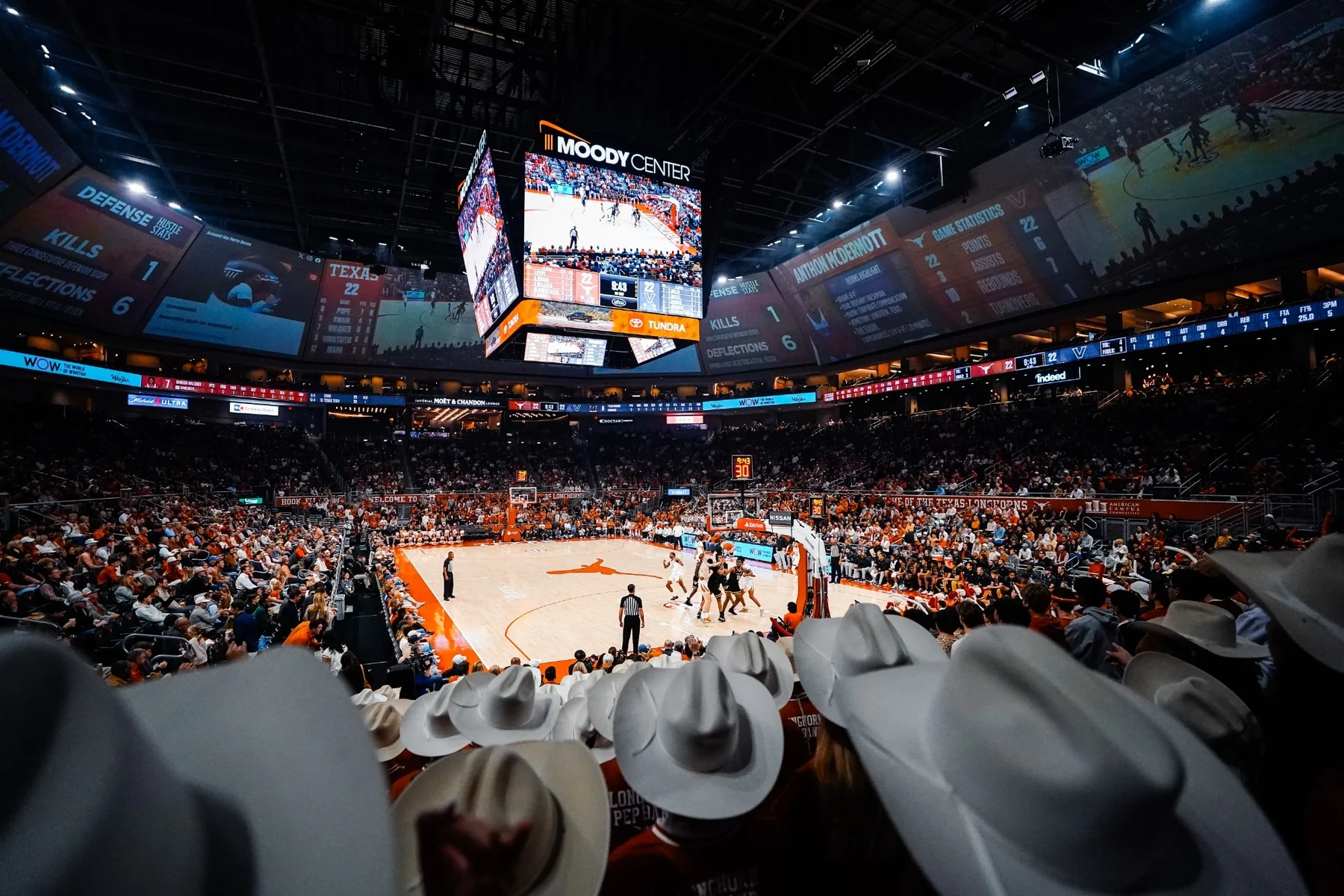
February and the rivalry finish need a separate viewing plan
The later SEC schedule combines returning opponents with changes in weekly rhythm. Texas visits Florida on February 6, hosts Alabama on February 9 and goes to Vanderbilt on February 13. The final phase then includes both Texas A&M meetings, the return game at Oklahoma and a late home date against Tennessee. It is a useful stretch to follow as a sequence rather than a collection of isolated names.
Read the gaps as well as the opponents
Texas has a January 30 home game against Kentucky before the February 6 trip to Florida. Six calendar days fall between those dates. That is a larger interval than the Saturday-to-Tuesday turn into Alabama, but the schedule alone does not tell you how Miller will use it. Preparation, recovery and individual work compete for that time.
The broader lesson is to avoid describing every week as equally compressed. A longer interval may allow a coach to revisit a problem observed over several games. A shorter turn may require prioritizing the opponent's most important action. Watch whether the next game shows a change in possession quality; do not assume an open date must produce a particular result.
The listing itself also deserves attention. Several current midweek dates are now Wednesdays, including the February 17 Texas A&M home game and February 24 trip to Mississippi State. Older release graphics with Tuesday-Wednesday ranges are useful history, but they should not set your current appointment. The Tennessee home game on February 27 still has a listed Central-time alternative, another reason to recheck rather than force a premature exact tip.
Home-and-away rivalries change the setting
Texas hosts Oklahoma on January 16 and travels to Norman on February 20. Texas A&M visits Austin on February 17, and the Longhorns finish the regular season in College Station on March 6. Those pairs allow a fan to compare how the same matchup evolves after both teams have seen the first game.
The second meeting is not simply the first game with the uniforms reversed. A coach can change who initiates an action, how a ball screen is defended or which forward receives the help defender. Availability and confidence may also change. Compare the tactical response to what actually happened in the first meeting, without assuming that the earlier winner must retain the same advantage.
The final home dates are Tennessee on February 27 and Missouri on March 2, followed by the A&M road finale. That ending rewards a viewing plan that includes both home and away conditions. Conference standings and postseason context will make the stakes clearer nearer the time; the October schedule can identify the opportunities, but it cannot settle the eventual seeds or the importance of a particular result.
How to follow Texas on TV and plan a game-day trip
Texas' schedule is spread across more than one television route. The school lists ESPN-family channels for much of the season, while the San Diego tournament uses FS1 and FOX. Several nonconference home games carry SEC Network+ listings. A single-channel assumption can therefore fail even when you have watched the previous Texas game successfully.
Read the exact label before opening an app or choosing a subscription. SEC Network is a linear channel; a SEC Network+ event is a digital listing. Check the event in the ESPN service and the access supplied by your television provider. Do not assume that a similarly named subscription automatically includes every event carrying an ESPN-associated label.
The schedule also contains entries such as “ESPN or ESPN2” and, in some cases, a wider set of network alternatives. Those indicate an unresolved channel choice, not simultaneous coverage on every listed network. Use the TV schedule and the school listing again near game day. Set a reminder to recheck the specific channel rather than guessing from the tip time.
Time zones require equal attention. Texas generally presents its primary time in Central, but road and neutral listings can include local time too. San Diego is on Pacific time and Louisville on Eastern time. A 1:30 p.m. Central tournament appointment is an 11:30 a.m. local start, which affects when an attending fan must arrive and when a remote viewer needs to be free.
For tickets, begin with the actual building and event session. Moody Center, Frost Bank Center, Toyota Center and Jenny Craig Pavilion are separate trips with separate entry details. Houston's event information specifies mobile admission through AXS and says a barcode screenshot is not valid for entry. Follow that event's current instructions instead of assuming an old saved image will work at the door.
Keep the complete travel decision tied to a confirmed listing: correct men's team, opponent, date, local time, venue and session. Then check the venue's current arrival and ticket-access guidance. This is particularly useful for a showcase that advertises multiple days or games. A Texas matchup in the event title does not mean every ticket covers every session.
Finally, separate the regular-season finale from the postseason. March dates can appear as placeholders on a season calendar before Texas' opponent or round is determined. Enjoy planning around the confirmed games now, and let conference results establish the later path. The best schedule guide leaves those open questions visible while helping you make concrete plans for the dates that are settled.
Sign in with Google to join the discussion.