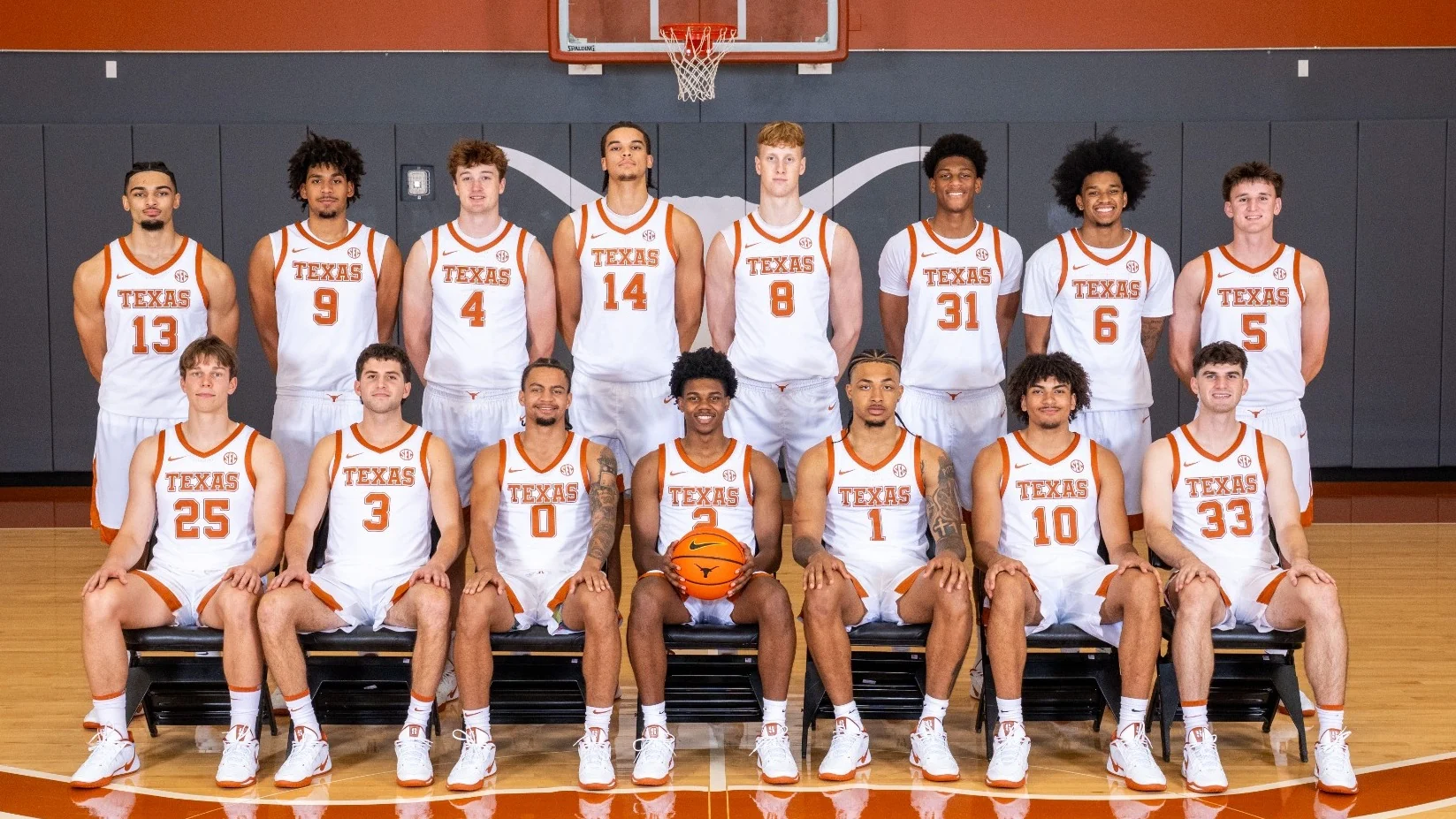
The official Texas roster for 2026–27
Texas has a substantially rebuilt men's basketball roster for 2026–27. The official October list contains 15 players, with Sean Miller preparing a group that the university describes as having 11 new faces. This is the University of Texas at Austin, the Longhorns: a search for “UT basketball roster” can also lead to Tennessee, whose roster belongs to a different program.
The table is a reference list, not a depth chart. Positions follow the school's labels. They identify a player's broad category without telling you who will initiate a possession, defend the opposing point guard or close a tight SEC game.
| Number | Player | Position | Class | Height |
|---|---|---|---|---|
| 0 | Mikey Lewis | G | Junior | 6-3 |
| 1 | Amari Evans | G | Sophomore | 6-5 |
| 2 | Isaiah Johnson | G | Sophomore | 6-2 |
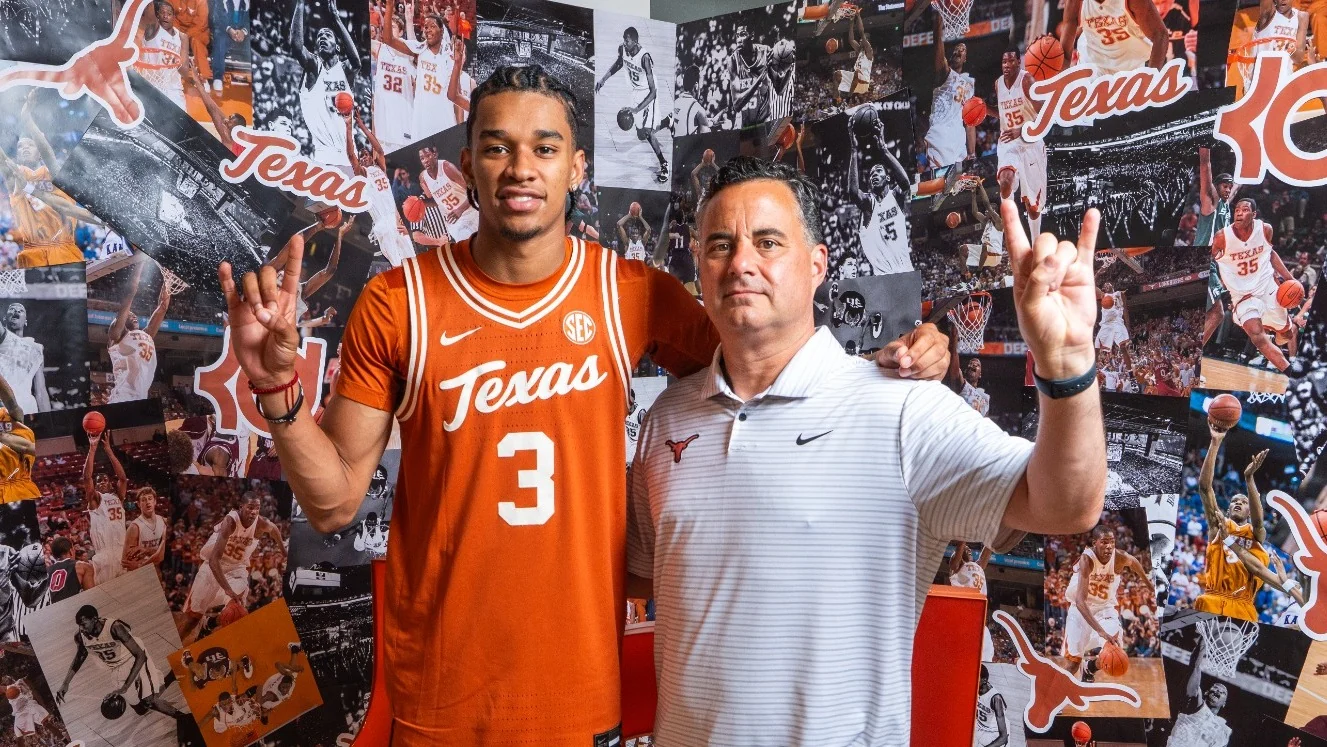
| 3 | Joe Sterling | G | Freshman | 6-4 |
| 4 | Coleman Elkins | F | Freshman | 6-11 |
| 5 | Bo Ogden | G | Freshman | 6-6 |
| 6 | Elyjah Freeman | G/F | Junior | 6-8 |
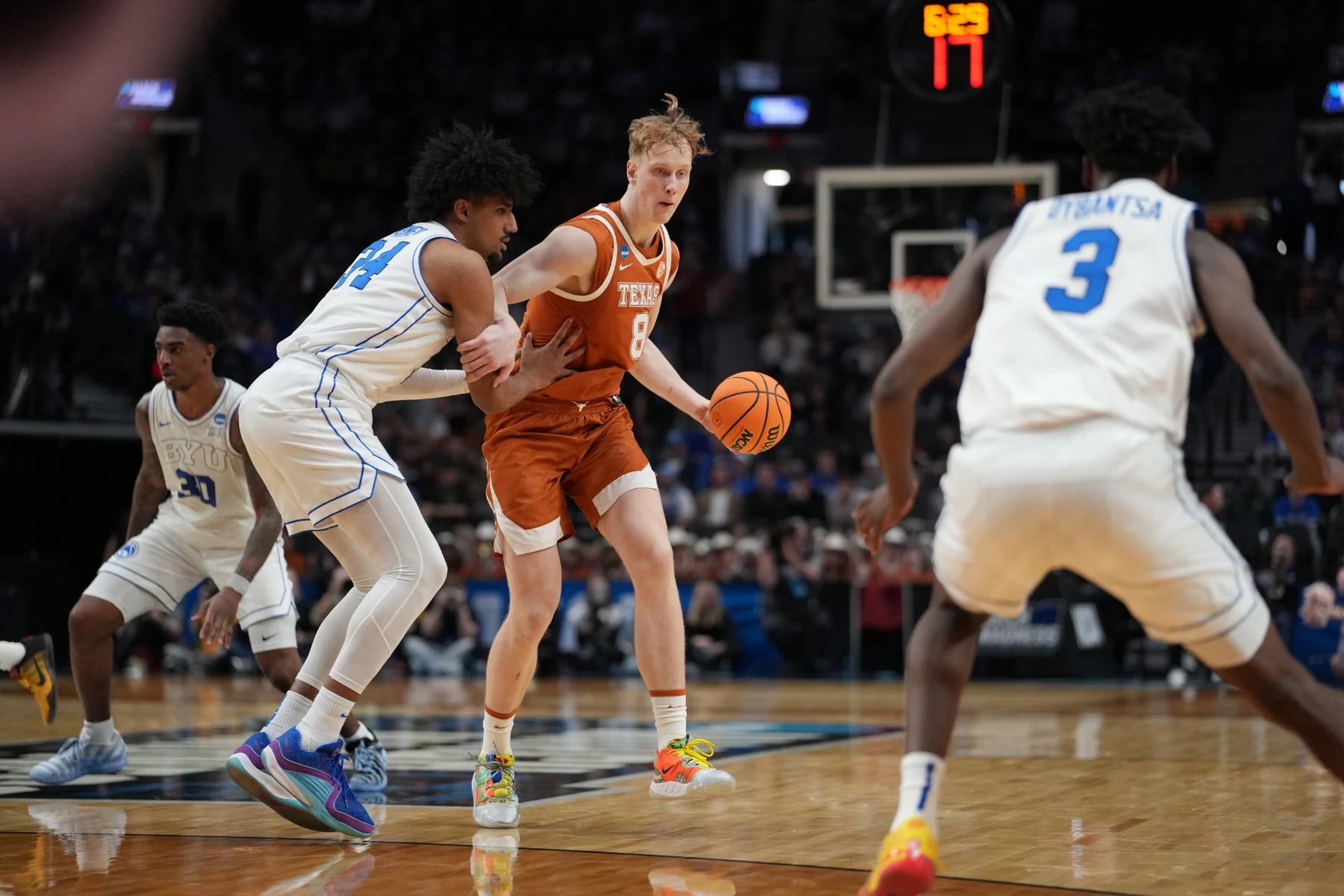
| 8 | Matas Vokietaitis | C | Junior | 7-0 |
| 9 | John Clark | F | Sophomore | 6-9 |
| 10 | Austin Goosby | G | Freshman | 6-5 |
| 13 | David Punch | F | Junior | 6-7 |
| 14 | Lewis Obiorah | C | Sophomore | 7-1 |
| 25 | Mantas Laurencikas | G | Freshman | 6-4 |
| 31 | Marcus Spears Jr. | F | Freshman | 6-9 |
| 33 | Anthon McDermott | G | Junior | 6-5 |
Reading the roster without mixing seasons
Use the season selector before comparing this team with an older Texas roster. A player biography can remain available after a player leaves, and a search engine may send you directly to that archived page. An accessible Texas biography is therefore not evidence that its subject belongs on the current team. The 2026–27 list above is the relevant starting point.
Academic class is also different from a complete eligibility ruling. A junior label does not, by itself, settle redshirt history, medical exceptions or future availability. Those questions require a player's specific record. Likewise, being listed on the roster confirms membership in the published group; it does not establish an injury clearance or a guaranteed place in the game rotation.
For watching purposes, organize the names by jobs as well as positions. Texas needs reliable initiation, players who can maintain spacing, physical defensive possessions and a dependable answer near the rim. The Texas schedule supplies the opponents against whom those combinations will be tested. The useful question is how the jobs fit together, rather than how impressive each recruiting or transfer addition looks in isolation.
How the new guards can organize the offense
Texas added guards from different college environments, which makes their interaction more interesting than a simple scoring comparison. Isaiah Johnson arrives from Colorado; Mikey Lewis comes from Saint Mary's; Amari Evans previously played at Tennessee. Those backgrounds establish experience, but the Longhorns still have to develop common timing on screens, outlet passes and the next action after an opponent stops the first option.
Mikey Lewis and Isaiah Johnson bring different questions
Johnson's Colorado freshman season supplies a substantial offensive reference: 16.9 points per game, 96 assists and 56 made threes at 37.8 percent, according to Texas' signing announcement. That mix suggests a guard worth evaluating as both a scorer and a distributor. The key is what happens when a defender forces him to give up the ball. Does Texas receive it in a position to attack, or does the offense spend the remaining clock reorganizing?
Lewis averaged 13.9 points and made 36.8 percent of his threes in 2025–26 at Saint Mary's. His shooting creates an obvious potential complement to another creator. However, availability changes that discussion: the Houston Chronicle reported on September 30 that Lewis suffered a right-foot fracture and would undergo surgery, with an absence extending into the season. That report does not establish his eventual return date. A preseason roster should not be read as medical clearance, and any proposed backcourt combination involving Lewis remains conditional on his return.
When both can play, the analytical question is whether they improve each other's shot quality. A credible off-ball threat can discourage a defender from crowding the lane, while a second handler can rescue a possession when pressure denies the first pass. Those are reasons to watch their spacing and decisions, rather than simply adding their old scoring averages and forecasting Texas production.
The competition behind the primary handlers
Evans and freshmen Austin Goosby, Joe Sterling, Bo Ogden and Mantas Laurencikas give the guard group several different-sized options. Anthon McDermott is also on the official list. The roster does not certify that every guard can perform the same initiation role, or that each will receive similar minutes. With Lewis' reported injury, the practical issue is who can keep possessions organized when Johnson rests or encounters foul trouble.
Watch the first pass after a hard hedge or a trap. A reserve who releases the ball promptly, reaches the correct outlet spot and recovers into defense can help even without a large scoring total. Conversely, a spectacular individual shot can disguise an otherwise disjointed stretch. For this backcourt, the repeatable connection between an initial advantage and a clean team attempt is a stronger early signal than one hot shooting night.
Wings and forwards will shape lineup flexibility
The most revealing part of this roster may be the group between the guards and the centers. Elyjah Freeman is listed as a 6-foot-8 guard/forward, David Punch as a 6-foot-7 forward, and John Clark and Marcus Spears Jr. as 6-foot-9 forwards. Those labels give Miller several possible arrangements, but size alone cannot settle the combinations. A lineup still needs someone to defend a quick wing, someone to absorb contact on the glass and enough offensive room for the center.
Freeman offers a useful reminder to read statistics in context. He played his freshman season at Division II Lincoln Memorial and his sophomore season at Auburn. Texas' signing release lists 9.2 points and 5.2 rebounds per game, plus 49 steals, for his 2025–26 Auburn season. His combined college numbers include a different competition level. Using that combined scoring average as though it were all SEC production would inflate the evidence for an immediate offensive role.
The Auburn record does establish a meaningful body of conference-level work. The next question is the shape of that contribution beside Texas' guards: can Freeman attack a closeout after an advantage already exists, make the extra pass and finish the possession with a rebound? These are scouting questions, not promises. For a player with his positional label, the ability to connect an initial drive to a second action can be more valuable to a particular lineup than another contested isolation.
Punch brings a TCU background into this group. Pairing a physically substantial forward with Vokietaitis creates a straightforward rebounding hypothesis: Texas could put more bodies around missed shots. The tradeoff is what happens when opponents pull both toward the perimeter or help off a player who is not occupying a threatening offensive spot. Watch where Punch receives the ball and which defender is willing to leave him. That reveals the actual spacing problem more clearly than calling a lineup “big” or “small.”
Clark, Spears and 6-foot-11 freshman Coleman Elkins add different developmental questions. None should be assigned a fixed minutes total from a preseason list. A young forward can win a useful role through positioning, screening and reliable defensive decisions before becoming a featured scorer. Conversely, an impressive frame does not guarantee that the player can handle every SEC assignment immediately.
The important lineup test is collective. When a forward helps on penetration, does another player cover the rim or find the opposing rebounder? When Texas plays through a guard, do the forwards create a second passing lane? Track those connected actions across several opponents. They will tell you whether Miller's flexible-looking list becomes a flexible team.
The centers set the terms around the rim
Matas Vokietaitis provides a different kind of certainty from the newcomers: a full Texas season under Miller. The school's final 2025–26 biography credits him with 36 starts, 15.6 points and 7.1 rebounds per game, and 61.9 percent shooting from the field. Those are last season's results, not a forecast for this one. Still, they give the Longhorns a concrete interior reference while so many perimeter relationships are being rebuilt.
A center's offensive value extends beyond the shot he takes. A screen that forces two defenders toward a guard can create a passing window for a teammate. A deep seal can keep help from reaching the ball. An offensive rebound can rescue a possession that did not generate a clean first attempt. For Vokietaitis, watch whether Texas gets him involved early enough that the defense must respond before the shot clock becomes urgent.
The defensive side is more collective than the phrase “rim protector” suggests. If the ballhandler repeatedly turns the corner with no resistance, the center has to choose between the driver and the player behind him. A good block total cannot by itself measure that decision. Track the initial guard defense, the weak-side rotation and the rebound together. Otherwise, a possession ending near the basket can be incorrectly credited or blamed entirely on the center.
Lewis Obiorah is the other player labeled center on the official roster, listed at 7-foot-1 and 255 pounds. That gives the list another interior option, but it does not prove an identical role. His individual page retains language from his arrival alongside a current sophomore header, a reason to avoid turning every biography sentence into a fresh-season claim. The current roster establishes his identity and size; game usage must establish his place in the rotation.
What a two-big lineup would need
Playing additional frontcourt size beside Vokietaitis could help Texas finish defensive possessions, but only if the spacing works at both ends. On offense, two players cannot casually occupy the same driving lane. One may need to screen away, move along the baseline or receive the ball where a defender must respect the next action. On defense, someone must cover the opposing forward when that player moves outside.
That is why a two-big combination should be judged against the opponent it faces. It may be useful for rebounding against one lineup and difficult to sustain against another with more perimeter movement. For a fan, the informative sequence is what forces Miller to change the pairing: foul pressure, a second-chance problem, a defensive mismatch or a need for another handler. Substitution patterns explain those priorities more clearly than a preseason position chart.
Sean Miller's rotation decisions to watch
Texas entered the October 19 AP preseason poll at No. 7. That establishes the level of national expectation, but it does not resolve Miller's substitution decisions. The university identifies Vokietaitis as the returning starter and describes a roster with 11 newcomers. “One returning starter” should not be silently rewritten as “one returning player”: the statements mean different things, and the published list includes other familiar names.
A working depth chart is not a starting lineup
The useful preseason approach is to map responsibilities. Johnson offers an established college scoring and passing record for the initiation job. The guard group must cover secondary handling and perimeter defense, with Lewis' reported injury affecting the available options. Freeman and the forwards provide possible ways to balance wing size with rebounding. Vokietaitis supplies the clearest returning interior reference, while the other frontcourt players compete to support or relieve him.
That description deliberately leaves room for changes. It is an editorial framework based on the roster and prior production, not an announced Texas depth chart. A coach may start a player because a particular matchup requires him, bring a creator off the bench to stabilize the next unit or finish a game with a different five. The opening lineup alone cannot explain the full plan.
Pay attention to the overlap between groups. If Johnson leaves the floor, who calls and initiates the next action? If Vokietaitis rests, how does Texas replace the interior target without abandoning useful spacing? The most important reserve may be the one who prevents a functional drop in those minutes. Scoring rank is only part of that evaluation.
The evidence that should change an early projection
A projection deserves revision when the underlying possession quality changes. Repeated live-ball turnovers under pressure are more informative than one ambitious pass that fails. Several possessions of lost defensive assignments matter more than a difficult opponent making a contested jumper. For the young players, track whether an early mistake recurs after a timeout or whether the next possession shows an adjustment.
Opponent strength matters, too. A comfortable home game may allow Miller to test combinations that become difficult against a faster or larger opponent. A short stretch of excellent plus-minus can reflect which other players shared the floor and which shots happened to fall. Treat it as a prompt to inspect the possessions, rather than a verdict on a reserve's entire role.
The same caution applies to preseason rank. No. 7 reflects expectation before this group has played its regular-season schedule together. It cannot certify defensive communication, late-clock execution or the ability to survive foul trouble. Those details will decide whether the list's attractive parts reinforce one another when an SEC opponent removes the first option.
Following this roster through the Texas schedule
The first viewing opportunity and the first regular-season result are different events. Texas lists an October 25 exhibition against St. John's at Madison Square Garden, then opens the regular season against Chicago State at Moody Center on November 2. As checked on October 20, the opener is scheduled for 8 p.m. Central on SEC Network. Verify the listing again near game day before making travel or television plans.
The exhibition can show how the guards organize possessions and which combinations Miller wants to examine, but it should not be added to the regular-season record. It may also involve different priorities from a game that counts. A coach testing a young player through a difficult stretch is collecting information; that is not automatically a promise that the same substitution pattern will appear in January.
For the early home games, choose a few questions to follow consistently. Identify the handler when Johnson is off the floor. Watch how Texas feeds the interior without allowing the defense to crowd every passing lane. Note whether the forwards end possessions with rebounds after helping on a drive. These observations create a more useful baseline than judging the roster entirely from the final margin.
The November 26–27 Rady Children's Invitational in San Diego and the December 1 trip to Louisville provide a different setting. Consecutive tournament days change preparation time; a road game changes the communication environment. Those conditions can reveal whether a new group has more than one reliable way to begin an offense and whether reserves can execute without the comfort of a home crowd. They are tests to watch, not advance declarations of which opponents will hold a particular ranking later.
Keep the individual and team questions connected. A guard's lower scoring night may accompany better possessions for Vokietaitis. A forward might take fewer shots because the most productive job is screening or chasing a second chance. An apparent rotation change may reflect an opponent's size or foul pressure rather than a permanent demotion. The schedule gives the context needed to interpret the numbers.
Use the Texas team schedule for the changing game list and the college basketball TV guide for broadcast planning. This roster is an October snapshot. As the season develops, prioritize current availability, actual combinations and the quality of the possessions those players produce together.
Sign in with Google to join the discussion.