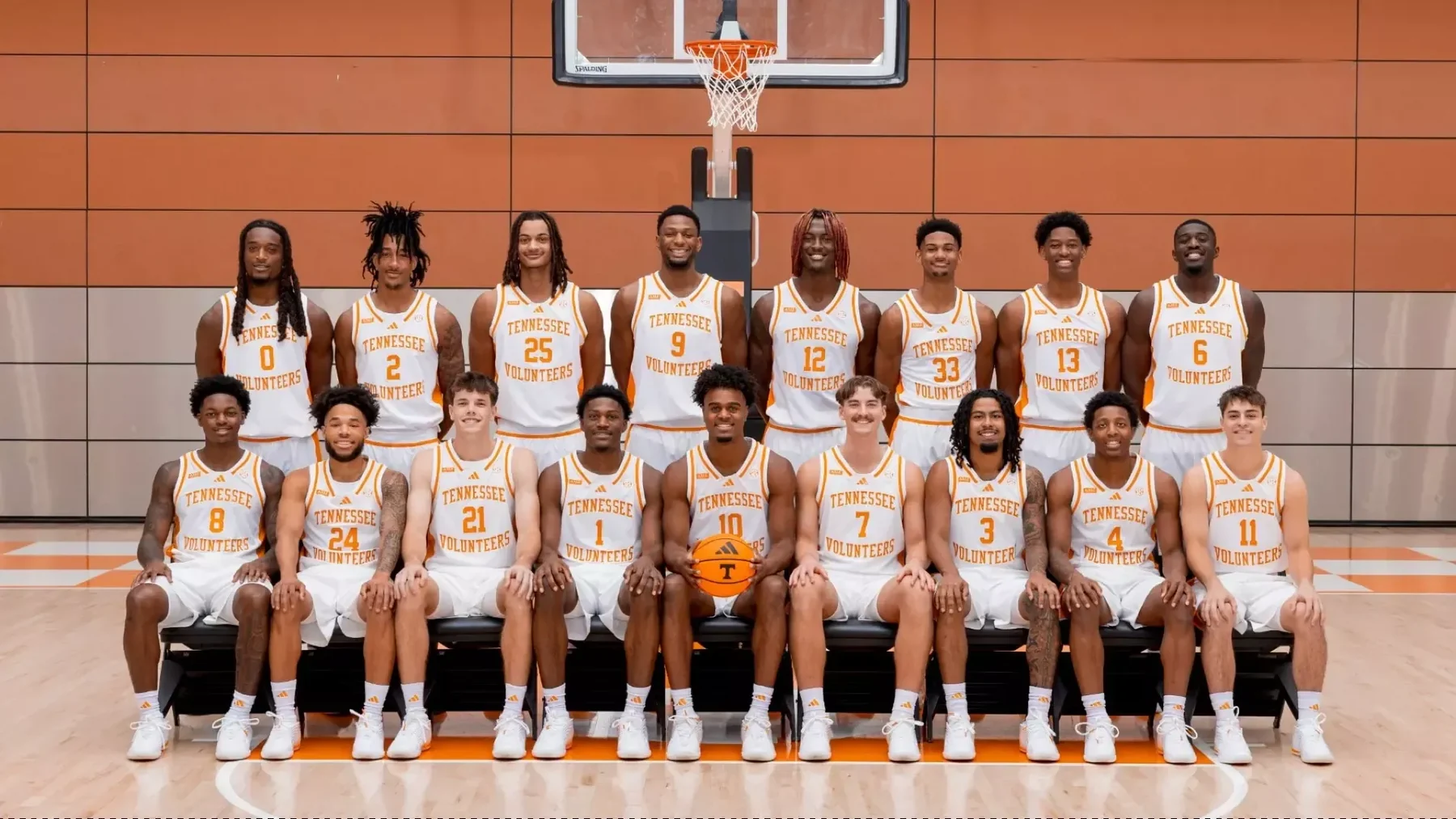
Tennessee's 2026-27 roster at a glance
Tennessee enters 2026-27 with a roster that needs to be learned almost from scratch. Rick Barnes remains the head coach, but the university described his group at October media day as nine transfers and four freshmen alongside four returning players. That is the starting point for understanding this team: experience arriving from elsewhere is valuable, while experience playing together has to be earned.
The following is the men's roster listed by Tennessee on October 20, 2026. Jersey numbers help identify players during a broadcast; position labels are the school's, rather than a prediction of where every player will stand in every lineup.
| No. | Player | Position |
|---|---|---|
| 0 | Braedan Lue | Forward |
| 1 | Manny Green | Guard |
| 2 | Juke Harris | Guard |
| 3 | Terrence Hill Jr. | Guard |
| 4 | Dai Dai Ames | Guard |
| 6 | DeWayne Brown II | Forward |
| 7 | Tyler Lundblade | Guard |
| 8 | Marquis Clark | Guard |
| 9 | Jalen Washington | Forward |
| 10 | Jalen Haralson | Guard |
| 11 | Gavin Paull | Guard |
| 12 | Christian Fermin | Forward |
| 13 | Ralph Scott | Forward |
| 21 | Campbell Duncan | Guard |
| 24 | Troy Henderson | Guard |
| 25 | Miles Rubin | Center |
| 33 | Chris Washington Jr. | Forward |
This is a roster, not an announced depth chart. A player's place in this list does not establish a starting assignment, a minutes guarantee or his availability for a particular game. Those distinctions matter especially in October, when a coach may deliberately test combinations that will not survive into conference play.
A useful first viewing task is to learn the jobs rather than simply memorize the names. Identify who brings the ball up under pressure, who receives the first off-ball screen, who communicates the defensive coverage and who finds a body when a shot goes up. Those actions reveal how a new roster is becoming a team. A spectacular finish can obscure a possession in which the wrong spacing forced a difficult shot; a scoreless shift can still contain several winning defensive decisions.
This guide concerns the Volunteers in Knoxville. Searches for "UT basketball" can also produce Texas, while Tennessee Tech and Chattanooga have separate programs. Use the Tennessee Volunteers schedule to connect the names here with the correct opponents, game times and venues throughout the season.
The backcourt: creation and shooting have different jobs
The perimeter group gives Tennessee several ways to begin an attack, but the challenge is deciding how those ways fit together. Five talented guards do not receive five separate basketballs. Someone has to initiate, someone has to punish the help and someone has to keep the possession moving after the first option disappears.
Ames and Hill give the ball a place to start
Dai Dai Ames arrives after averaging 16.9 points at Cal in 2025-26, when he made 37.6 percent of his three-point attempts. Terrence Hill Jr. averaged 15.0 points and 2.8 assists for VCU, with a 2.55 assist-to-turnover ratio. Those are previous-school records, not promises of equivalent Tennessee production. They establish that each has handled meaningful offensive responsibility.
For fans, the useful distinction is between beating an initial defender and organizing everyone behind that advantage. A guard can score on a drive while still missing an earlier pass that would have produced a cleaner team shot. Watch where Ames and Hill pick up the dribble, whether the next pass arrives on time and whether Tennessee can start a second action without resetting completely. A late-clock bailout basket is welcome; repeated dependence on one is a warning about the structure of the possession.
The assist-to-turnover comparison needs the same care. Hill's VCU number reflects that team's opponents, spacing and responsibilities. It cannot establish how he will fare against every SEC pressure scheme. It does make decision quality an appropriate question to track as the Vols meet stronger defenders.
Lundblade, Harris and Haralson change the perimeter picture
Tyler Lundblade supplies a particularly clear shooting reference: he made 115 threes at 40.6 percent for Belmont last season and was the Missouri Valley Conference Player of the Year. Jalen Haralson averaged 16.2 points, 4.0 rebounds and 2.6 assists at Notre Dame. Juke Harris joins from Wake Forest. Tennessee can therefore ask different players to create an advantage, finish one or pull a defender away from the lane.
With Lundblade, do not watch only whether the shot falls. Watch whether his defender stays attached when another guard turns the corner. That attention can create room even on a scoreless trip. Haralson's next decision is equally revealing: against a moving defense, a quick finish or immediate pass can be more valuable than restarting an individual matchup.
The editorial question is how these skills coexist. A lineup with several creators may reduce the burden on any one guard, but it still needs deliberate off-ball movement and a defensive matchup plan. Strong individual scoring histories support optimism about available tools. They do not remove the work of establishing a shared pecking order.
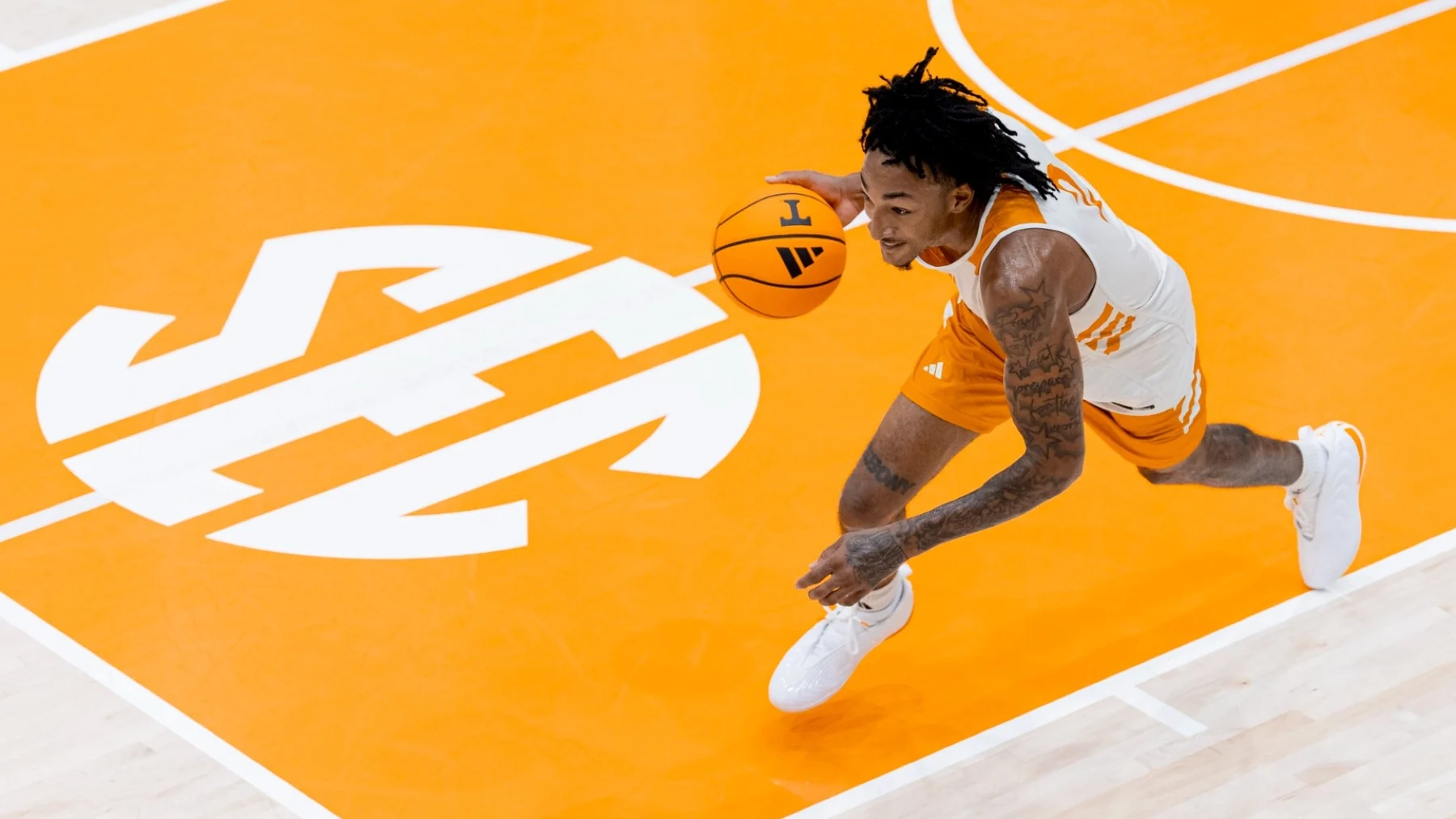
The frontcourt: size only matters if the possession ends
Tennessee's collection of perimeter names should not distract from the work required near the basket. A defense can force the shot it wants and still lose the possession by allowing an offensive rebound. An offense can create a driving lane and still waste it if the screener arrives late or occupies the same space as the driver. Interior execution connects the roster's individual skills.
Rubin and Washington anchor the interior options
Miles Rubin comes from Loyola Chicago with two Atlantic 10 All-Defensive Team selections in his background. Jalen Washington arrives after playing at North Carolina and Vanderbilt. Their individual Tennessee pages list both at 6-foot-10. Braedan Lue, from Kennesaw State, and Christian Fermin, from VCU, add other frontcourt choices alongside returning forward DeWayne Brown II.
Rubin's defensive record makes rim protection an obvious strength to investigate, but blocked shots alone cannot describe the job. If a center leaves his assignment to contest, a teammate must cover the rebounder he has left behind. If a guard is beaten too easily, even a well-positioned big may face an impossible choice between a layup and a pass across the lane. Judge the five-man coverage before assigning every paint basket to the center.
For Washington, the question is how an experienced forward changes the shape of an offensive possession. Watch his screening angle and where he receives the next pass. A catch close to the rim asks the defense a different question from a catch outside the lane. The Vols do not need every big man to perform the same task; they need the next player's movement to fit the first player's decision.
A two-big combination might provide another rebounder and a different defensive matchup. A smaller group might open driving space. Neither is automatically superior. The tradeoff depends on whether the opponent can punish the change, whether Tennessee can defend without excessive help and whether the offensive spacing stays useful. Those are matchup questions, not conclusions that can be settled by adding the listed heights.
When watching early games, follow an entire defensive possession from the first screen through the rebound. Did the guard recover? Did the big communicate? Did the weak-side player make contact before chasing the ball? A single second-chance basket will happen. A repeated failure in the same responsibility is more revealing, and it gives fans a concrete way to discuss frontcourt progress without reducing the conversation to toughness or effort.
Returning players and freshmen need a role, not a label
DeWayne Brown II and Troy Henderson return as sophomores, while Campbell Duncan and Gavin Paull also provide continuity within the program. Manny Green, Marquis Clark, Ralph Scott and Chris Washington Jr. form the freshman group. These are different starting points, but neither returning status nor a recruiting reputation independently determines the right role.
For Brown, familiarity can matter in the small decisions that make a frontcourt partnership work. Knowing where a teammate expects the screen, recognizing the next defensive call and beginning a box-out early can preserve an advantage that never appears as an individual statistic. That is a reason to watch his possessions carefully, not to assume that a returning player automatically moves ahead of every newcomer.
For Henderson, the question is how a returning guard handles his opportunities within a crowded perimeter group. A short shift can still be purposeful: organize the offense, withstand pressure, defend without giving away an avoidable foul and make the next pass. Fans should distinguish a player being trusted for a defined task from a player being asked to carry the entire attack.
The same approach makes freshman evaluation more useful. Clark and Green are listed as guards; Scott and Chris Washington Jr. are listed as forwards. Before projecting scoring averages, ask what would make each playable against a specific opponent. A young guard who keeps the ball moving and recognizes a switch may help a veteran scoring group. A young forward who rebounds and covers the weak side can contribute without being the first option.
Development is rarely a straight line. A freshman may look comfortable in one matchup and struggle when the opponent changes the pressure or size. An experienced teammate may take minutes in a difficult road game without ending the younger player's long-term opportunity. The important distinction is between a temporary assignment and a verdict about the player's ceiling.
It is also worth observing who shares the floor with a newcomer. Playing alongside established decision-makers can simplify the first set of responsibilities. Asking several inexperienced players to solve the same broken possession is a different test. A fair assessment therefore considers the surrounding lineup, the opponent and the job being attempted. Counting points alone misses much of the information Barnes and his staff need when they decide which combinations to revisit.
How to judge a projected Tennessee depth chart
A responsible Tennessee depth chart in October is a set of possible answers to basketball problems. It is not an official announcement. The roster gives Barnes options, and the opponent determines which options are most useful on a particular night.
Build combinations before picking five starters
Begin with functions: a dependable initiator, enough shooting to keep the lane usable, someone who can attack the second side, interior screening and finishing, and five players who can complete the defensive possession. One player may fill several functions. Several players may compete for one. A recognizable name should not be inserted simply because leaving him out looks uncomfortable on paper.
For example, pairing a creator with Lundblade asks whether the shooter's movement can stretch the help defense. Putting Haralson alongside another ballhandler asks whether both can make quick decisions without the offense becoming a series of isolated turns. Choosing Rubin or another frontcourt combination asks what coverage Tennessee wants against the opposing screen game. These are possible uses of the roster, rather than a declared starting lineup.
The first substitution can reveal as much as the opening five. Does the staff maintain two creators? Does one big replace another directly, or does the shape of the lineup change? Who stays on the floor when a defensive stop is needed? Those choices begin to expose the practical rotation that a preseason depth-chart graphic cannot capture.
Separate exhibition clues from a season-long verdict
Tennessee lost its October 15 exhibition against Xavier, 86-70. Xavier erased a halftime deficit and took over in the second half. That result is useful evidence about one evening and one stage of preparation. It is not a regular-season loss, and it does not settle how the Vols will perform after more practice and competitive games.
The right response is specific. Identify a coverage that broke down, a lineup that struggled to create a clean shot or a rebounding responsibility that repeatedly went unfilled. Then watch whether the same issue returns in the next comparable matchup. Simply dismissing the game wastes available evidence; treating it as a complete forecast gives a small sample more authority than it deserves.
As of October 20, Tennessee's next scheduled exhibition is at Duke. A different opponent can ask different questions of the same personnel. Evaluate improvement in decisions and execution as well as the scoreboard, and keep availability reports separate from speculation. No player should be described as injured, recovered or certain to start without current confirmation from a reliable report.
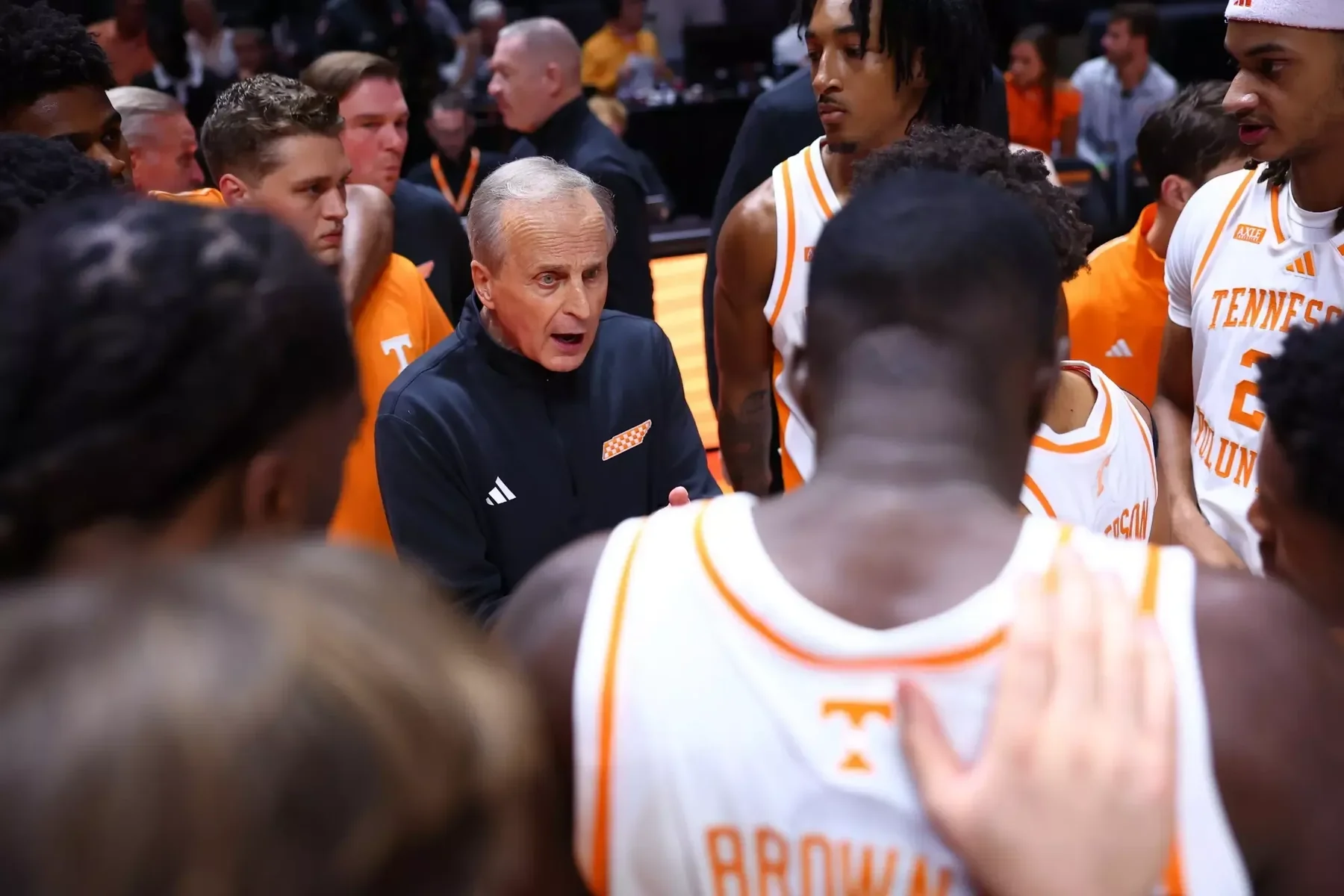
What to watch as the schedule gets harder
The regular season begins at home against Wofford on November 3, with Michigan State visiting on November 17. The December 11 road game at Purdue offers another setting in which to examine the roster, before SEC play starts against Vanderbilt on January 2. These dates give the evaluation a useful sequence: learn the jobs, test the combinations, then see which habits survive more demanding situations.
In the early home games, concentrate on repeatable decisions. Is Tennessee getting into its offense promptly? Does a turnover come from a sensible pass narrowly missing, or from teammates expecting different actions? Are guards locating the correct player after a switch? The answer matters more than a large margin against an opponent that cannot consistently punish mistakes.
Against a stronger opponent, track what disappears first. If the first drive is stopped, can the Vols create a second advantage? If the opponent denies Lundblade a clean catch, does the resulting movement open another option? If Rubin is pulled away from the basket, does a teammate assume the rebounding responsibility? The roster has multiple possible answers, but the game tells us which answers are ready.
Road basketball adds a communication test. A team may need a simpler action because the first call is not heard, or a more decisive cut because a pass arrives a fraction later. That makes shared habits valuable. It also makes a new group's progress visible in ways that a points-per-game list cannot show.
Keep a small viewing notebook rather than chasing every single-game ranking. Record the opponent, the relevant lineup, the problem and whether Tennessee solved it on the next comparable possession. After several games, a pattern of improved ball security, cleaner shot quality or more complete defensive rebounds is more meaningful than one unusually hot or cold shooting night.
Before each game, check the team schedule and the TV schedule for the current tip time and viewing assignment. This roster guide provides a dated starting point for understanding the personnel. The most useful season-long question is how those players make each other easier to play with when the opponent removes Tennessee's first choice.
Sign in with Google to join the discussion.