Every 2027 NCAA tournament location at a glance
The 2027 men's NCAA tournament uses 15 venues in 15 cities across four competitive stages. The new Opening Round starts March 16-17 at UD Arena in Dayton and INTRUST Bank Arena in Wichita. Eight first-weekend buildings then host the first and second rounds: PPG Paints Arena in Pittsburgh, CHI Health Center in Omaha, Dickies Arena in Fort Worth and Numerica Veterans Arena in Spokane on the Thursday-Saturday track; Spectrum Center in Charlotte, Target Center in Minneapolis, KFC Yum! Center in Louisville and Golden 1 Center in Sacramento on the Friday-Sunday track.
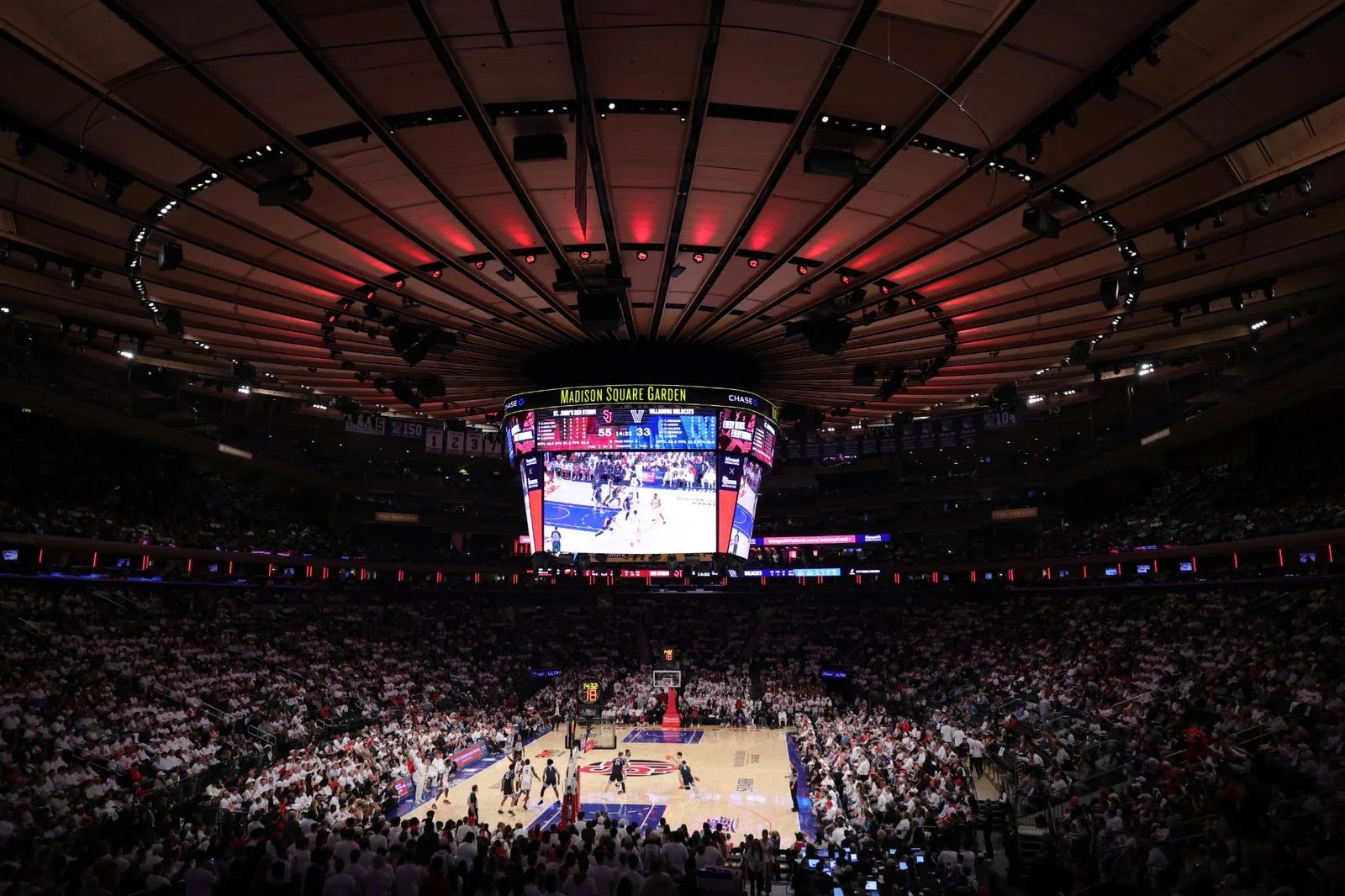
The tournament narrows to four regional arenas. Frost Bank Center in San Antonio hosts the South Regional and Crypto.com Arena in Los Angeles hosts the West on March 25 and 27. T-Mobile Center in Kansas City hosts the Midwest Regional and Madison Square Garden in New York hosts the East on March 26 and 28. The four regional champions then travel to Ford Field in Detroit for national semifinals April 3 and the championship April 5.
| Stage | Dates | Cities | Venues |
|---|---|---|---|
| Opening Round | March 16-17 | Dayton; Wichita | UD Arena; INTRUST Bank Arena |
| First/Second | March 18 & 20 | Pittsburgh; Omaha; Fort Worth; Spokane | PPG Paints Arena; CHI Health Center; Dickies Arena; Numerica Veterans Arena |
| First/Second | March 19 & 21 | Charlotte; Minneapolis; Louisville; Sacramento | Spectrum Center; Target Center; KFC Yum! Center; Golden 1 Center |
| Regionals | March 25-28 | San Antonio; Los Angeles; Kansas City; New York | Frost Bank Center; Crypto.com Arena; T-Mobile Center; Madison Square Garden |
| Final Four | April 3 & 5 | Detroit | Ford Field |
That list is fixed; team assignments are not. Before Selection Sunday, fans know the buildings and round dates but not which programs will appear in each first-weekend city. The committee places teams into the bracket after selection and seeding. A school's regional destination is only a possible route until it survives two games at its first-weekend site, and Detroit remains conditional until it wins an Elite Eight game.
Use the site's printable men's college basketball schedule to keep the date sequence beside the venue map. The practical distinction matters: a location table answers where each stage can happen, while the live bracket answers where a particular team is actually going.
Opening Round locations: Dayton and Wichita
UD Arena remains the tournament's opening anchor
Dayton continues its long relationship with the start of the men's tournament. UD Arena hosts three games Tuesday, March 16 and three more Wednesday, March 17. When the NCAA announced the two-site plan, the arena had staged 145 men's tournament games—the most of any venue—and Dayton had been the event's opening city since 2001.
The 2027 workload is bigger than the old First Four doubleheaders. Six games at UD Arena now form half of a 12-game Opening Round. The participants are drawn from the 12 lowest-seeded automatic qualifiers and the 12 lowest-seeded at-large teams, with automatic qualifiers playing within their pool and at-large teams doing the same. Fans should check the released bracket rather than assume Dayton always receives one particular seed line.
Dayton's value is operational as well as historical. The building and local staff know the compressed tournament handoff: teams arrive soon after Selection Sunday, play Tuesday or Wednesday and, if they win, continue immediately to a preassigned first-round city. The tournament does not pause for a new draw.
INTRUST Bank Arena gives the expanded field a second launch point
Wichita joins the men's Opening Round because 24 teams cannot fit comfortably into the previous one-site format. INTRUST Bank Arena mirrors Dayton with three games each day. It is not new to March Madness: the arena hosted first- and second-round games in 2018 and 2025, while Wichita's NCAA tournament hosting history reaches back to the 1956 event at what became Levitt Arena.
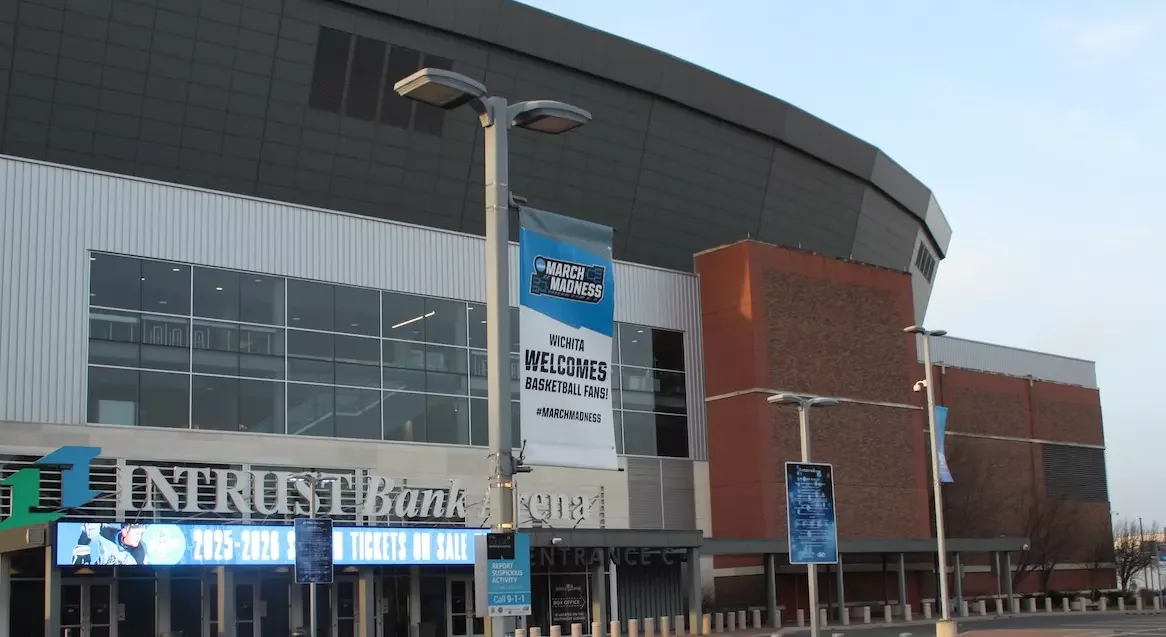
The NCAA selected Wichita after several cities expressed interest. Its central location was a practical factor. Opening Round participants are unknown until Selection Sunday, and winners may need to fly to first-weekend sites spread from Pittsburgh to Sacramento. A central second launch point gives the committee more workable travel combinations while bracketing teams.
For fans, the important change is concurrency. Dayton and Wichita each stage tripleheaders on both days, so games can overlap. A ticket in one city does not provide access to the other site, and a television viewer needs the confirmed network grid rather than one generic “Opening Round” start time. Fans tracking how conference champions enter the automatic-qualifier pool can use the site's conference schedule directory before the bracket is released.
The eight first- and second-round locations
Thursday-Saturday sites: Pittsburgh, Omaha, Fort Worth and Spokane
Four cities begin first-round play Thursday, March 18 and bring their winners back Saturday, March 20. PPG Paints Arena hosts in Pittsburgh, CHI Health Center in Omaha, Dickies Arena in Fort Worth and Numerica Veterans Arena in Spokane. Each building stages two four-team pods, so eight teams arrive and two leave for the Sweet 16.
The geographic spread is deliberate. Pittsburgh offers an eastern option, Omaha and Fort Worth cover central corridors, and Spokane gives the bracket a northwestern destination. That does not reserve a city for teams from one conference or region. The committee works through the seed list, travel distance and bracket restrictions before a program is attached to any site.
The Thursday-Saturday track matters for Opening Round winners. A team that plays Tuesday can feed into Thursday when travel is workable. A Wednesday winner cannot, so the committee must preserve Friday destinations for those onward routes. Fans should read the final bracket, not infer a first-round day solely from a team's seed.
Friday-Sunday sites: Charlotte, Minneapolis, Louisville and Sacramento
The other four venues open Friday, March 19 and stage second-round games Sunday, March 21. They are Spectrum Center in Charlotte, Target Center in Minneapolis, KFC Yum! Center in Louisville and Golden 1 Center in Sacramento. This group supplies southeastern, upper-midwestern and western options while also absorbing Wednesday Opening Round winners.
The same eight-to-two reduction applies at each site. Friday's four first-round games produce four teams; Sunday's two second-round games produce two Sweet 16 teams. Exact sessions and tip times belong to the later ticket and broadcast schedule, so “Friday site” should not be translated into one all-day admission or one universal starting window.
Fans following the active slate can use the site's men's college basketball games today page. It is the practical companion to the venue list once eliminations begin.
Two pods in one arena do not necessarily share a region
A first-weekend building contains two independent four-team groups. The NCAA's standard groups are 1-16-8-9, 4-13-5-12, 2-15-7-10 and 3-14-6-11. One venue might receive two such groups, but the two survivors can advance to different regional cities. They share a building, not necessarily a regional bracket.
That distinction affects travel planning. Buying a first-weekend ticket in Pittsburgh does not prove that every winner there goes to New York's East Regional. The printed bracket must be traced from each pod to its assigned Sweet 16 site. It also affects basketball analysis: teams in separate pods cannot meet in the second round even though they played under the same roof.
For higher seeds, a nearby first-weekend site is a placement benefit, not a home game. Opponents use the same neutral court, and the tournament host may be a conference or institution not participating in that pod. Crowd share can still matter, but the site label alone does not confer campus-home status.
The four regional sites for the Sweet 16 and Elite Eight
San Antonio and Los Angeles play Thursday and Saturday
The South Regional is at Frost Bank Center in San Antonio, and the West Regional is at Crypto.com Arena in Los Angeles. Both open with Sweet 16 games Thursday, March 25 and decide their regional champions Saturday, March 27. Four teams arrive at each arena; two semifinal winners return for one Elite Eight game.
The named region describes the bracket lane, not the permanent identity of every team inside it. A program from the Northeast can be placed in the South or West when seed order, geography and conflict rules require it. By the time the Sweet 16 arrives, the lane is fixed: surviving teams follow the route printed on Selection Sunday rather than being moved to whichever arena is nearest.
The Thursday-Saturday cadence gives semifinal winners Friday to recover and prepare. It also lets a traveler buy around a known city and date pair, but not a known team before the bracket is set—and not a guaranteed second game for that team before Thursday's result.
Kansas City and New York play Friday and Sunday
The Midwest Regional is at T-Mobile Center in Kansas City, and the East Regional is at Madison Square Garden in New York. Their semifinals are Friday, March 26 and their Elite Eight games Sunday, March 28. The basketball structure matches San Antonio and Los Angeles; only the calendar track and destinations differ.
Each regional ticket plan should be read by session. The two Sweet 16 games share a city and night, while the regional final is a separate Sunday event. A fan whose team loses Friday may still hold a Sunday ticket, but the ticket follows the session, not the school. Conversely, advancing does not automatically grant the fan admission to the next round.
The four regional winners become the Final Four. They are not compared and reseeded after Sunday. South, West, Midwest and East champions occupy semifinal slots established by the original bracket. That makes these arenas genuine gateways: each starts with four teams and sends exactly one to Detroit.
Detroit and Ford Field host the Final Four
Ford Field is the end of every 2027 bracket path. The downtown Detroit stadium hosts two national semifinals Saturday, April 3 and the national championship Monday, April 5, with Michigan State listed as the host institution. Four regional champions arrive; one leaves with the title.
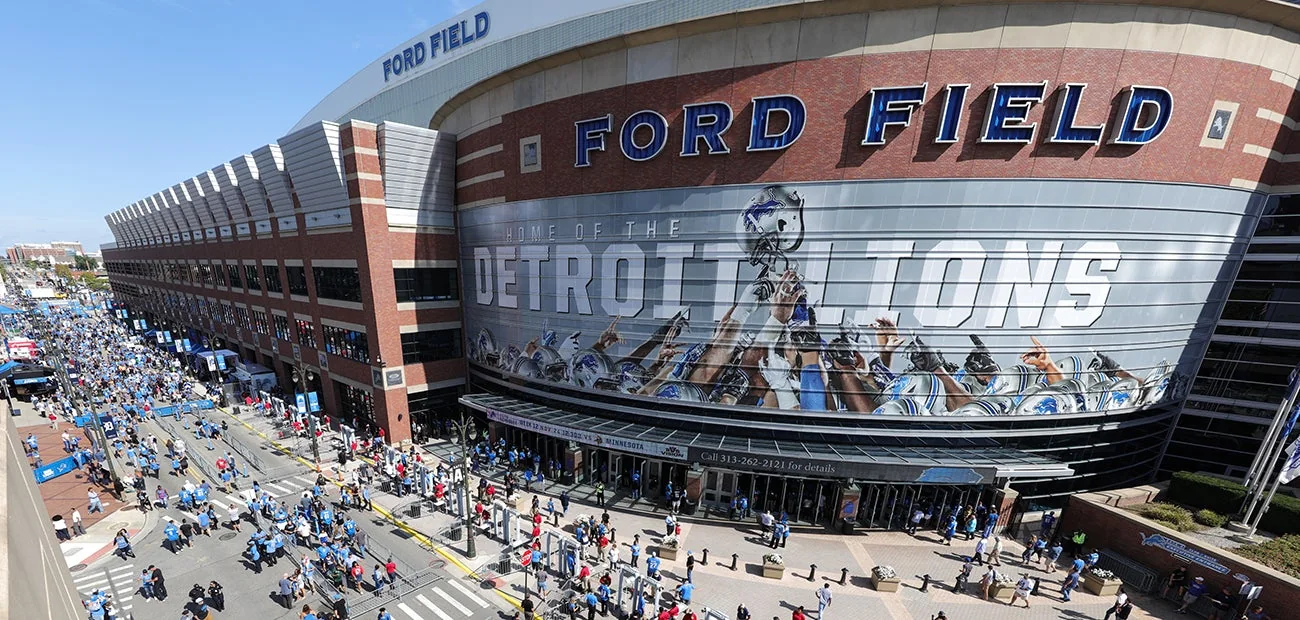
The building is a different visual and spatial environment from the basketball arenas used earlier in the tournament. Ford Field is the indoor home of the NFL's Detroit Lions, and the Final Four court and seating plan transform a football floor into college basketball's largest stage. That scale can change sight lines and the depth behind the baskets, which is one reason teams value practice time in the building. It does not change the court, rim or rules.
The semifinal pairings are already attached to the regions in the bracket. The committee does not wait for the Elite Eight, rank the four survivors again and reward the highest remaining seed. If a double-digit seed wins a region, it carries that region's slot to Detroit. Fans therefore can trace a possible semifinal from Selection Sunday, but both team names remain conditional until the last regional final ends March 28.
For travel, treat Saturday and Monday as separate event dates rather than assuming one admission covers the weekend. Verify the exact ticket package, seat location and entry rules with the authorized seller. Stadium maps can vary by event configuration, so a football section number alone is not enough to judge a basketball view.
Detroit also concentrates the fan experience into one city for the final stage. Teams receive the longer week after regionals, while semifinal winners have only Sunday between games. A visitor planning both dates should build lodging and transport around that Saturday-Monday rhythm, not around an assumed opponent or tip time that has not yet been announced.
How the committee assigns teams to sites
Geography helps higher seeds, but bracket rules come first
Predetermined venues do not mean predetermined teams. After selecting and seeding the field, the committee places teams into sites in true-seed order. It tries to keep programs in or near their areas of natural interest, measured from campus to venue. A higher-ranked team normally receives priority when two teams want the same geographic path.
That preference is not an absolute right to the closest arena. The bracket must separate conference opponents according to how often they played, avoid certain early rematches where possible, respect venue-use restrictions and keep the four regions reasonably balanced. A team generally cannot be placed in a building where it played more than three games during the season, excluding exhibitions and conference tournaments. A top seed also should not be placed where it would face a severe home-crowd disadvantage.
Those rules explain why a strong team can pass a nearby city and appear somewhere farther away. The committee did not necessarily rank it lower; it may have been solving a conflict created by another team, a rematch or the complete pod. Geography is a benefit applied inside a legal bracket, not the only construction principle.
Opening Round winners already have onward destinations
The Dayton and Wichita games are embedded in the main bracket. During selection weekend, the committee identifies the first-round slot and site that each Opening Round winner will enter. The result does not trigger a new travel draft Wednesday night. An advancing team follows the route already printed.
Because the turnaround is short, the procedure gives Opening Round participants early placement priority within their seed lines and considers practical flight options for winners. Wednesday winners must feed into Friday-Sunday sites, not Thursday games. That constraint can influence where a No. 1 or No. 2 seed is assigned when its opponent comes through the Opening Round.
The same fixed-route principle governs later travel. A first-weekend pod is connected to one regional site, and a regional champion is connected to one Final Four semifinal. Upsets change the surviving team, not the destination. A fan deciding whether to follow a school should trace that exact bracket line rather than choose the regional city that seems geographically intuitive.
A practical travel and ticket plan for 2027
Know what is confirmed before Selection Sunday
The safest early bookings are built around facts already fixed: city, venue and round-date pair. A fan can plan to attend the South Regional in San Antonio on March 25 and 27 or the Final Four in Detroit on April 3 and 5. What that fan cannot know months ahead is which team will occupy the bracket slot, which semifinal comes first or which exact tip time a broadcaster will assign.
If the trip depends on one school, wait for Selection Sunday before buying nonrefundable first-weekend travel. Even a projected No. 1 seed is not guaranteed the closest available site because the committee must satisfy the whole bracket. If the trip is about the event rather than one team, book flexible lodging near transit and verify the arena's current bag, entry and accessibility policies closer to game day.
Final Four planning can begin earlier because every survivor ends in Detroit. The official event page offers presale signup, ticket and hospitality information, fan-event schedules and travel resources. Some surrounding events run April 2-5, while the games themselves are April 3 and 5. Keep those calendars distinct.
Read session details before buying seats
“First round in Omaha” is not a complete ticket description. Early-round venues host multiple games and sessions, and access can be sold by session or package. Confirm the date, session, included games, seat location, delivery method and refund or resale terms. Advancing with your team does not automatically extend the ticket to its next session or city.
Use the authorized NCAA ticket path or the event's named official provider, and treat a screenshot or social-media message as insufficient proof. Compare the listing's venue and date with the official site table. For Ford Field, consult the basketball seating configuration rather than judging a seat only from the Detroit Lions chart.
Finally, leave the game-day plan flexible. Exact tip times and networks can arrive after matchups are known, and official listings commonly use Eastern Time. Check the site's men's college basketball TV schedule before departure, then allow for security lines and earlier games running long. A strong plan locks in the venue first, the team second and the exact clock last.
Sign in with Google to join the discussion.