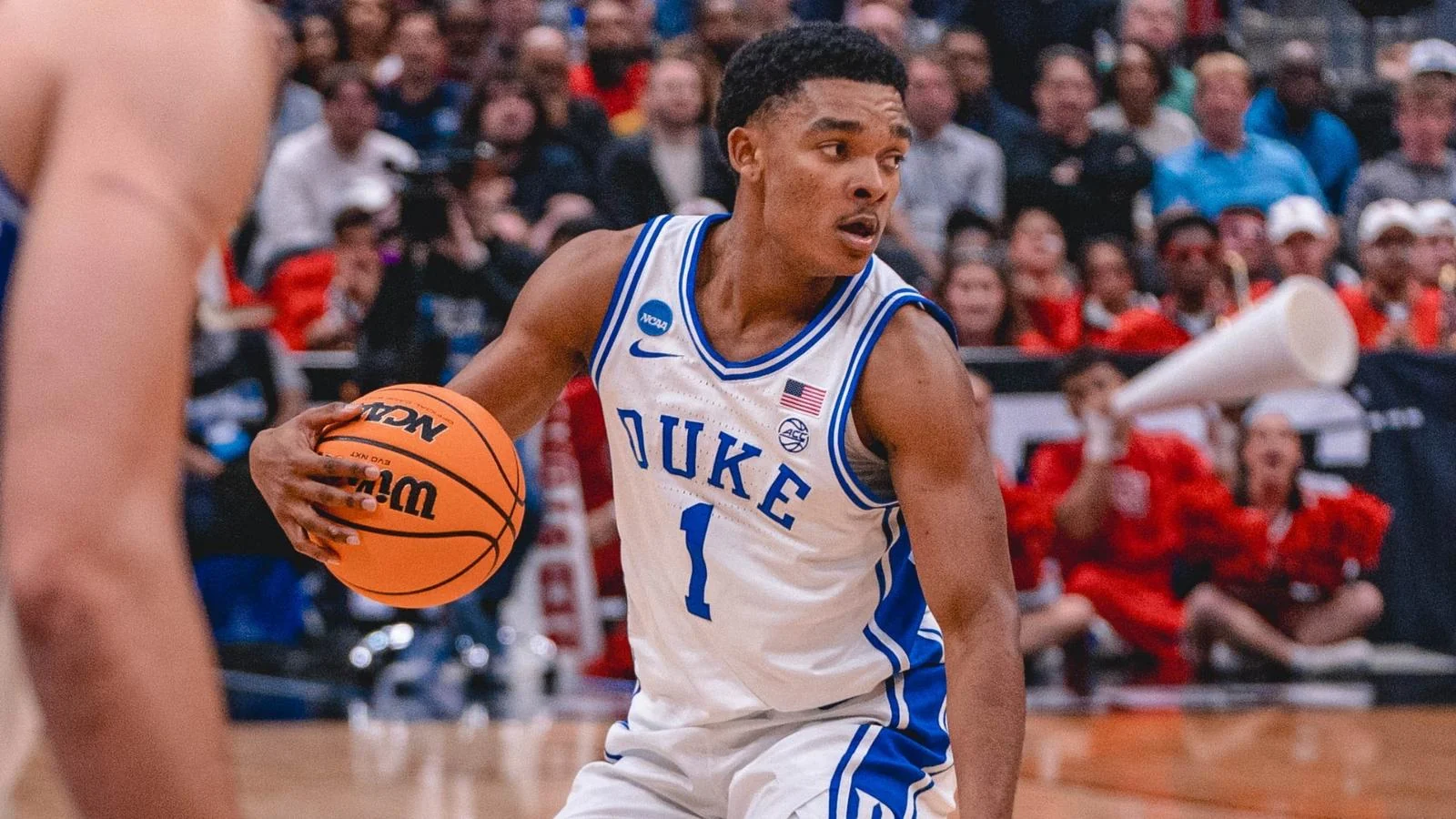
NCAA men's basketball uses a size 7 ball
The men's NCAA basketball corresponds to the retail size 7 ball, normally labeled 29.5 inches. That measurement is its circumference: the distance around the ball. It is not the ball's diameter. Women's college basketball uses the smaller size 6, normally labeled 28.5 inches. If your goal is to match men's college dimensions, check the size and circumference before you compare brand names or a March Madness logo.
These labels describe the familiar shopping sizes. The NCAA's equipment rules specify permitted ranges and additional requirements. A product can carry “NCAA” in its name, come in more than one size and have a different intended surface from the ball used in a particular college game. The label therefore needs to be read as a set of details rather than as one complete promise.
The men's rulebook specifies a circumference range
The current 2026–27 men's rulebook allows a circumference from 29.5 to 30 inches. Wilson's size 7 description uses 29.5 inches as its nominal commercial size. Those statements are compatible, but they are not identical: the rule gives a permitted interval, while the shop label identifies a product-size category. “Size 7” is useful shorthand for a buyer, not a substitute for every NCAA equipment specification.
For a Duke men's game, the applicable men's rule matters more than a school name printed on a consumer ball. A Duke-themed souvenir and a regulation-sized playing ball can both refer to the same program while serving different purposes. Check whether you are buying an actual playing product, what size variant is selected and what the manufacturer says it is designed to do. A photograph beside a listing may not change when you switch size options.
Women's college basketball uses the smaller size 6
The women's NCAA rule permits a circumference of 28.5 to 29 inches. The nominal 28.5-inch size 6 therefore belongs to a separate commercial size category from men's size 7. Calling it “intermediate,” as some product pages do, does not mean women's college competition is an intermediate level. It is a size label, and the women's game has its own equipment standard.
The difference is an inch between the two familiar nominal sizes, not a one-inch difference in diameter. That distinction matters when a buyer compares dimensions or notices that a ball feels smaller in the hands. Do not estimate regulation size from an action photo, the player's stature or the color of a ball. Read the printed size and product specification. For an organized game, use the standard of the competition actually being played rather than assuming every college-branded basketball is interchangeable.
Size is only one part of the NCAA ball standard
A ball can have the right circumference and still require other checks before college competition. The men's NCAA rule addresses shape, cover, panel construction, weight and rebound behavior as well as size. It calls for a spherical ball with a pebbled leather or composite cover and the traditional eight-panel arrangement. These requirements show why “29.5-inch basketball” is an incomplete description of game equipment.
The home team supplies a ball meeting the rule specifications, and the referee judges its legality. That is a competition procedure, not an assurance that any ball bought from a retailer becomes approved merely because it carries a recognizable logo. For an ordinary practice purchase, the practical lesson is to check the product's intended use. For an organized game, the competition's equipment rule and officials' administration determine what may be used.
Weight, rebound and inflation checks
The men's permitted weight is 20 to 22 ounces. Its rebound test uses a drop from six feet, measured to the bottom of the ball, with the rebound measured to the top. The allowed response runs from at least 49 inches at the least resilient spot to no more than 54 inches at the most resilient spot. Changing which part of the ball you measure would change the test, so a casual bounce beside your waist is not the same procedure.
The rule connects inflation to that response and says the pressure producing it is stamped on the ball. It does not justify applying one guessed PSI to every NCAA-branded retail product. Read the marking on the ball and the manufacturer's instructions. A pressure gauge is more informative than repeatedly squeezing the cover and guessing. This is an equipment-checking recommendation, rather than a claim that a home test certifies NCAA compliance.
Consistency matters to preparation. The NCAA recommends providing visiting teams with warm-up balls of the same type as the game ball. That recommendation acknowledges the relevance of familiar equipment without proving that a particular miss was caused by a brand, surface or inflation difference. For a men's guard bringing the ball upcourt, the object being handled should be understood through its actual specifications, not only through its appearance in a television close-up.
If a shot falls short or a dribble looks awkward, the ball is only one possible consideration. Defensive pressure, footwork, decision-making and execution remain part of the basketball explanation. Without measurements or a documented equipment issue, assigning a team's poor performance to the ball would be speculation. The standards help describe what game equipment must satisfy; they do not supply a ready-made cause for every result.
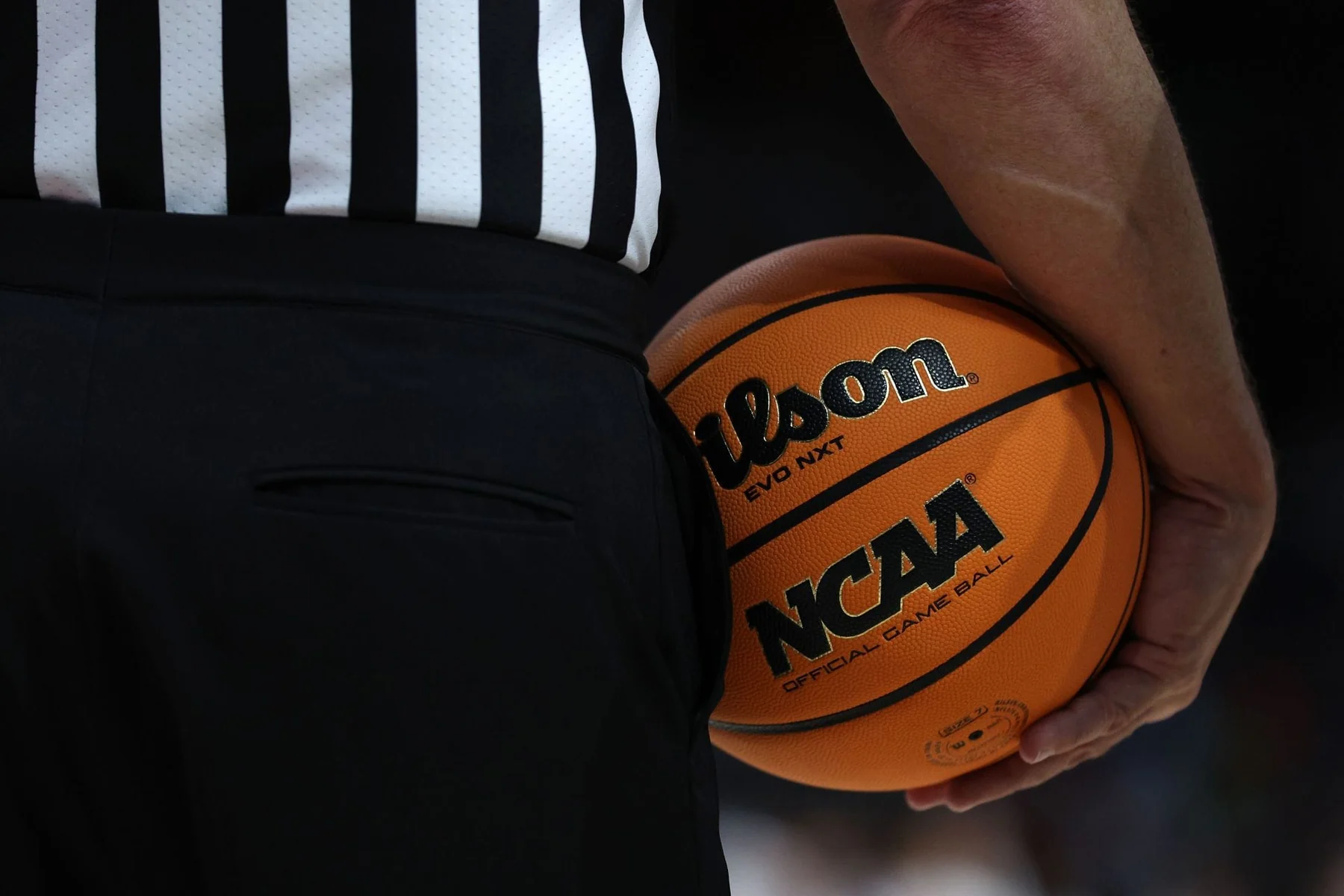
The March Madness game ball is a specific Wilson model
The championship ball has a more precise identity than “Wilson NCAA basketball.” The NCAA's current equipment supplier list names Wilson and the EVO NXT model for basketball. Wilson's 2026 team sports catalog identifies its NCAA Evo NXT Game Ball as the official basketball of March Madness and the Final Four. The catalog lists separate size 7 and size 6 versions, so the tournament connection does not mean the men's and women's competitions use the same circumference.
This distinction helps when a television close-up sends you searching for the ball in a player's hands. Start with the tournament model name and then choose the correct size. Searching only for NCAA can return recreational balls, replicas and other branded products alongside the game model. Those results belong to different product lines even when their orange covers and black channels look similar in a small photograph.
Official game ball and NCAA replica mean different things
The same Wilson catalog separately lists an NCAA Replica Game Ball. It describes a composite leather cover intended for indoor and outdoor play and offers size 7 and size 6 versions. That separate listing is the useful comparison: a replica can share the men's nominal size while having a different product identity and intended use. “Replica” describes the consumer model; it is not evidence that a legitimate retail basketball is counterfeit.
Likewise, an NCAA trademark identifies a connection to NCAA merchandise, while official championship equipment is selected through a supplier arrangement. The NCAA describes these as separate programs. A retail listing carrying the NCAA name therefore needs an exact model check before you call it the tournament ball. The name, selected size and manufacturer specification should agree. A page heading alone is a poor substitute for that full check.
Wilson describes the game model's cover and channels as part of its construction. Those specifications can help identify which product you are considering, but they do not establish how much your shooting will improve. This guide compares documented models and rules rather than reporting a hands-on test. It cannot tell you that two balls feel identical simply because they have the same circumference.
The championship designation also should not be stretched into a claim that every regular-season college game uses that exact retail model. The rulebook governs legal equipment, and the NCAA supplier listing concerns its championships. If you are following the sport after checking the equipment, our men's college basketball games today page provides the next practical step.
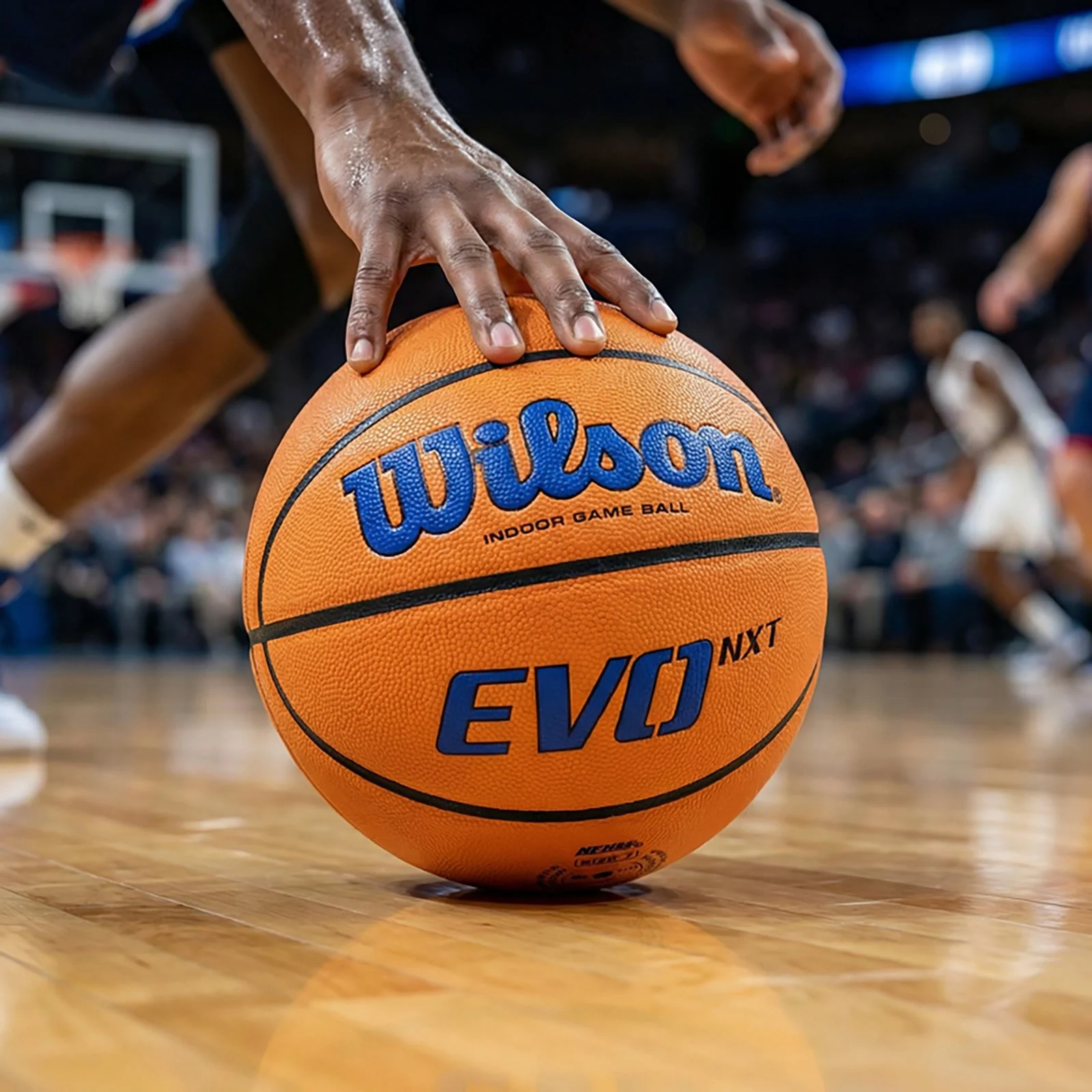
Choose the ball's surface rating for your court
Your playing surface creates a separate buying question after you have settled the size. Someone looking for a men's basketball for a driveway needs to check its outdoor suitability. Someone practicing in a gym needs to check the indoor specification and the facility's equipment policy. Watching an NCAA game can establish which competition interests you, but it does not tell you what construction is appropriate for your local court.
Indoor, outdoor and all-court labels
Wilson separates indoor, outdoor and indoor/outdoor basketballs in its shopping categories. Its buying guide describes outdoor courts as abrasive environments and identifies rubber basketballs with street and casual outdoor play. Composite covers appear across models with different intended uses. That makes the actual surface label more useful than a broad assumption that every composite basketball belongs in the same setting.
For a ball that will move between a park and a gym, look for an explicit indoor/outdoor or all-surface description on that model. Wilson's NCAA Replica Game Ball provides a concrete example: the 2026 catalog places it among indoor/outdoor basketballs. The catalog's NCAA Final Four Edition is also described for indoor or outdoor use. These are specific consumer models with a stated purpose, not proof that every NCAA branded basketball has that same specification.
A purchase decision can be straightforward without a claim about which ball is universally best. Write down where you will play most often, whether you need one ball for two surfaces, and what size your game requires. Compare models that answer those questions before considering their colors or tournament graphics. A product designed for your setting is a more coherent choice than one selected entirely because it appears beside a familiar college basketball logo.
A size 7 outdoor ball is still a different product
Two balls can both read size 7 and still serve different purposes. One may be a game model, another an outdoor recreational model, and a third a display item. Wilson's catalog even lists an NCAA Autograph Ball in size 7 while explicitly describing it as intended for display rather than game play. The size label answers a measurement question; it does not settle the intended activity.
If your aim is to play a men's pickup game at the park, the relevant combination is the right size and an appropriate surface rating. If your aim is to collect signatures, a display basketball may meet your goal despite being unsuitable as game equipment. Neither decision requires pretending the consumer product is the ball supplied for March Madness. Keeping these purposes separate makes an NCAA basketball search much easier to interpret.
When a smaller basketball makes sense
A young fan who watches men's March Madness does not automatically need the men's college ball size for their own games. Children's competitions and development programs may use smaller equipment. A basketball can carry NCAA branding while being offered in more than one size, so choosing a gift involves the player and their activity as well as the team or tournament they follow.
There are established examples of this approach. In their 2018 announcement of youth playing guidelines, USA Basketball and the NBA recommended a size 5 basketball with a 27.5-inch circumference for ages 7–8 and a size 6 basketball with a 28.5-inch circumference for ages 9–11. These were recommendations for youth development, rather than an instruction that every program must apply the same equipment rules.
Manufacturer charts offer another starting point, but they are buying guides. Wilson publishes a chart covering sizes 3 through 7 and different youth and adult groups. An age printed in a store's sizing table does not replace a league handbook. When a child is joining organized play, ask the coach or organizer for the actual ball size before ordering. That avoids buying a ball based on one chart while the team practices with another size.
For example, a family shopping for a nine-year-old who loves college basketball can ask whether the program uses 28.5 inches, then look for that selected variant in an appropriately rated model. This is a purchasing example, not a claim about the rules of a particular local league. The important information is the program's answer. The NCAA logo can satisfy the child's interest in the sport after the practical specification has been settled.
The smaller women's college basketball should also be understood on its own terms. Size 6 is the standard competition size associated with the women's game; it is not a temporary step toward the men's ball. An adult choosing equipment for women's competition should follow that competition's specification. Calling size 7 “official” in a retail menu does not make the women's competition less official.
For casual play outside a league, the buyer has more room to choose according to the intended activity and the player's preference. For organized games, the required size comes first. Separating those situations keeps a men's college equipment guide useful without turning it into a universal rule for every person who enjoys basketball.
How to check a Wilson NCAA basketball listing
Read a listing in a consistent order: identify the model, confirm the selected size, check the intended surface, and then compare the seller's description with the manufacturer's specification. This sequence addresses the most common ambiguity in an NCAA basketball search. The tournament name, a size number and a material description can each be accurate while referring to different aspects of the product.
Read the model, size and intended surface together
First, decide what you are buying. If you want the documented March Madness game model, look for NCAA Evo NXT Game Ball and compare the model details. If you want a recreational replica or a Final Four branded ball, read that exact product's specification. A description that mixes the official game model in its heading with a replica in its body needs clarification before it can answer your question.
Second, confirm the variant you will actually receive. A page can offer more than one size, and the main photograph may remain similar when the size selector changes. For men's college dimensions, the familiar retail target is size 7 or 29.5 inches. Check the selected option, the order description and any model code together. Do not assume that a product page mentioning size 7 somewhere will deliver that size regardless of the selection.
Third, match the surface description to your court. A buyer playing outdoors should look for an explicit outdoor or indoor/outdoor rating on the chosen model. The material name alone is incomplete information. A family purchasing a collectible should also check whether it is intended for play or display. These choices are independent of whether the product carries a college basketball name.
Once the ball arrives, its markings provide another useful check. Wilson's 2026 catalog says sizing information is located near the air valve. Compare that information with the model and variant you ordered. Inflation should follow the ball's own marked instruction. Neither a photograph nor a size marking can demonstrate every requirement in the NCAA rulebook, and equipment for organized competition still goes through that competition's approval process.
This leaves three clear answers to three different questions. The men's college size category is size 7, commonly sold as 29.5 inches in circumference. The NCAA men's permitted circumference range is 29.5 to 30 inches, with additional equipment requirements. The official championship model is Wilson's NCAA Evo NXT Game Ball. Keeping the measurement, the rules and the model identity together lets you choose or identify a basketball without confusing a retail label with a complete competition standard.
Sign in with Google to join the discussion.