Men's college basketball plays two halves
NCAA men's college basketball has two 20-minute halves, not four quarters. Regulation therefore lasts 40 minutes on the game clock. The first half counts down from 20:00 to zero, the teams take halftime, and the second half starts with another 20:00. A tied score after the second half sends the game to overtime. That is the format to use when reading a men's NCAA schedule or watching a regular-season game or March Madness matchup.
This answer is current as of October 1, 2026. There has been renewed discussion about a four-quarter format, but discussion does not change the period shown on a scoreboard. The NCAA's May 2026 committee update described further evaluation of quarters. For now, a men's game reaching 10:00 remaining in the first half has reached the middle of that half; it has not completed a first quarter and does not automatically pause for a period break.
On a broadcast, labels such as “1st,” “2nd,” “H1” or “H2” usually identify the half. Read the period label alongside the remaining time. A 42–38 score with 12:00 in the second half describes an unfinished game with substantial regulation time left. The same score labeled “Final” describes a completed game. The period and status answer different questions, which is useful when several games appear together on today's men's college basketball schedule.
What the 40-minute game clock measures
The 40 minutes represent playing time, rather than the time between your first and last glance at the television. Whistles, free throws, timeouts and the halftime interval create stretches when the game clock is not counting down. That makes “a 40-minute game” a rules description, not a promise that you can watch the entire contest in less than an hour. A close finish can contain many consequential possessions while only a small amount of clock time disappears.
Keep the shot clock separate, too. It limits an offensive possession; it does not replace the half's clock. In a hypothetical Duke–North Carolina game, a graphic showing 7:15 and a smaller possession countdown is showing two clocks doing different jobs. The longer display says how much regulation time remains in that half. The shorter one tells the offense how urgently it must produce a legal shot attempt. Knowing which is which lets you judge a rushed possession without misreading the overall state of the game.
Why women's college basketball and the NBA look different
The word “basketball” does not identify a single timing format. NCAA men, NCAA women and NBA teams all play the same broad sport, but their period structures differ. Moving between broadcasts without checking the competition can lead to a surprisingly large mistake: what looks like the last period in one game may still be the first half in another. Start with the competition's name, then interpret its clock.
A quick comparison of periods and regulation time
| Competition | Regulation periods | Total game-clock time |
|---|---|---|
| NCAA men | Two 20-minute halves | 40 minutes |
| NCAA women | Four 10-minute quarters | 40 minutes |
| NBA | Four 12-minute quarters | 48 minutes |
The important comparison is that NCAA men's and women's regulation games contain the same amount of playing time, divided differently. The women's game is not shorter simply because each period is shorter. The NBA comparison changes both variables: it has four periods and eight additional regulation minutes. A fan switching from a Duke men's broadcast to a Duke women's broadcast therefore needs to change how the period label is interpreted even while staying with the same school.
A period number also puts a score in context. A lead late in a women's third quarter still has an entire fourth quarter to survive. A men's lead late in the second half is much closer to the end of regulation. Comparing those situations only by the displayed clock would miss that difference. For team comparisons, use possession efficiency and the actual competition context rather than assuming a higher raw score proves a faster or better offense.
Why a men's TV timeout is not a quarter break
A televised men's game contains scheduled opportunities for media timeouts inside each half. The NCAA's regular-season guidance ties the number and timing marks to the electronic-media agreement; examples include 16-, 12-, 8- and 4-minute marks or 15-, 10- and 5-minute marks. The break occurs at a qualifying dead ball, rather than forcing live action to stop precisely when the clock passes a round number.
These stoppages can make a half feel like smaller segments, but they are still timeouts within the same period. The half's clock resumes from its remaining time. The teams do not receive a quarter-boundary reset simply because viewers saw advertisements. Coaches may use the pause to make substitutions or clarify defensive coverage, so it can be tactically significant without changing the game's period structure. The safe viewing habit is to read the actual half label when the broadcast returns.
Halftime, overtime and a close finish
The regulation structure contains one halftime interval, between the two halves. The standard rules allowance is 15 minutes. It is a genuine intermission: the first-half clock has expired and the second-half clock has not started. That is different from a timeout in the middle of a half, after which the teams return to the same remaining clock time. For viewers, halftime is the clearest opportunity to step away without assuming a late-game stoppage will last long enough.
The score carries forward through halftime. A team leading by six starts the second half with that same advantage, although the tactical contest may look different after coaching adjustments. A poor first half does not eliminate the chance to win; the second half still provides 20 minutes to change the possession battle. Conversely, a first-half lead is only a checkpoint. Treating halftime as a final verdict overlooks the time remaining and the opponent's opportunities to respond.
What happens when the score is tied
A tie at the end of the second half leads to a five-minute overtime period. It is not sudden death: the first team to score does not automatically win. If the teams remain tied after that period, another five-minute period follows. The process continues until an overtime period ends with one team ahead. One overtime produces 45 total minutes of game-clock time; two produce 50. Stoppages and the intervals before extra periods still add elapsed time beyond those totals.
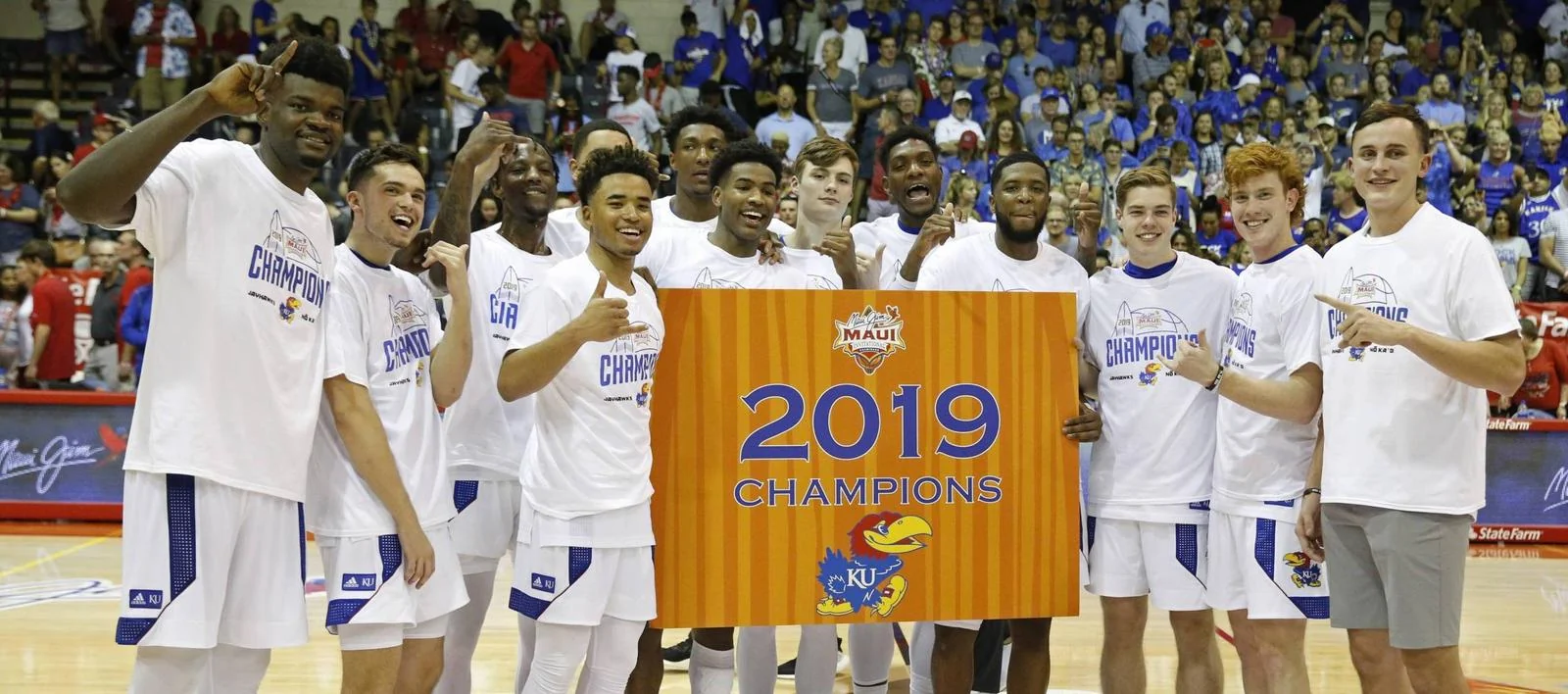
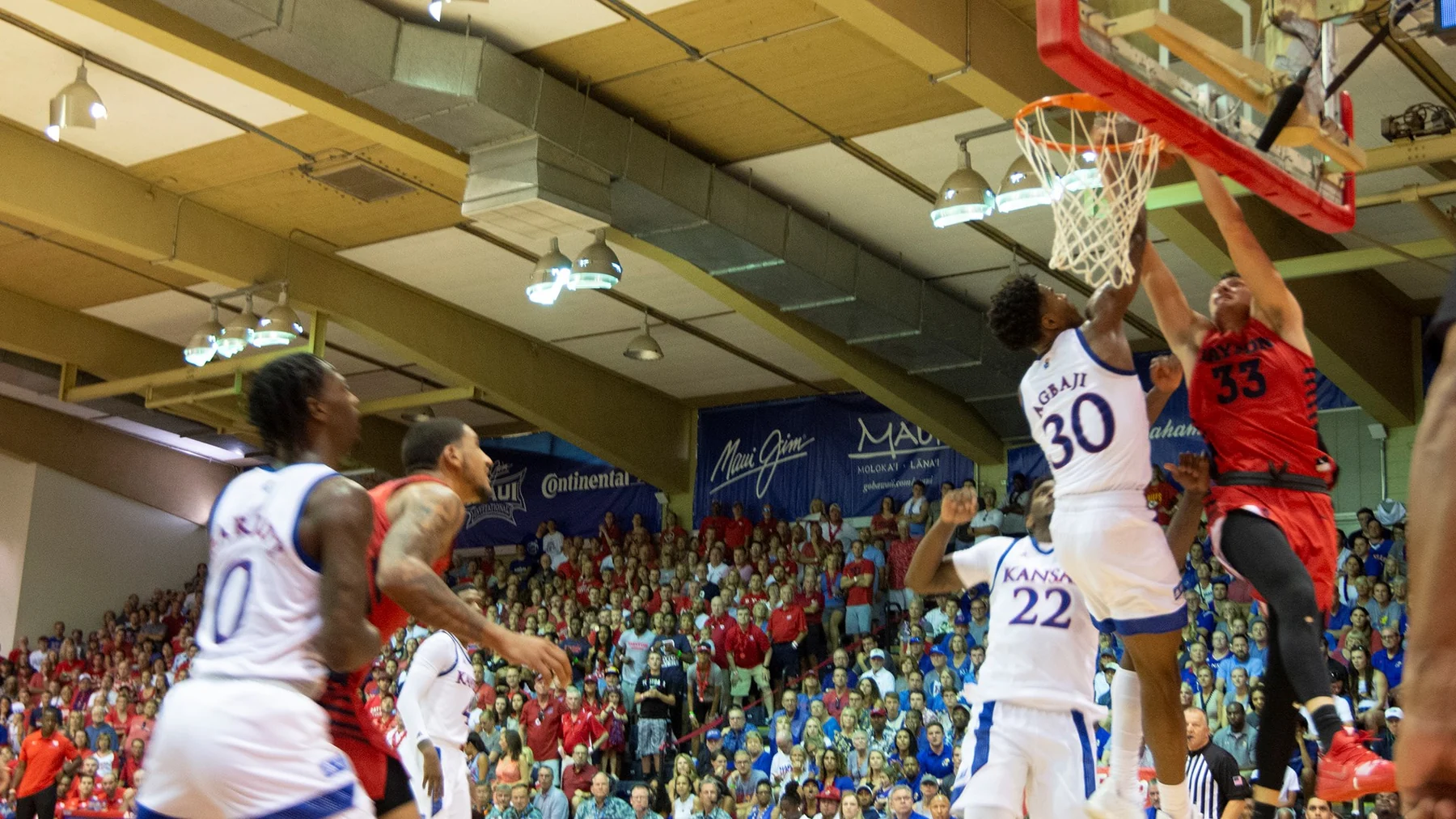
Kansas and Dayton supplied a clear example in the 2019 Maui Invitational championship game. The teams were tied 73–73 after regulation. Kansas then won the overtime scoring 17–11, finishing with a 90–84 victory. The regulation tie was a milestone, while the 90–84 score was the final result. A box score listing “1,” “2” and “OT” records the two halves and the extra period rather than three regulation quarters.
For a close finish, watch more than the clock. The score margin, possession, foul situation and timeouts help explain whether a team needs a quick shot, a defensive stop or an opportunity to stop the clock. A minute remaining does not mean the broadcast will finish in a minute. Several free throws, an official review and timeouts can stretch that interval. These are reasons to leave a viewing buffer, rather than reasons to assign a precise finish time before the game starts.
Overtime also invites a different basketball question: who is still available to execute? A starter in foul trouble or a heavily used ballhandler may complicate the next possession. Those considerations are game-specific; extra time does not favor one kind of team automatically. Read the lineup actually on the floor and the current foul counts before attributing an overtime result simply to “momentum.”
How halves shape fouls and coaching decisions
The halves format matters most when fouls accumulate. It creates a long stretch in which a team's early defensive mistakes can affect later possessions. A broadcaster showing the team-foul total is giving you information about the next whistle's possible cost, not just recounting previous contact. Read that total together with the half and the type of foul called.
The bonus builds across a half
For eligible non-shooting defensive fouls in NCAA men's basketball, the seventh, eighth and ninth team fouls produce a one-and-one. The shooter must make the first attempt to earn a second. From the tenth team foul, the double bonus provides two attempts for those eligible fouls. Shooting fouls and other categories have their own penalties; the team-foul number does not mean that every whistle automatically produces bonus free throws.
Team fouls reset at halftime, rather than halfway through a half. Overtime extends the second half for this purpose. A hypothetical Kansas defense reaching seven team fouls early in the second half therefore cannot wait for a quarter break to erase that pressure. The opponent may benefit from attacking the paint or putting a defender in a difficult recovery position. That is a tactical possibility, not proof that every drive will draw a whistle or that the offense should abandon good perimeter shots.
A player's personal foul count is a separate matter. Halftime does not erase it, and a fifth countable personal foul disqualifies a player. A coach deciding whether to protect a starter must weigh that player's current foul count, the replacement options and the matchup. Team bonus pressure can concern the entire defense even if no individual is close to disqualification. Conversely, one starter can be in serious foul trouble while the team is still below the bonus threshold.
Late-half possessions and the shot clock
The standard full men's shot clock is 30 seconds, although particular situations use shorter resets. Near the end of a half, compare the actual shot-clock display with the actual game clock. If the possession clock expires before the half ends, the offense cannot simply dribble out all the remaining regulation time. If the game clock will expire first, the team may be able to play for the half's final attempt, depending on how the possession develops.
For example, an offense with 24 seconds left in the half and a longer possession countdown has a different decision from an offense with 42 seconds left and a fresh 30. In the first situation, patience can deny the opponent another normal possession. In the second, waiting until the possession limit creates room for the opponent to respond. A quick first attempt might create another opportunity, but a rushed poor shot can undo that advantage. Clock arithmetic sets the opportunity; execution determines whether it helps.
These are reasons to watch possession timing rather than memorizing a universal end-game formula. Rebounds, fouls and turnovers can change the available sequence immediately. A halves format supplies the deadline, while the shot clock supplies the nearer constraint. The best reading of a late-half possession combines both clocks with the score and the lineup.
Are men's college basketball games changing to quarters?
The current answer remains two halves. The NCAA's May 8, 2026 update describes evaluation of a possible move to four quarters. The current 2026–27 men's rules book still specifies two 20-minute halves. A headline asking whether the sport should change is describing a policy conversation, rather than a different rule that viewers must already apply.
The distinction matters because rule announcements can discuss several ideas with different statuses. The NCAA's June 2025 approval release introduced changes such as the coach's challenge while also discussing momentum toward quarters. Reading the entire release prevents a fan from treating every idea in it as approved. A word such as “evaluate,” “propose” or “consider” carries a different meaning from a published rule with an effective season.
Four 10-minute quarters would still add to 40 minutes, so the issue is larger than total playing time. The committee's stated areas of consideration include game flow, strategy, foul resets, elapsed length and broadcast arrangements. Earlier in this guide, the long accumulation of men's team fouls illustrated why that subject matters. Changing where a foul count resets could change the pressure attached to a possession even if the amount of regulation time stayed identical.
That does not establish that quarters would automatically produce more scoring, fewer stoppages or a better television experience. Those outcomes depend on the accompanying rules and how games are administered. As an editorial judgment, the most useful fan question is therefore “Which parts of the format would change?” rather than simply “Would there be four periods?” A quarters proposal without its foul and timeout provisions is an incomplete description of the game that would result.
For a Duke men's game, or any other current NCAA men's matchup, keep reading the scoreboard as halves unless an official applicable rule says otherwise. For a future season, check the season named on the rulebook and an announcement's effective date. A retrospective article, an opinion column or a social clip can explain the debate, but it cannot by itself establish the rule for an upcoming contest. This guide makes no prediction about when or whether a four-quarter change will be adopted.
How to plan around a men's college basketball game
Use the 40-minute regulation length to understand the sport, and use the announced tip time to plan your evening. They answer different questions. The date and start time tell you when the matchup is scheduled to begin; the halves tell you how the competition unfolds once it does. Neither supplies a guaranteed finish time. Leave room for halftime, stoppages and possible overtime when another commitment follows the game.
Before watching, confirm the matchup, local date, selected time zone and announced carrier on the men's college basketball TV schedule. A start time in Eastern time may sit on a different local date for an overseas viewer. “Time TBA” means a firm tip has not been announced. It does not give you enough information to infer a finish simply by adding 40 minutes to a guessed start.
If two games overlap, the period label is often more useful than the raw remaining time. Twelve minutes left in a first half leaves the rest of that half, halftime and a full second half still to come. Twelve minutes left in a second half places you much closer to the finish, although the score and stoppages still matter. Switch between broadcasts with that context, especially when deciding whether to stay with a tight game or catch the beginning of another.
Reading the schedule and scoreboard
Read a game in this order: competition, status, period, clock, score. “NCAA men” establishes the halves format. “Scheduled” means play has not started; “Final” means the result has been completed. A half label identifies where an active game sits within regulation, while “OT” identifies extra time. The score then tells you the margin. This order prevents an unfinished two-point lead from being mistaken for a completed victory.
After the game, the site's confirmed final scores provide completed results, rather than a promise of a possession-by-possession live scoreboard. An overtime marker explains why a game went beyond its normal two halves. For the Kansas–Dayton example above, it also helps a reader understand why the final includes more scoring than the two regulation period totals alone.
The short answers are therefore straightforward: men's NCAA basketball has two halves; regulation has 40 minutes; a standard overtime has five minutes; and a TV timeout does not create a quarter. The viewing decision takes one additional step: check the actual game status and keep a buffer for the finish. That habit remains useful whether you follow a November nonconference contest, a rivalry game or a tournament matchup.
Sign in with Google to join the discussion.