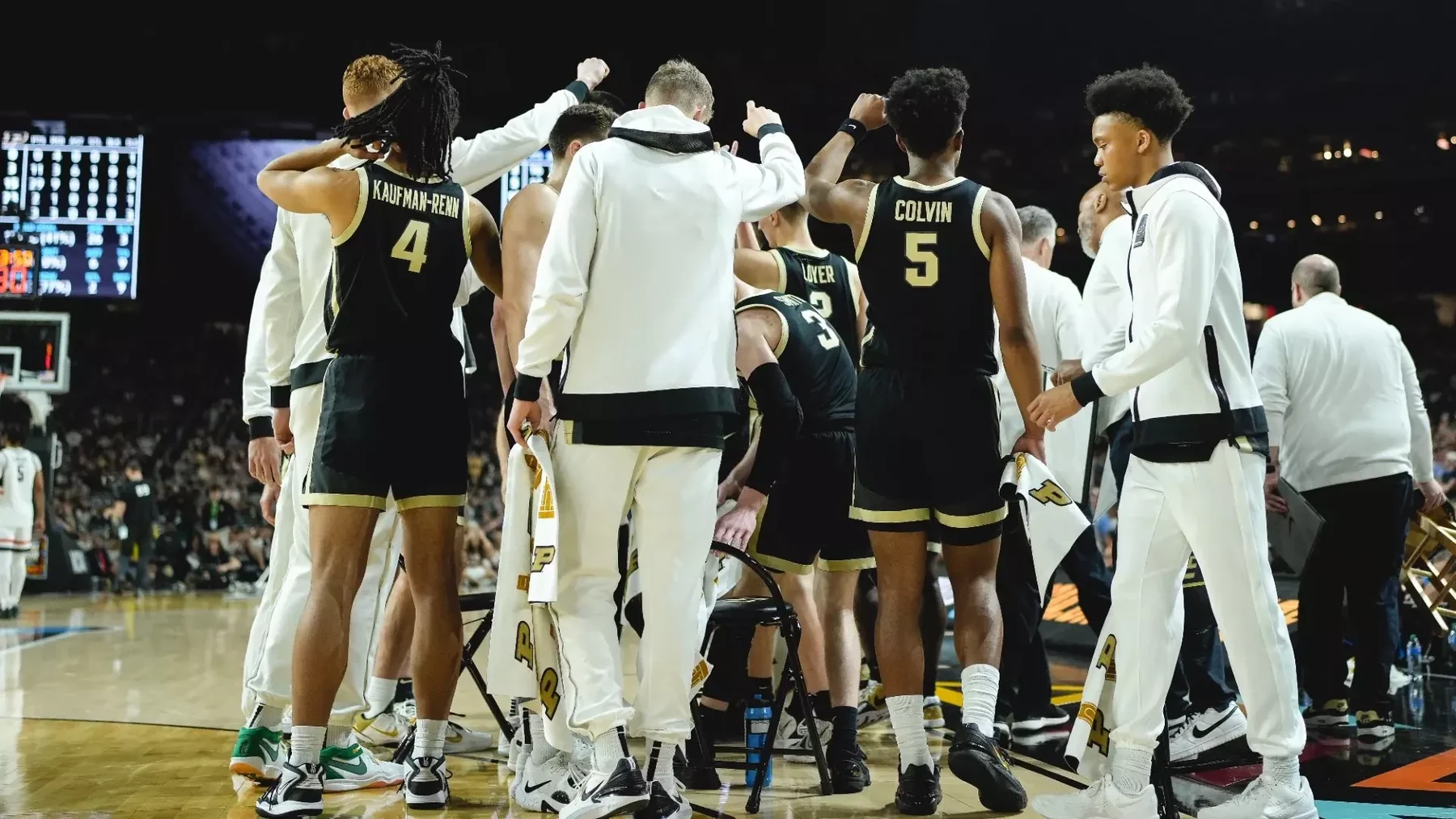
Five players play at once; the roster answers a different question
A men's college basketball team puts five players on the court at a time. The number on its full roster is a separate question. Under the Division I framework for schools participating in the House settlement, men's basketball has a standard 15-player roster limit, with designated-athlete exceptions. Fifteen therefore describes a roster rule; it does not mean 15 players enter every game or that every school publishes exactly 15 names.
| Number you are counting | What it tells you |
|---|---|
| Five on the court | The active lineup during ordinary play. |
| Season roster | The players listed with the program for that season. |
| Game participants | The players who actually entered a particular game. |
| Regular rotation | The group a coach repeatedly trusts for meaningful minutes. |
| Scholarship recipients | The players receiving athletics aid, which a public roster may not identify. |
The distinction matters when a television graphic says a team is “seven deep.” That is a basketball assessment of its usable rotation, not a claim that the university has only seven players. A reserve might dress, warm up and remain available without entering a close conference game. Conversely, several players can appear late in a comfortable win without establishing themselves as options the coach would use against pressure in the final minutes.
Think of a hypothetical Texas lineup. A staff could begin with two guards, two forwards and a center, then replace a forward with another ball handler to attack a press. There are still five active players. Position names describe responsibilities, rather than adding roster slots. “Three guards” does not mean a sixth player has joined the action, and a point forward can initiate the offense without being listed as a point guard.
Roster size also tells you very little about how those jobs fit together. A team with several tall players might still lack a dependable defensive rebounder. A bench full of guards may not contain a second player who can handle pressure and organize a late-clock possession. The useful follow-up to “how many?” is “which problem can each available player solve?”
Keep the administrative and tactical counts separate throughout the season. A roster rule determines the framework within which a program assembles its team. The coach then chooses combinations for spacing, ball security, rim protection and opponent-specific matchups. Five is the immediate playing answer; roster composition and eligibility explain how many alternatives exist behind those five.
What the 15-player Division I limit actually means
NCAA Division I Proposal 2025-11 sets men's basketball's roster limit at 15 for institutions in the defendant conferences or institutions that opt into the House settlement. The effective date was July 1, 2025. Those qualifications belong in the answer: a rule for participating Division I programs should not be presented as a universal headcount for every NCAA, junior-college, NAIA or club team.
The immediate fan consequence is that a school roster must be interpreted within its competition and regulatory setting. A page with fewer names is not automatically incomplete, while a page with more names is not automatically evidence of a violation. Counted roster places, exempt athletes and the particular season all matter. The school's compliance staff, rather than a fan counting photographs, determines the formal certification.
Scholarships and roster places are separate questions
The settlement framework removed sport-specific scholarship limits for participating schools. That permits athletics aid across the roster; it does not promise an identical financial package to every player. A roster entry normally tells a reader a name, jersey number, class, listed position and biographical information. It usually cannot tell the reader the terms of an individual aid agreement.
For basketball analysis, avoid using “scholarship player” as shorthand for “will play.” A funded developmental center might be behind two more experienced options. Another player might earn a larger role through defensive execution or ball security. Funding, eligibility and playing time are different decisions, even when recruiting coverage discusses them in the same paragraph.
Why designated athletes can make a roster longer
The transition created a designated-student-athlete category for qualifying players whose 2025–26 places were or would have been affected by the new limits. The adopted legislation includes specific pre-April 7, 2025 roster or recruiting conditions. This is a dated protection for an identified group, rather than a standing invitation for every future recruit to occupy an extra place.
NCAA implementation guidance explains that a qualifying designated athlete can remain exempt for the duration of his athletics eligibility, including after a transfer to another participating institution. Consequently, a school can have additional listed athletes without changing the underlying 15-player rule. The exemption follows its own conditions; it should never be inferred merely because someone is older, transferred recently or appears at the bottom of a roster page.
That is why “15, with qualifying exceptions” is more accurate than “exactly 15 everywhere.” For a fan previewing a game, the administrative exception is usually less important than whether those listed players are available and trusted. But understanding it prevents a common mistake: treating a public name count as a complete account of a university's roster certification or a player's financial support.
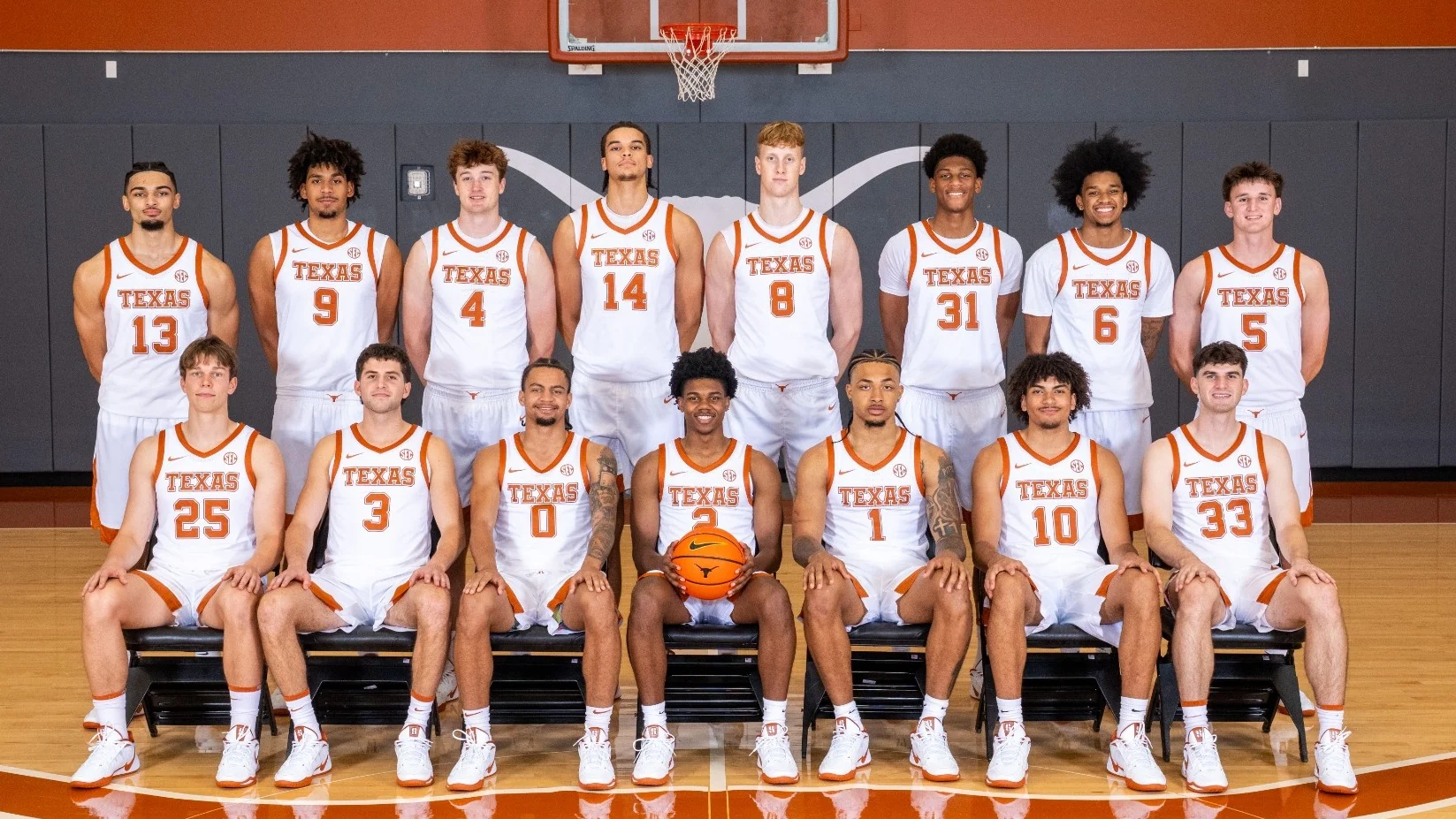
How substitutions and foul trouble change the available five
College basketball does not ration a team to a fixed number of changes for the entire game. An eligible player can leave, rest and return through the normal substitution procedure. There is no rule requiring all the reserves to be used, nor a rule requiring a coach to change all five players together. Substitutions have to be administered through the table and officials at permitted opportunities; they are not live, rolling exchanges.
That flexibility allows a staff to exchange skills. A strong defender can replace a shooter for a possession, a rebounder can enter against a bigger frontcourt, or a second handler can help bring the ball up against pressure. A substitute's value may be highly specific. His few minutes can protect a starter from fatigue or cover one uncomfortable matchup without making him a permanent member of the primary closing group.
For a fan, the telling moment is often the first substitution after an opponent changes its attack. Does the coach preserve size, add a shooter or use another guard? That decision reveals what the staff considers the greater danger. The total headcount stays constant while the team's offensive spacing, switching options and rebounding responsibility can change dramatically.
Five fouls and the loss of a specialist
A men's college player who reaches the disqualifying foul limit cannot simply return after a rest. The familiar college threshold is five personal fouls, rather than the NBA's six. Ordinary foul trouble before that point is different: a coach may remove a player to protect him, but that is a strategic decision while he remains eligible.
Imagine Texas facing a hypothetical opponent whose center draws two early fouls on the Longhorns' best rim protector. A like-for-like reserve would preserve the defensive plan. A smaller replacement might instead require earlier help against post entries, leaving a perimeter defender responsible for both tagging a cutter and recovering to a shooter. That is why “the backup scored only four points” can miss the most important part of his contribution.
Do not infer a universal automatic substitution rule from a coach's habits. Some staffs sit a player immediately after a second first-half foul; others accept the risk because the alternatives create a larger disadvantage. Score, remaining time, opponent size and the player's foul discipline all affect that calculation. The administrative rule establishes eligibility, while the staff decides how much risk to tolerate.
The same logic applies when injury, illness or discipline removes someone from consideration. The roster might contain many names, yet only one reserve may possess the missing skill. Watch the new combinations rather than assuming that subtracting one player has the same effect on every team. Basketball depth is the ability to replace a function, not merely fill an empty jersey.
Why a full roster is larger than the regular rotation
A coach assembles a season roster for more circumstances than the next game's first ten minutes. Practice requires competitive bodies and different defensive looks. Development requires opportunities that might not immediately produce a public role. Injuries, foul trouble and matchup demands create needs that a preferred five cannot cover alone. None of that obliges the staff to distribute competitive minutes equally.
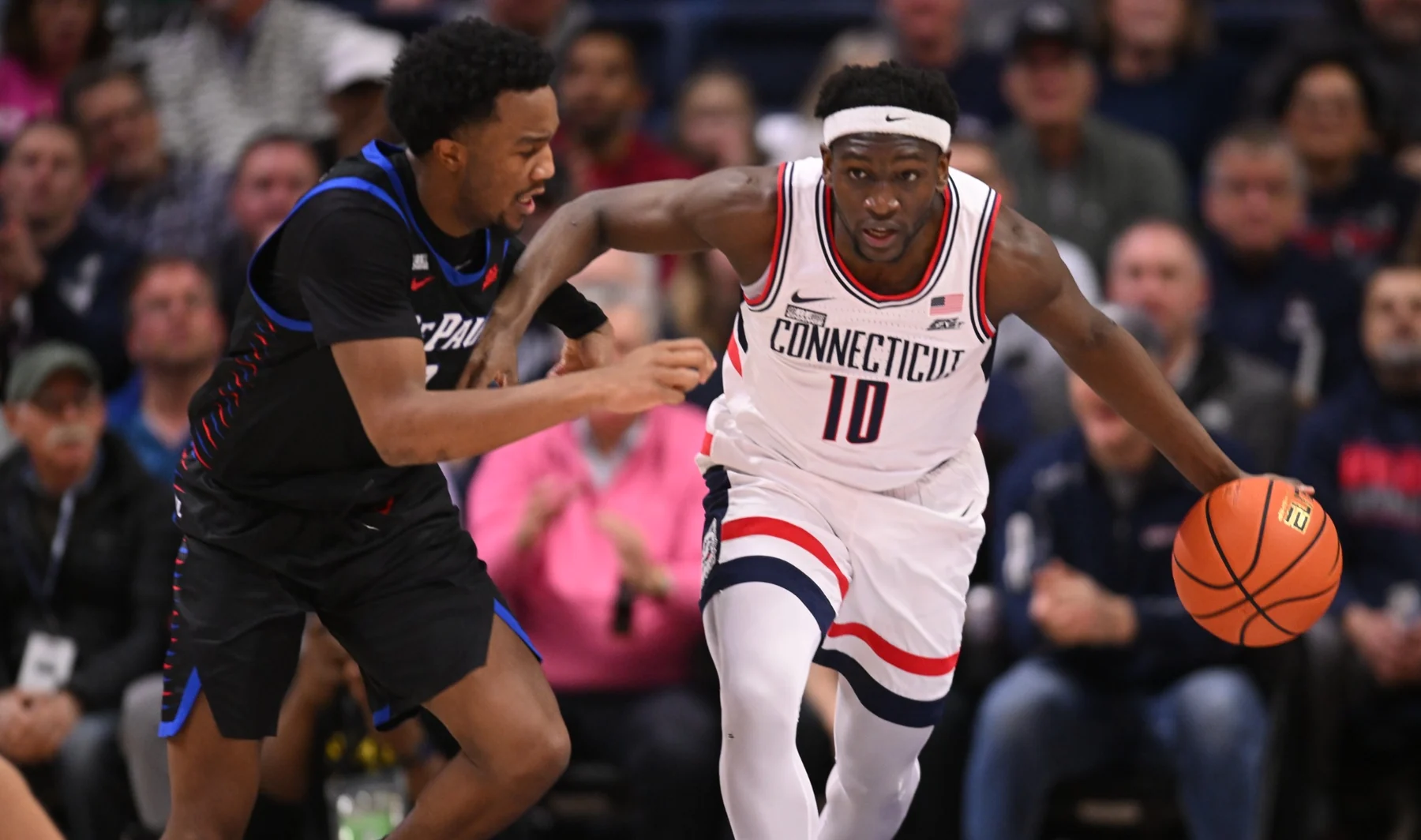
Hassan Diarra's 2023–24 season at UConn is a useful historical example. The school's official biography records 40 appearances, only one start and an average of 19.3 minutes. He won the BIG EAST Sixth Man Award. Calling him a reserve is accurate; treating that label as evidence of a marginal role is not. His season illustrates how starting status and sustained contribution can point in different directions.
The difference became visible in UConn's 2024 regional final against Illinois. Diarra and Samson Johnson each shot 5-for-6, helping the Huskies finish with a 27–15 edge in bench scoring. That is a concrete example of reserves contributing during a championship run, rather than merely entering after the contest was settled. It also shows why the useful count is the number of trusted options with complementary skills.
Contrast that with a team built around a dominant center. Zach Edey scored 37 points for Purdue in the 2024 national championship game. A substitute could provide relief, but replacing his minutes did not automatically replace his scoring function. These examples are historical, not projections for either school's current roster. They illustrate why counting bodies without examining roles can overstate or understate depth.
When studying a box score, separate the competitive rotation from appearances in a lopsided finish. Ask who entered while the outcome was uncertain, who returned after the opponent adjusted and who remained in the closing lineup. A player with a tiny season average could become a specialist against a particular opponent. Another with regular early minutes could sit late because the game requires more shooting or a different defensive matchup.
There is also a difference between quantity and resilience. Three substitutes who all need another player to create their shots do not necessarily protect a team if its lead guard is unavailable. One dependable secondary handler might do more to stabilize the offense. The same reasoning applies to rebounding and defensive communication: duplicated body types are useful only if the skills work in the combinations a coach actually needs.
Use the team directory to find the relevant program, then compare its roster with recent participation and minutes. Depth means preserving enough of the team's identity when a starter leaves. It is a more demanding test than asking whether the bench has another person at the same listed position.
How to count a college roster without being misled
Start with the university's official men's basketball page and select the intended season. A search for “UT roster” can mean Texas in Austin or Tennessee in Knoxville; UT Dallas is another institution again. Even a correct school page can display a historical season after a reader follows an old link. Check the school name, men's team designation and season label before doing any arithmetic.
A practical roster-reading checklist
Count unique players rather than jersey numbers or every name on the page. Official athletics sites can present the same athletes in card, list and table views. Counting repeated views doubles the apparent squad. Coaches, analysts, athletic trainers and support staff also appear below many rosters, but none belongs in the player total. A missing jersey number is not an unfilled roster place.
- Confirm that the selected season is the one you mean.
- Count each player once, using the player table or a single display view.
- Keep coaches and support personnel outside the total.
- Read previous-school information to distinguish a transfer from a returning player.
- Use official participation and minutes to identify the current competitive rotation.
- Leave aid status, designated-athlete status and medical availability unassigned unless separately confirmed.
Texas and Tennessee's 2026–27 roster pages demonstrate why these distinctions help. Their school biographies supply positions, classes and previous schools, but those fields do not constitute a starting lineup. A listed forward can play beside another forward or function as a small-ball center. A player's hometown says where he is from, not where he most recently played. Read the column labels rather than treating every piece of background as a current basketball role.
Class labels deserve similar care. “Junior” is useful biographical information; it does not by itself resolve every question about remaining eligibility. Do not reconstruct a player's full eligibility history by counting roster seasons on different sites. For ordinary game analysis, the more useful evidence is what he has done recently and whether the school identifies him as available.
What to check before the next game
A complete roster can still overstate the choices a coach has tonight. Check the latest school preview, recent box scores and trustworthy availability reporting. A player absent from one game might be injured, unavailable for another reason or simply outside the rotation. A box score showing no minutes records the outcome of that game; it does not diagnose the cause.
Then ask three basketball questions: who can organize the offense if the primary handler sits, who can defend the opponent's strongest interior player, and which combinations maintain enough shooting? These questions turn a headcount into a useful preview. If the answers all depend on the same starter, the team may be less resilient than a long roster suggests.
Find the next matchup on today's men's college basketball schedule, then apply the distinction that keeps every count clear: five active players, a broader roster, and a smaller group of trusted combinations. Those numbers describe different parts of the same team.
Sign in with Google to join the discussion.