Duke's 2026–27 basketball schedule begins against Army West Point on November 2 and builds toward early tests with Michigan State, Illinois and UConn. December adds Florida in Gainesville and Texas Tech at Madison Square Garden before ACC play starts at Georgia Tech on December 30. Gonzaga's February showcase remains a nonconference game inside the league-season calendar.
This guide uses official information checked through October 14, 2026. It explains the sequence, the current players' basketball questions and the practical distinctions among venues, broadcasts and clocks. Confirmed old results, preseason scrimmages and future fixtures are identified separately, while unknown scores, seeds and starting combinations remain unknown.
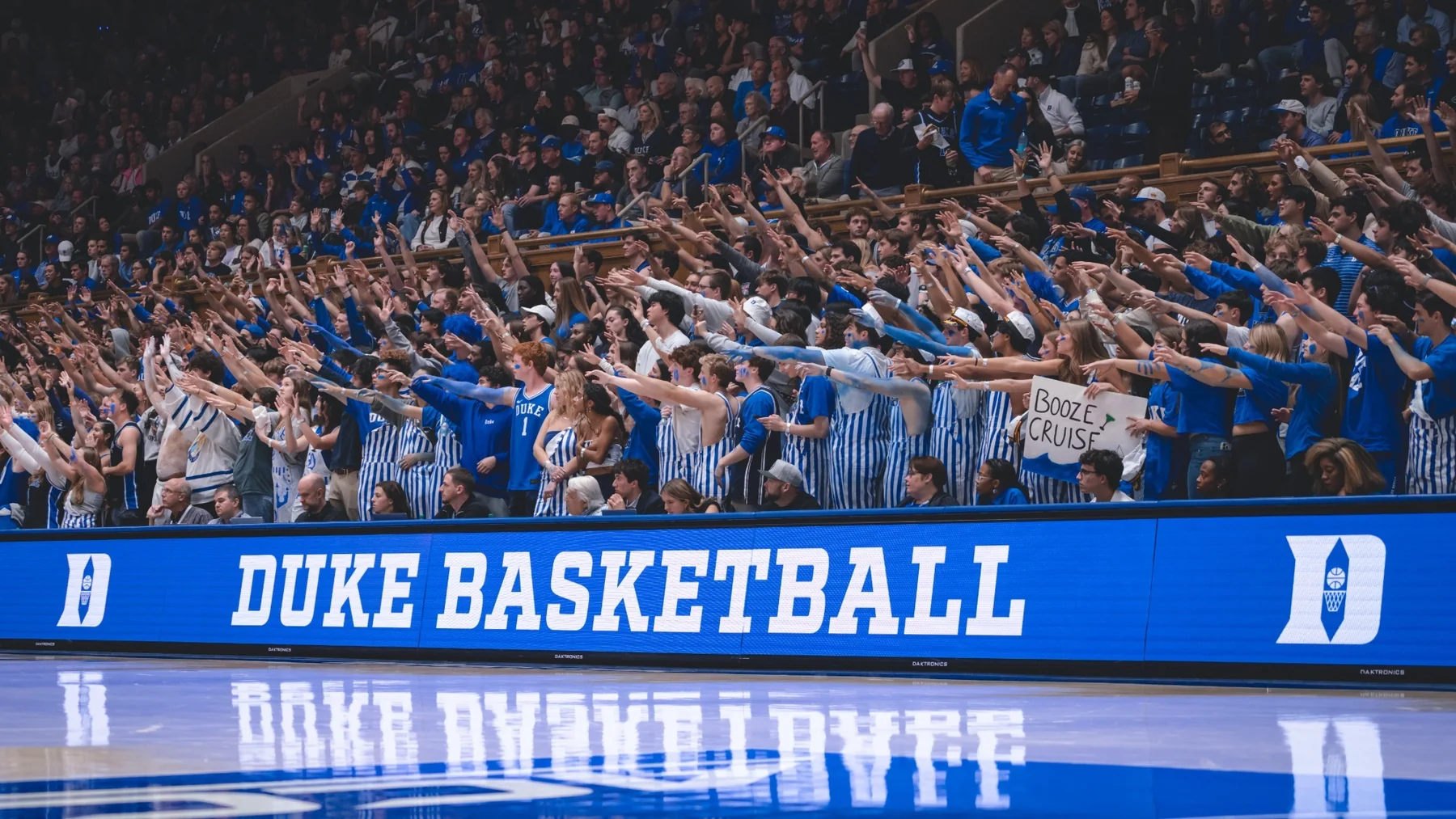
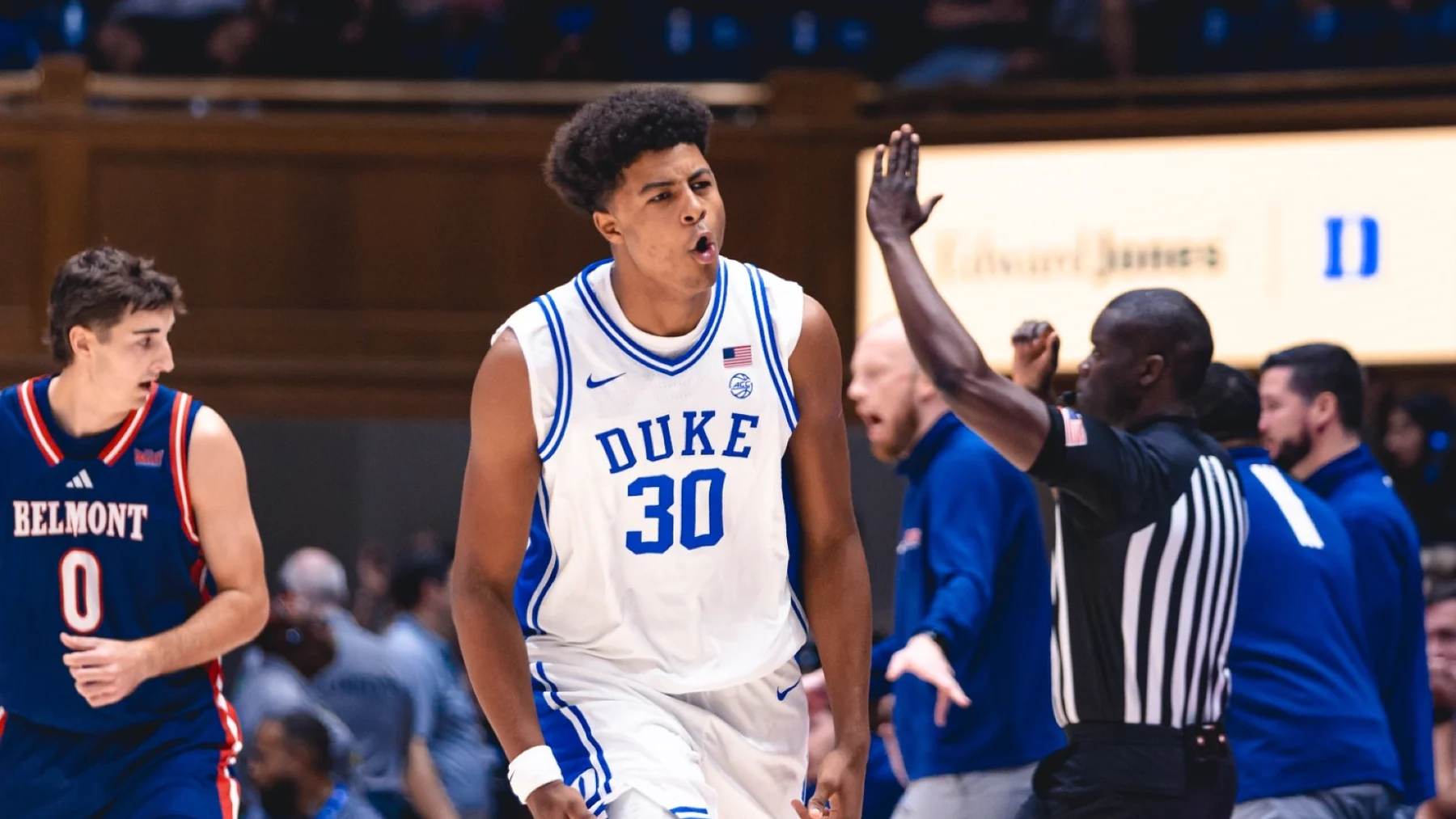
The cover is an archived Cameron Indoor Stadium crowd photograph used in Duke's April 2026 announcement. It shows the home atmosphere rather than a game in the upcoming schedule. The player photographs below illustrate the new group with their separately recorded source context.
Reading Duke's 2026–27 calendar correctly
Duke opens the regular season against Army West Point at Cameron Indoor Stadium on November 2, with a 6:30 p.m. Eastern tip listed on the current official calendar. Coastal Carolina follows at home November 5. These games begin the record that will matter for the new season; they should not be combined with October's preseason results.
The school's nonconference announcement identifies fourteen games, seven away from Cameron, entering Jon Scheyer's fifth season as head coach. Add eighteen ACC games and the current regular-season slate totals thirty-two. The mix creates opportunities to evaluate the team in several environments without assuming that any upcoming result has already been secured.
The October 8 Belmont scrimmage finished 102–62, yet the official season record remains 0–0 as of this guide's October 14 cutoff. Tennessee on October 20 and the trip to Kansas on October 25 are also preseason exhibitions. They can reveal combinations, timing and decisions, but an exhibition score is not a regular-season win or an NCAA tournament resume result.
The ACC portion begins December 30 at Georgia Tech. Nonconference play does not disappear once that league stretch starts: Duke meets Gonzaga in Detroit on February 20. That game can inform an assessment of the team while remaining separate from its conference standings. A calendar organized by date therefore needs more interpretation than simply labeling everything after December as an ACC game.
Read each fixture through three questions: who is the opponent, where is the game, and what category does it belong to? A neutral-site listing means Duke plays away from Cameron without necessarily visiting the opponent's campus. An exhibition means observations can be useful without counting toward the regular record. A future postseason date means an event has been scheduled, not that Duke's seed or opponent is already known.
That framework makes the rest of the season easier to follow. The early games establish the new group's habits, travel exposes those habits to different settings, and the repeated league opponents provide another look after adjustments. Dates tell fans when to watch; the sequence helps explain what to watch for.
November tests the team in several settings
The November sequence alternates familiar surroundings with neutral venues before sending Duke west. It offers a useful way to compare the new team's decisions without pretending that one environment explains every performance. A good possession at Cameron and a good possession in an unfamiliar arena should ultimately satisfy the same basketball requirements, even when the surrounding conditions differ.
Michigan State and Illinois arrive early
The October broadcast announcement places Duke–Michigan State in Chicago on November 10 and Illinois at Duke on November 17, both at 7 p.m. Eastern on ESPN. Chicago's Champions Classic game is at the United Center, a neutral venue. Illinois visits Cameron rather than meeting Duke in another neutral showcase.
The Michigan State game asks the group to organize its possessions away from the home routine early in the regular season. Watch whether the ball reaches the intended starting point promptly, whether teammates recognize a denied first option, and whether the resulting shot leaves players positioned to recover defensively. Those details can be more informative than a brief scoring burst.
Illinois then provides a home setting for another examination. The useful comparison is not simply whether Duke scores more points at Cameron. It is whether the team generates an advantage, preserves it through the next pass, and completes defensive possessions when the opponent makes it work. A home crowd does not decide who covers a cutter or secures a rebound.
These games also give coaches evidence for allocating responsibilities. A player who supplies a good first action may need support finishing the next one; a productive scoring combination may require a different defensive arrangement. Fans can watch those adjustments while avoiding the assumption that October's combinations already establish the eventual starting five.
The UConn meeting is a new game, not an old result
The revised Prime Video announcement confirms UConn on November 25 at T-Mobile Arena in Las Vegas. That fixture follows the western portion of Duke's November schedule and carries a separate historical connection.
In the March 29, 2026 East Regional Final, UConn won 73–72 after Duke led 44–29 at halftime. A late Duke turnover preceded Braylon Mullins's winning three-pointer. Those events belong to the completed 2025–26 season and explain the interest in the new meeting; they do not supply its outcome.
That history makes possession management worth watching, particularly when an initial pass is unavailable or an opponent applies pressure late. The relevant evidence will be the current players' choices: preserving an outlet, using the available space and avoiding a hurried decision. A new result cannot reverse an old NCAA elimination, and the matchup should be assessed through the teams actually on the floor.
Florida and Texas Tech extend the nonconference examination
The December schedule asks Duke to handle two distinct versions of a major game away from Cameron. The Florida visit on December 1 is a true road game in Gainesville, with a 9:30 p.m. Eastern tip. The Texas Tech meeting on December 21 takes place at neutral Madison Square Garden. Sharing an away-from-home label does not make those environments interchangeable.
Florida's September retention report records four returning starters and 81.8 percent of its previous season's scoring. Rueben Chinyelu averaged 11.2 rebounds in 2025–26. That completed evidence supplies a concrete reason to examine how Duke finishes defensive possessions against the returning group, rather than merely describing the opponent as famous or highly regarded.
A strong initial contest can be wasted if an offensive rebound gives Florida another attempt. Duke's guards and wings therefore need to locate rebounders while the interior defender handles the shot. Watch whether that responsibility survives a switch, a helping rotation or an unusual rebound. A stop requires the ball to be secured, not simply the first attempt to miss.
The offensive question is equally connected. When a road defense takes away the preferred receiver, can Duke reach another action with enough time to make a useful choice? A difficult individual basket can rescue one possession while concealing a problem that remains on the next. The Gainesville game offers a setting for observing how readily the group creates another option under pressure.
Texas Tech's July announcement confirms the December 21 MSG matchup and recalls its 82–81 victory there on December 20, 2025 after trailing by seventeen. It also identifies a personnel change: Christian Anderson entered the NBA after that season. The guard's old performance should not be carried into a preview as if he remains on the current college team.
The current Red Raiders calendar lists the new game at 6 p.m. Central, equivalent to 7 p.m. Eastern in New York, on Prime Video. The interest in a rematch does not remove the need to assess the new teams' decision-making and actual availability.
By late December, fans will have more than October evidence for judging Duke. Compare how the team handles denied catches, defensive rebounds and late possessions with its early neutral-site performances. Improvement in those repeatable tasks would be meaningful even before the ACC standings develop. Neither an old one-point loss nor a new venue announcement predicts the upcoming score.
The ACC slate rewards attention to sequence
Duke's eighteen ACC games do not represent a full home-and-away round robin. The league's format announcement gives each team two repeat opponents, fourteen single-game opponents and one other conference member absent from its regular league schedule. Venue allocation therefore matters when comparing teams' calendars.
North Carolina and Virginia are the repeat opponents
North Carolina is Duke's primary partner and Virginia its variable partner for 2026–27. Duke hosts UNC February 13 and visits Chapel Hill March 6. Virginia hosts Duke February 6, then visits Cameron March 1. The Cavaliers' current time announcement still lists February 6 as 6 or 6:30 p.m. Eastern; March 1 is listed at 7 p.m.
The repeat meetings let fans examine adjustments against a familiar opponent. If the first game exposes a difficult defensive rotation, watch whether the second game changes who helps, who covers the released receiver and who finishes the rebound. On offense, notice whether Duke reaches a different option when the defense again denies the action that worked initially.
A second meeting does not guarantee the same personnel or circumstances. Availability and roles can change, and both teams will have more current evidence by March. Treat the first game as information for the next one rather than a script that must repeat. The home-and-away locations also make the comparison more useful than assuming a result travels unchanged between buildings.
The seven single-game home opponents are California, Florida State, Miami, NC State, Notre Dame, Pitt and Stanford. The seven single-game road opponents are Boston College, Clemson, Georgia Tech, Louisville, SMU, Syracuse and Wake Forest. Those lists mean there is no regular-season return fixture for each individual meeting. Duke also does not make a California league road trip on this slate.
Road stretches and short turnarounds change the task
The school's conference release identifies visits to Boston College January 16 and Wake Forest January 20. After Notre Dame at home January 23, Duke visits Clemson January 30 and hosts Miami February 1. Later, the Virginia and SMU road games on February 6 and 9 precede UNC's visit February 13.
Clemson to Miami is a Saturday-to-Monday change of opponent and setting. It is a practical test of how clearly the group retains its responsibilities while preparing for another game. Do players communicate an altered coverage early? Does the next offensive action remain available when an opponent takes away the first? Those basketball questions are more specific than declaring a stretch difficult because several dates sit close together.
Consecutive road games can also expose whether defensive habits depend too heavily on familiar surroundings. A missed shot still requires somebody to locate the rebounder, and a turnover still requires an immediate recovery decision. Those tasks remain the same even as the opponent and venue change. Fans should compare how reliably Duke completes them rather than assume that every road trip must produce the same result.
The calendar establishes the sequence, not the eventual standings. For comparisons involving preseason polls, consult the rankings explainer. Duke's league finish will come from games actually played, with its repeated and single-game opponents contributing within this confirmed format.
What the current players need to establish
The names attached to past Duke results cannot simply be carried into the new schedule. The school's NBA draft announcement confirms that Cameron Boozer, Isaiah Evans and Maliq Brown were selected in 2026. They should not appear as expected contributors in a current college rotation preview.
The 2026–27 roster includes returning Caleb Foster, Cayden Boozer, Patrick Ngongba II and Dame Sarr, along with newcomers such as John Blackwell, Deron Rippey Jr., Bryson Howard, Cameron Williams and Joaquim Boumtje Boumtje. Cayden is the returning Boozer; Cameron's draft departure is a separate fact. A roster listing establishes membership without establishing the eventual starting five.
Blackwell brings a completed body of college evidence from Wisconsin. His official Duke biography records 107 appearances and 74 starts across three Badgers seasons. As a junior, he averaged 18.3 points, 4.8 rebounds and 2.3 assists. Those averages are Wisconsin production, not statistics accumulated at Duke.
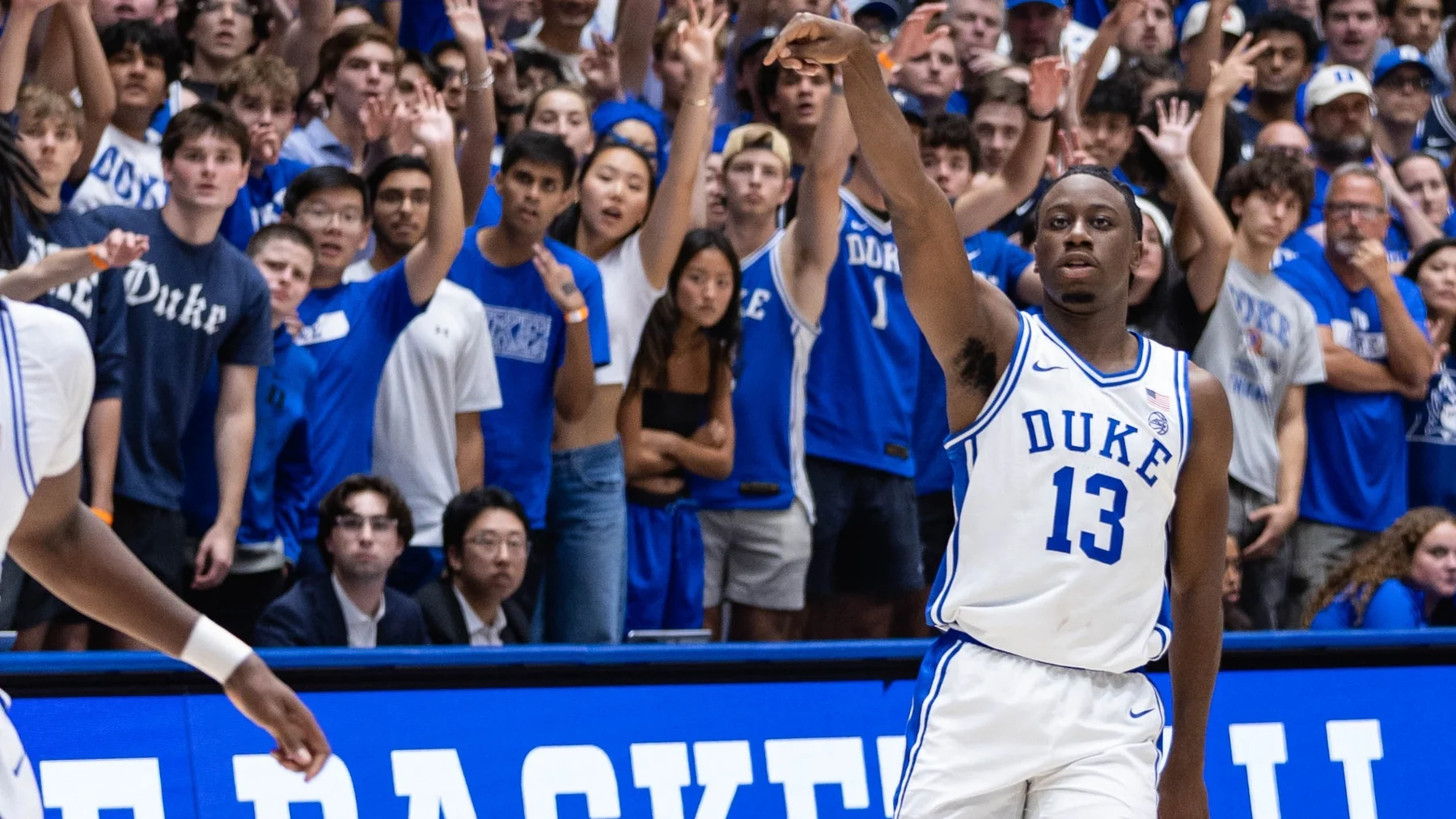
That experience gives fans specific decisions to watch as he joins returning guards. If a defender closes quickly on his catch, can he attack the open space and deliver the next pass before help arrives? If the ball has already moved through two actions, can he contribute without restarting the possession? Successful integration requires useful choices around the returning players, not merely the addition of a previous scoring average.
The October Belmont record offers an early, limited sample. Boumtje Boumtje and Sarr scored nineteen each, while Ngongba collected seven rebounds and four assists. The team's statistical panel also records sixteen Duke turnovers. A forty-point scrimmage margin can coexist with possessions that need improvement.
Ngongba's passing provides a useful observation point when defenses send help toward the interior. Watch whether he can find the released teammate and whether that teammate is ready to continue the attack. Four assists in one scrimmage identify something to investigate; they do not establish a season-long passing rate or promise the same production against every opponent.
For the younger newcomers, the schedule will expose how their individual skills fit with defensive and passing responsibilities. A made jumper is visible, but recognizing a teammate's help position or avoiding a rushed outlet can matter just as much. Duke's early neutral games and December road test supply different settings in which to observe those connections.
The useful preview therefore keeps three kinds of evidence separate: previous-school production, returning Duke experience and actual current preseason action. None alone settles the rotation. As the regular games begin, judge combinations through the quality of the possessions they create and complete, while checking actual availability before treating a listed player as a guaranteed participant.
Planning broadcasts, Cameron visits and March
A schedule guide becomes more useful when it helps fans actually see the opening possessions and arrive at the right building. Duke's current calendar crosses several networks and time zones. Checking the specific game is therefore more reliable than carrying one channel or one clock assumption through the whole season.
Match the broadcast to the specific game and local clock
The ESPN announcement lists Army on ESPNU, Coastal Carolina on ACC Network and Illinois on ESPN. The November 13 SIU Edwardsville game is listed for The CW, with streaming on the ESPN App through ESPN Unlimited. A streaming designation identifies the service to check; it is not a promise of free access.
Duke's official media hub labels its table in Eastern Time. It lists UConn on November 25 at 7 p.m. Eastern on Prime Video, equivalent to 4 p.m. Pacific in Las Vegas. Washington State on November 21 is listed at 11 p.m. Eastern, meaning 8 p.m. Pacific in Palm Desert. Travelers should use those local conversions rather than treat the school table's clock as the arena clock.
The same media table assigns the Texas Tech and Gonzaga showcases to Prime Video. Those assignments make it especially important to check each game rather than assume every Duke contest is on an ESPN channel. At the other end of the season, March 6 at UNC still carries a 6 or 6:30 p.m. Eastern window. A displayed alternative remains unresolved until a later update chooses the final time.
Before subscribing or arranging a trip, confirm the provider's current listing for your location and the school's latest time. The games-today page provides a useful starting point for daily viewing. Recheck the original event information when the distinction between a local tip and an Eastern listing affects your plans.
Check tickets and entry rules before traveling
The current Cameron game-day guide links the ticket waitlist, auction and student-ticket routes. Those links do not establish that a seat is available for every game. Check the actual event, date and seating before committing to travel, and use the venue's own ticket process for Duke's neutral-site appearances.
Cameron entry begins sixty minutes before tipoff. The guide requires security screening and compliance with its linked clear-bag policy, and it specifies a strict no-reentry policy apart from emergency or evacuation exceptions. The venue is cashless. Check its parking information and game-specific alerts before arrival rather than substitute a football parking plan or another arena's entry rules.
Those practical details matter for anyone trying to watch how the game begins. Allowing time for entry helps you see the initial combinations, defensive assignments and first responses to pressure. If you need accessibility arrangements, use the official guide's dedicated contact and parking information while planning the visit.
For March, the ACC confirms March 9–13 at First Horizon Coliseum in Greensboro. Duke's seed, opening opponent and exact playing schedule are not known at the October cutoff. The event window supports advance planning, while the actual bracket must wait for the season to determine it.
Sign in with Google to join the discussion.