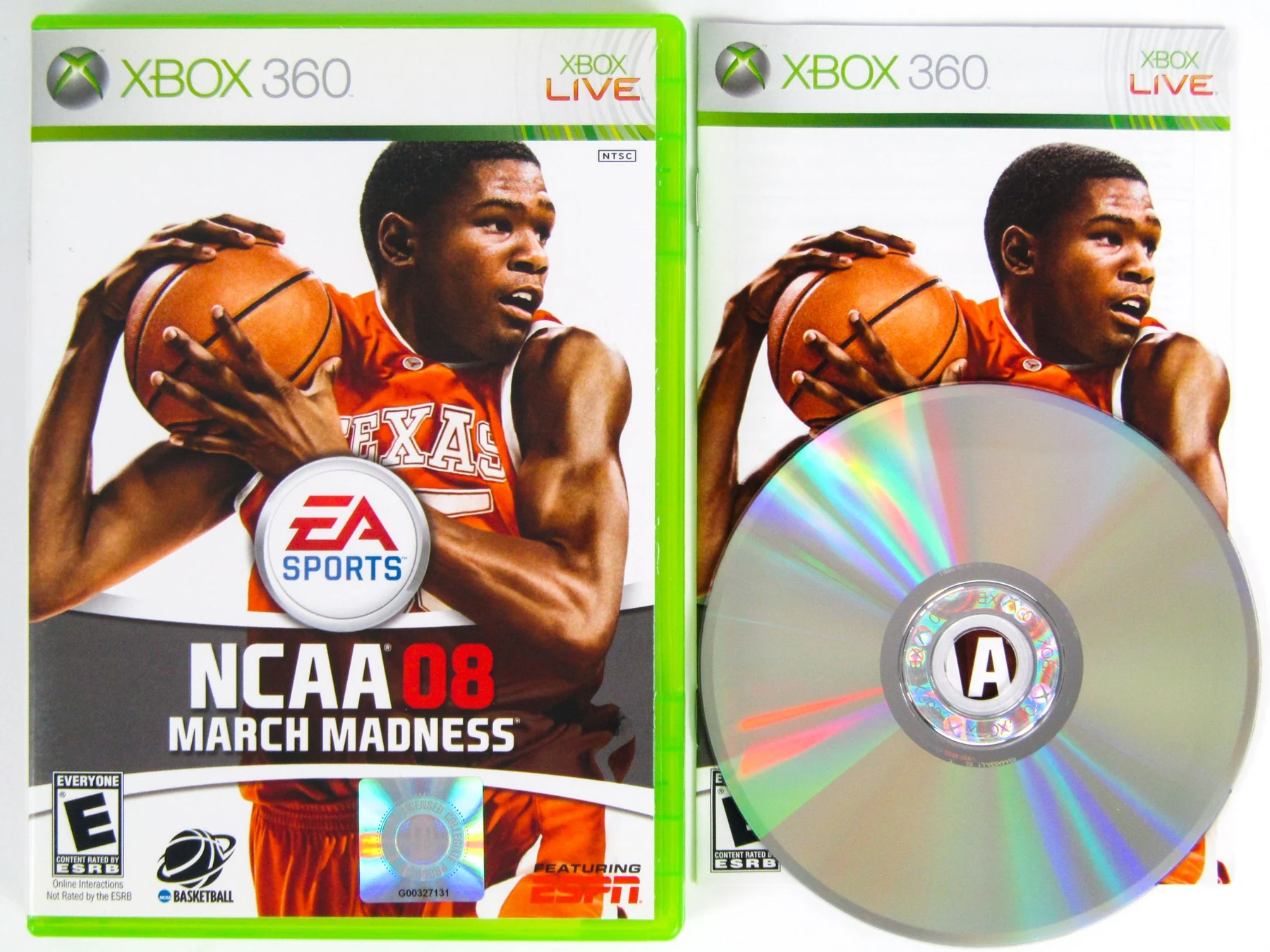
The key college basketball games and what their year labels mean
College Hoops 2K8 and NCAA Basketball 10 remain useful starting points for exploring college basketball video games. They represent different approaches to the same attraction: taking recognizable schools, their atmosphere and their competition into a playable season. They are also historical products. Their original features, hardware and rosters should not be confused with a modern release.
The year printed in a sports-game title is not necessarily the year it reached stores. Take-Two announced College Hoops 2K6 as available in November 2005 and College Hoops 2K8 in November 2007. EA announced NCAA Basketball 10 during 2009 for that year's holiday season. Reading “10” as a 2010 launch can therefore lead to the wrong source, roster assumptions or edition.
| Selected title | Historical reference | Why it belongs in the discussion |
|---|---|---|
| College Hoops 2K6 | Publisher launch announcement in 2005 | Legacy and recruiting were central selling points |
| College Hoops 2K7 | Xbox archive records its content in 2006 | Part of the evolving college-focused 2K series |
| College Hoops 2K8 | Publisher launch announcement in 2007 | Expanded coaching, play and atmosphere tools |
| NCAA Basketball 10 | EA announcement in 2009 | Team styles and television-style presentation |
This is a selected-title map, not a claim to list every college game or every regional edition. Its purpose is to explain the comparison that most returning fans encounter. A full franchise chronology is less useful to a new player than understanding whether a title emphasizes continuing program management, a single game or the feeling of a televised matchup.
There is no universal winner without a preference attached. Someone interested in roster construction over several seasons may value different systems from a fan who wants to stage a familiar matchup with convincing broadcast presentation. A collector may care about a particular console edition or physical package. Those are legitimate but different reasons to seek the same older disc.
That distinction also protects against an easy mistake when watching retrospective videos. A creator can show an edited roster, altered settings or a modification while discussing a base game. The footage may be real, but the displayed team or feature may not be what an untouched retail copy provides. Keep the original release, the platform edition and any later community changes separate as you compare the games.
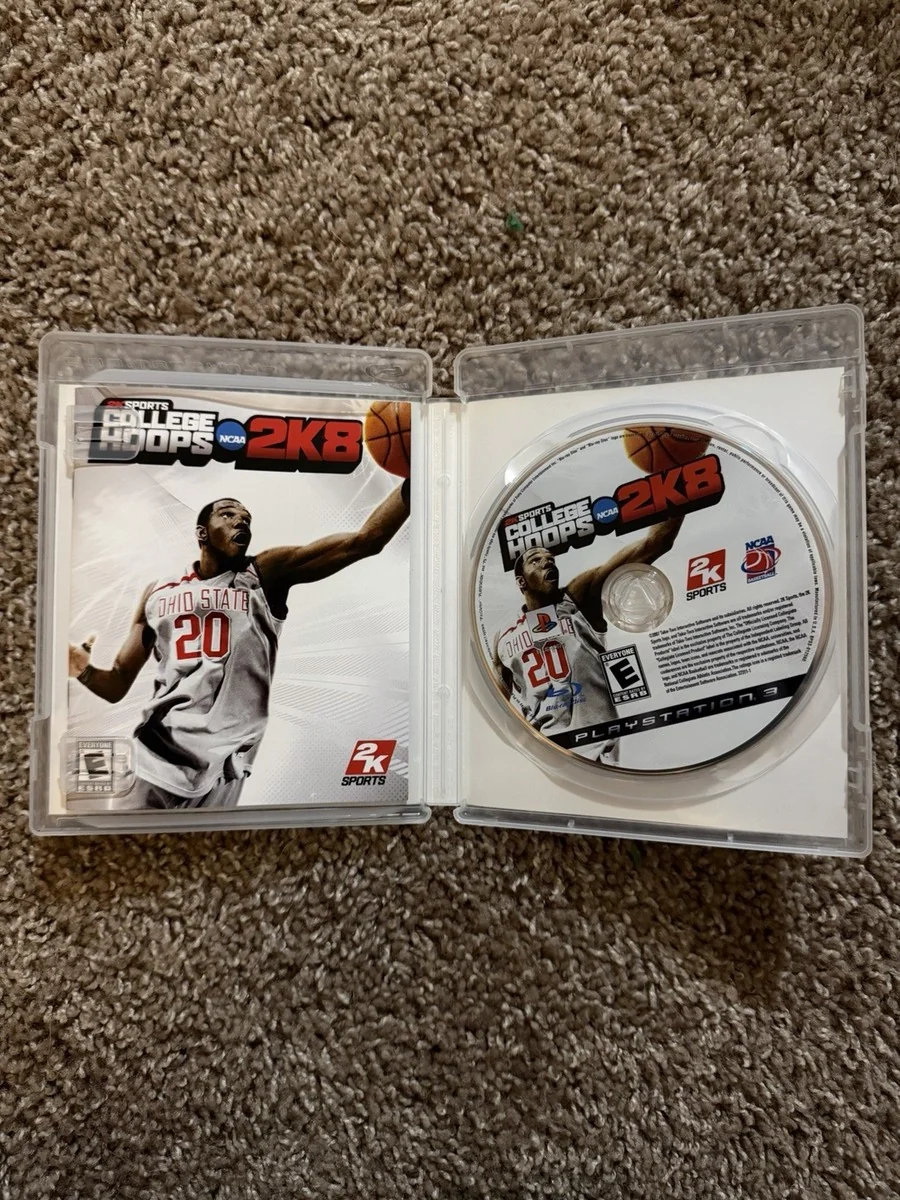
College Hoops built its identity around running a program
The College Hoops series treated college basketball as more than an NBA game with different uniforms. Its publisher repeatedly emphasized program continuity, team relationships and coaching tools. That history helps explain why returning players often discuss the series in terms of a long save file rather than one memorable exhibition matchup.
Legacy mode made the next season matter
College Hoops 2K6 promoted Legacy features involving recruiting, underclassmen and high-school camps. The 2K8 announcement later highlighted Amateur Basketball Leagues and Create-a-Recruit within its Legacy offering. These were announced game systems, not ideas that fans retroactively attached to the title.
The appeal is the connection between today's team and tomorrow's problem. A program can win now while leaving a different gap in its future roster. A player who fills a modest role may become more important when another contributor leaves. Even without treating the game as an exact model of real recruiting, that continuity gives a user reasons to care about the composition of a bench.
For a college fan, the basketball choices follow naturally. A roster with several useful interior players still needs someone to organize possessions. A group of scoring guards needs rebounds and defensive balance. The interesting part is making those needs coexist over time, rather than collecting the five highest individual ratings and assuming the lineup is complete.
Play tools connected coaching to possessions
College Hoops 2K8's publisher described PlayVision, which displayed the progression of an offensive play, and Play Designer, which let users create actions for the playbook. The significance is practical: a user could approach a possession as a coordinated team sequence rather than a series of unrelated dribble moves.
That creates a different learning loop. If an action fails, ask whether the receiver arrived in the right place, whether the pass came at the useful moment or whether the defense removed the first option. The enjoyment comes partly from recognizing and solving that sequence. It is a reason to value play tools even when an older game cannot match modern animation or visual detail.
The series also invested in atmosphere and presentation. College Hoops 2K7's announcement described Team Unity and a College Hoops Tonight studio show, while the later game promoted additional crowd and arena elements. Program management and presentation were therefore overlapping interests, not mutually exclusive camps in a brand debate.
These are historical advertised features, not a claim that every edition implements them identically or that every old online sharing function still works. When comparing copies, check the platform and exact title. Then decide whether the continuing-program experience is the part of college basketball you most want to play.
NCAA Basketball 10 emphasized how college games look and sound
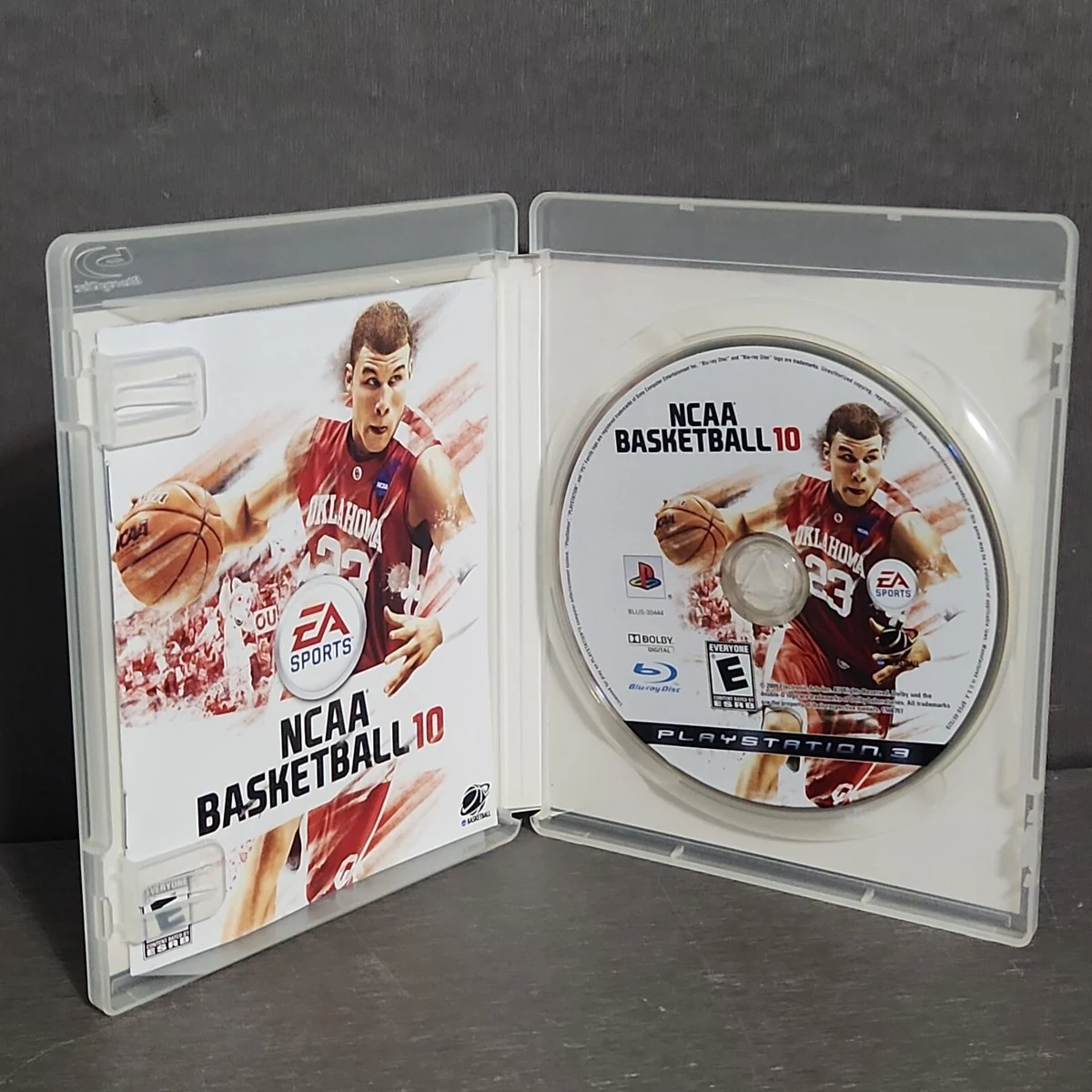
NCAA Basketball 10's most distinctive historical pitch was the integration of both ESPN and CBS Sports presentation. EA's launch materials described the ability to choose the broadcast treatment for a game. That is a concrete reason the title remains a point of comparison: it tried to reproduce the television identity through which many fans experience college basketball.
The announcer groups reinforced that distinction. The contemporary Xbox demo announcement named Dick Vitale, Brad Nessler and Erin Andrews for ESPN, and Gus Johnson and Bill Raftery for CBS Sports. These are historical game-presentation features, not a claim about the current real-world assignment of any announcer.
EA also emphasized a strategic motion-offense system and team styles. The presentation should therefore not reduce the game to a television overlay with basketball underneath. Its stated ambition connected how a school played with how the event was presented. A convincing matchup needs both: an identifiable setting and possessions that give a user something meaningful to decide.
For a fan comparing it with College Hoops 2K8, the practical question is which part of the experience matters most. If a familiar broadcast rhythm makes an individual game feel more convincing, NCAA Basketball 10's presentation is relevant. If continuing program decisions are the main attraction, inspect those systems separately. A preference for one feature is not proof that every other aspect of the chosen game is superior.
The tournament-only 2009 edition was a different product
NCAA Basketball 09: March Madness Edition illustrates why the exact subtitle matters. EA announced it in March 2009 as a downloadable Xbox 360 product organized around that year's NCAA tournament. Its advertised scope let a user play through the bracket, rather than simply serving as another name for the full retail game.
The original announcement described the historical 65-school tournament context. That number belongs to its era. It should not be silently updated to a modern field, and a retrospective launch page should not be read as proof the download remains for sale today. The product name, the tournament represented and the current purchase route are separate questions.
This is an early example of a distinction that still matters when college content appears inside another basketball title. A shorter tournament experience can satisfy someone who wants to recreate a bracket without offering every feature of a multi-season simulation. Calling both products “college basketball games” is accurate at a broad level, but it is not enough information to choose between them.
Read listings carefully: NCAA Basketball 09, its March Madness Edition and NCAA Basketball 10 are related names with different scopes. A seller's shorthand or a video title can blur those distinctions. The exact edition is the starting point for any meaningful comparison.
An old college game preserves a different basketball era
A legacy college game is more than an old list of players. It represents a particular period's competition, presentation and design assumptions. Treating it as a historical basketball world is often more rewarding than expecting it to reproduce every part of the current NCAA season unchanged.
The real men's game has changed since these releases. The NCAA approved a reduction from a 35-second to a 30-second shot clock in 2015. Division I moved its men's three-point line to 22 feet, 1¾ inches for 2019–20. The NCAA has also announced a 76-team men's tournament beginning in 2027. Each change came after the selected 2005–09 titles discussed here.
Those differences affect basketball choices. Less time on a possession changes how long a team can wait before starting its main action. A deeper arc changes the relationship between a credible shooter and help defense. A different tournament format changes the route through the bracket. Familiar player names alone do not update all of those conditions.
Updated names do not update the whole simulation
Community work can refresh an older game in useful ways, but identify exactly what a particular project changes. A roster file may edit names, positions or ratings without changing conference alignment, scheduling logic or tournament structure. A more extensive modification may address additional elements. Neither should be assumed from the word “updated” in a video headline.
The same caution applies to ratings. An edited number can represent a fan's interpretation, a statistical formula or a recreation of an earlier season. It is not automatically an official current scouting grade. If the goal is a convincing real-season recreation, inspect the source season and the definitions before treating the game's output as a prediction.
For example, a player described as a strong scorer may have accumulated points in a different role or against different competition. A simulation using a single overall rating cannot fully explain the fit beside a particular center or the decisions required against pressure. That limitation does not make the game unenjoyable; it explains why playing a season and forecasting the real one are different activities.
Use the current college teams directory when you want present-day program context. Then decide whether you are playing the original era, a clearly described community recreation or a fictional continuation. Keeping that choice explicit makes the old game's strengths easier to enjoy and its historical mismatches easier to interpret.
Original hardware and online access are separate questions
For a newcomer, the practical starting point is the version printed on the disc and case. A familiar basketball title can have several console editions. Finding a copy of the game does not establish that it works with the machine beside your television, and an old launch announcement cannot settle current access.
Check the exact console edition before buying
Sony's official support guidance says that PS5 consoles do not support PS3 discs. A PS3 copy of NCAA Basketball 10 therefore should not be purchased on the assumption that a PS5 disc drive will run it. The plastic case and the publisher's name do not create cross-generation compatibility.
Apply the same title-specific thinking on Xbox. Microsoft maintains a backward-compatibility program, but that does not mean every Xbox 360 game runs on every later Xbox. Verify the exact title, console version and supported hardware together. A marketplace seller's phrase such as “Xbox game” is too broad to answer that question.
For an original-hardware setup, inspect the disc condition, the console's working disc drive and the availability of a suitable controller. A case photograph is useful for identifying the edition; it is not a test of the disc. Likewise, a video of a classic game running on a computer does not establish that the publisher released a native PC version. Ask what software and hardware that demonstration actually uses.
A launch-day online feature is not a current service promise
Microsoft's Xbox 360 store announcement set July 29, 2024 as the end of new purchases through that console's store and the old Xbox 360 Marketplace. It distinguished that change from playing previously purchased games and redownloading owned content. It also explicitly made continuing multiplayer dependent on publisher server support.
EA's official online-services shutdown list includes NCAA Basketball 10 for PS3 and Xbox 360. Its historical online features should therefore be read as part of the product's history, rather than a reason to expect a working current matchmaking service. Offline modes and publisher-hosted online systems answer different questions about an old disc.
Decide which experience you actually want before choosing a copy. Someone planning an offline program-building season needs a working edition and compatible setup. Someone hoping to recreate a launch-era online tournament also needs a supported service, which a disc cannot supply by itself. This distinction makes comparisons between old games more useful: evaluate the experience you can access today, while appreciating the broader feature set that was advertised when the title was new.
How the modern college return fits this history
The modern return of college branding belongs in this timeline, but it needs its own description. In February 2026, 2K announced college-themed NBA 2K26 Season 5 content involving 16 universities. Its examples included MyTEAM cards, courts and jerseys, plus MyCAREER cosmetics and other school-themed items. This was a college presence inside an NBA title, with a particular set of activities attached to it.
The same publisher announcement identified an early 2027 window for a new college basketball experience. That is a useful confirmed milestone. It does not establish that the upcoming experience recreates College Hoops 2K8's Legacy mode, repeats NCAA Basketball 10's broadcast arrangement or sells as a particular standalone package. Those are separate product questions requiring their own official answers.
History helps frame the questions a fan should ask. If your favorite memory is recruiting a replacement guard before a senior graduates, look for confirmed multi-season program management. If you remember recognizing a team's offense, look for demonstrations of player movement and coaching control. If you mainly want the tournament's sights and sounds, inspect presentation and competition structure. A college logo can accompany any of these experiences without answering all three.
It is also useful to separate a game you can play now from a seasonal promotion that happened months ago. The official NBA 2K26 support roundup preserves the Season 5 college theme, while later entries document the title's subsequent seasons. An old reward description is evidence of the historical release; it should not be treated as a promise that the same redemption window remains open on October 20, 2026.
For a first journey through the older catalog, choose a specific question instead of chasing an undefined “best.” Compare the documented program-building tools in College Hoops, the television presentation emphasized by NCAA Basketball 10 and the narrower tournament focus of the downloadable 2009 edition. Then check which exact version and features your hardware can actually access. That process produces a much clearer choice than comparing cover athletes or assuming that a later year number improves every part of a game.
College basketball's appeal can live in a single tense possession, the noise around a rivalry or a season that carries into the next recruiting class. These games approached those pleasures in different ways. Understanding their original design priorities lets you enjoy a classic on its own terms and evaluate future announcements with more precise expectations.
Sign in with Google to join the discussion.