
The Buffalo schedule starts with the right Bulls and the right season
This guide covers the University at Buffalo Bulls men's 2026–27 basketball season. UB is different from Buffalo State, and the men's schedule is different from the women's schedule. Those distinctions matter because all can appear in searches for “Buffalo basketball.” The season begins in the fall of 2026 and continues into 2027; a January game in a 2026–27 schedule belongs to January 2027.
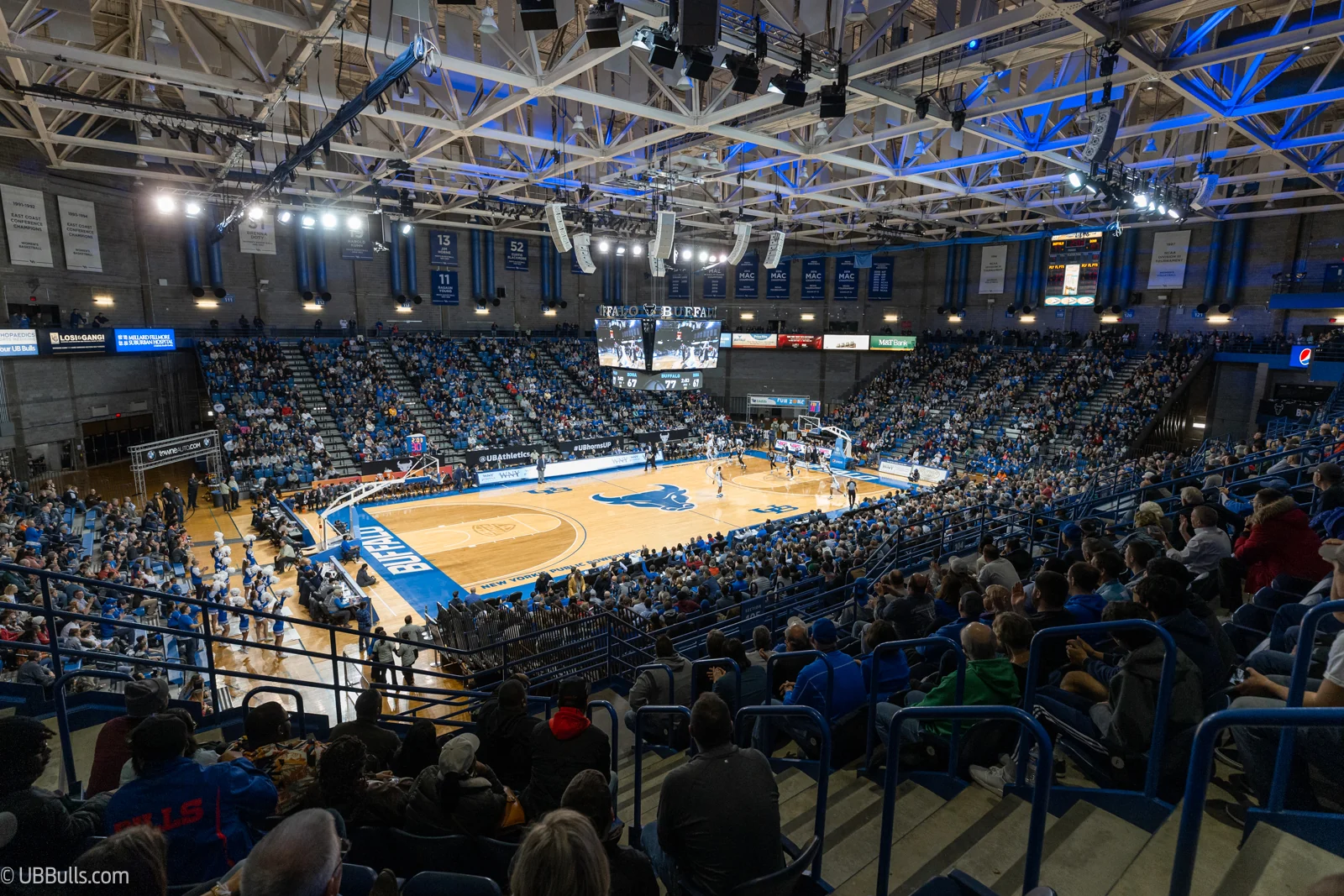
There is a venue-name update as well. The home arena formerly called Alumni Arena is now Broadview Arena. The University at Buffalo's archives document the March 2026 naming partnership, and the current athletics schedule uses Broadview. An older Alumni Arena reference may describe the same campus building, but it should not be treated as proof that a current listing has moved the game elsewhere.
| Schedule anchor | Date | Why it matters |
|---|---|---|
| Mercyhurst exhibition | October 21, 2026 | Preseason home preparation, separate from the regular-season opener. |
| At Marshall | November 2, 2026 | Regular-season opening trip, part of the MAC–Sun Belt Challenge. |
| Penn State Schuylkill | November 9, 2026 | Men's regular-season home opener. |
| At Western Michigan | December 2, 2026 | Early MAC play arrives before the calendar turns to January. |
These are planning anchors checked on October 20, 2026, rather than a substitute for the live official schedule. Read its home, away and neutral designations alongside each opponent. “Vs.” alone does not prove a game is on campus, especially when a tournament places teams at another school's arena. A neutral-site matchup can have its own ticket and broadcasting arrangements.
An exhibition also deserves its own label. It can provide an early look at combinations and defensive communication, but it should not be inserted into the regular-season record as though it carries identical competitive stakes. Similarly, a blank result or preseason 0–0 record is a sign the games have not been played, rather than a sequence of scoreless contests.
For a local fan, the first useful decision is whether the goal is an opening-night road watch, an early home visit or a conference game. Those choices lead to different dates and preparation. The team directory helps establish the correct program; UB's official schedule then supplies the current event details. Once the identity and date are clear, the schedule becomes a basketball story rather than a confusing list of similarly named teams.
Nonconference games reveal what Buffalo can carry into league play
Buffalo opens the regular season with two road assignments: Marshall on November 2 and Pittsburgh on November 5. That sequence makes the first week a useful test of organization away from home. The Bulls must establish their offensive roles without relying on a comfortable home opening, then respond to another opponent three calendar days later.
Road tests and short turnarounds ask different questions
At Marshall, watch how Buffalo gets into its first action under regular-season pressure. At Pitt, watch whether the same organization holds up against a different opponent. Those are prospective viewing questions, not claims about either opponent's eventual ranking. A road result matters, but the mechanisms behind it reveal whether the performance is repeatable: clean entries, connected help defense and a plan for possessions that do not produce an early shot.
The November 15 home game against Canisius and November 19 trip to St. Bonaventure create another useful comparison. Both are regional matchups, but the venues change the practical challenge. A fan can compare Buffalo's decision-making at home with its ability to execute on another campus. Do not assume that geographic familiarity makes the second game easy or predicts the intensity of a particular matchup.
November 28 against Towson is listed as a neutral-site game at the Palestra in Philadelphia, part of the Cathedral Classic hosted by Penn. It therefore belongs on a travel or viewing plan differently from a UB home date. The venue label matters more than a casual reading of “versus Towson.” This guide does not invent additional tournament opponents beyond those confirmed on the schedule.
What to watch beyond the final score
Ball security is the first transferable measure. Look for turnovers that stop Buffalo before it creates a shot, particularly when the primary handler sits or an opponent changes pressure. A few spectacular makes can disguise an offense struggling to begin possessions. Conversely, a cold shooting night can contain encouraging execution if the team repeatedly creates appropriate attempts.
Defensive rebounding supplies the second test. A first defensive stop has limited value if the opponent recovers the miss. Watch whether guards help finish possessions and whether help rotations leave a smaller player responsible for a larger rebounder. Those observations explain more than an unadjusted points-allowed total against opponents playing at different speeds.
Finally, distinguish an early win's confidence value from proof of conference readiness. The opponents and settings vary, so neither one impressive score nor one difficult road night settles the season. The useful nonconference question is which habits travel. By the time MAC play begins, fans should have evidence about Buffalo's ball handling, shot creation and ability to complete defensive possessions, rather than only a list of wins and losses.
The MAC stretch is a different schedule test
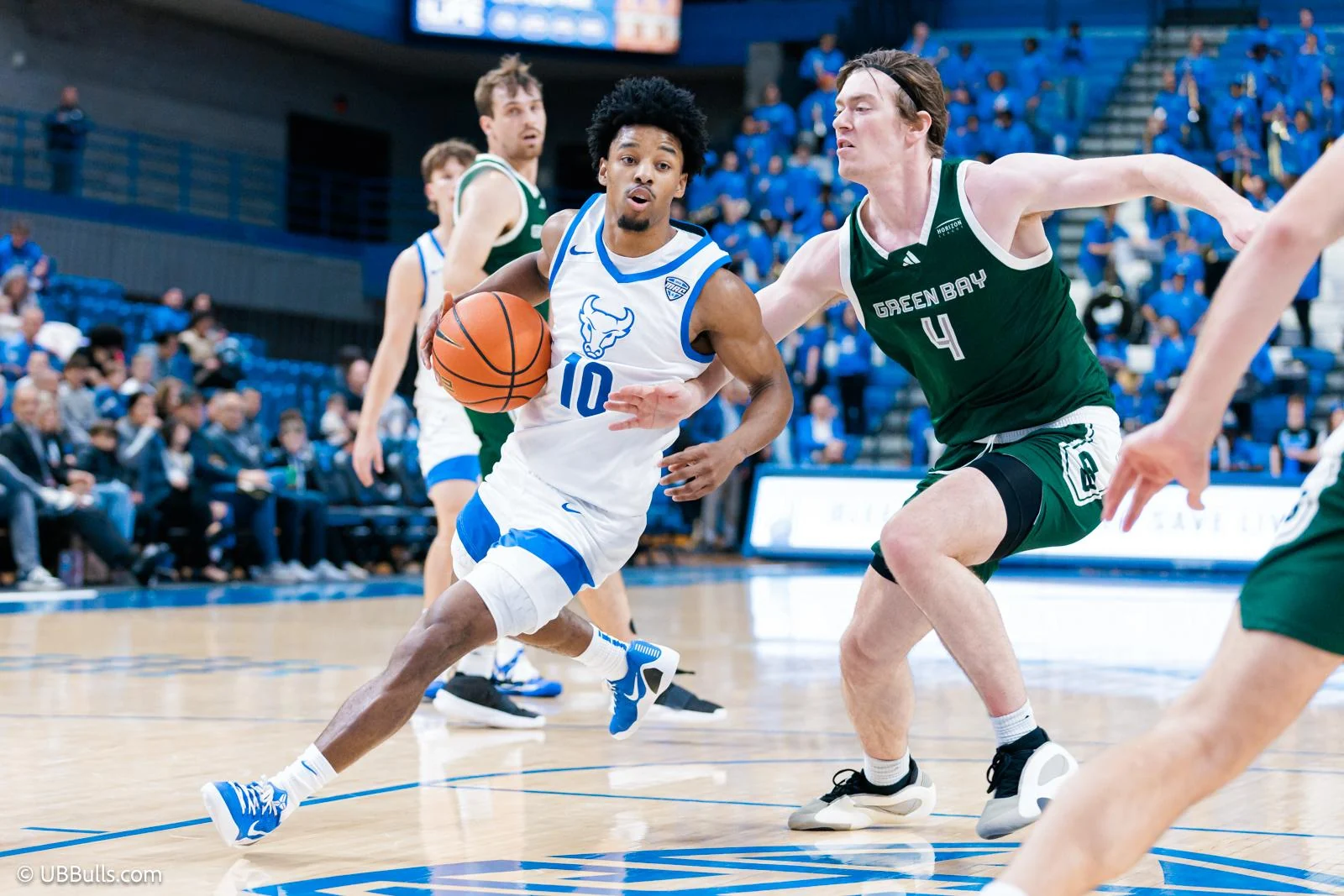
The MAC announced a 22-game conference schedule for 2026–27, with 11 home games and 11 away games over 12 weeks. League play begins December 2, so Buffalo's conference preparation cannot wait until January. Early December results already contribute to the league race, even with nonconference games still appearing elsewhere on the calendar.
That structure changes how to read progress. An encouraging November is useful preparation, but it does not give Buffalo conference wins in advance. Repeated league opponents also have opportunities to adjust. A scoring action that works in the first meeting may draw a different coverage in the second. The longer test is whether Buffalo develops more than one dependable way to create a good possession.
Why opponent sequence matters as much as the standings
January supplies a concrete stretch: Massachusetts visits UB on January 5, followed by Buffalo's trips to Toledo on January 8 and Central Michigan on January 12. The Toledo game was moved from January 9 in an October 14 television announcement. For fans, that is both a preparation story and a planning reminder: the same opponents can create different recovery windows when a game moves.
Two successive away assignments do not prove that Buffalo will be tired or predict a defeat. They do mean the team must prepare for changing opponents without an intervening home game. Watch whether the staff can maintain defensive communication and whether the reserves supply useful minutes. A deeper rotation matters if it preserves execution, rather than simply spreading playing time.
Another pair of road dates, at Akron on February 9 and at Bowling Green on February 13, offers a later comparison. By then, the team should have more evidence about which combinations work. Fans can ask whether the Bulls solve familiar problems more cleanly than they did in November: getting the ball into the offense, defending the second action and completing possessions after an opponent misses.
The February 6 MAC–Sun Belt Challenge date is a separate nonconference assignment, despite falling in the middle of the league calendar. Its outcome matters to the overall season, but it should not be inserted into Buffalo's MAC win-loss record. That distinction becomes especially useful when a schedule page lists league and nonleague games together without a conspicuous break.
The regular-season league schedule concludes March 5, followed by the MAC tournament period in Cleveland. A date reserved on a school schedule does not establish that Buffalo has already qualified or reached a later round. Use the conference directory for league context, then judge the Bulls on their own results. Follow the sequence of opponents and adjustments, rather than assume a preseason list has already determined the standings.
Choosing a UB home game and buying the right ticket
Choose the kind of visit before choosing a ticket. The home opener offers an early look at the team; a regional matchup offers a different atmosphere; a MAC home game lets you watch the adjustments that develop through league play. None guarantees a particular result. The best date is the one that fits your interest, group and travel plan.
For the purchase, begin with UB Athletics' own men's basketball ticket portal. The school announced a transition to Paciolan for 2026–27, so a returning fan should follow the current account instructions rather than assume an older provider login still handles the order. Men's and women's basketball have separate ticket products and event listings.
The university reported on October 12 that single-game tickets were on sale. That announcement establishes the sales process, not a guarantee of today's inventory for every seat and game. This guide does not quote a live lowest price. Compare the actual event, section, row, quantity and complete checkout amount. A season-ticket launch price from the summer should not be repackaged as a current single-game offer.
Broadview Arena is the current name to expect on home-game listings. If an older page says Alumni Arena, compare the actual location and event rather than immediately assuming the game moved. Keep the current school's directions and event message with the ticket. A neutral game in Philadelphia or an away game at another MAC school requires a different trip and can use a different ticket arrangement.
For basketball viewing, an elevated sideline angle helps reveal how actions develop across the floor. A lower baseline angle brings you closer to interior contact but makes the far end more distant and can place the basket structure in your sightline. These are editorial tradeoffs, not a claim that every seat has identical access or that a particular section is always the best value.
Ask the ticket office about accessible seating and companion arrangements if your group needs them. Confirm any special benefit attached to a seat rather than assuming a premium label includes food or parking. The school's ticket-information page notes that some seats can require a separate game-day benefit, so read the current offer carefully. A comfortable, usable seat for the whole group matters more than winning an abstract proximity comparison.
Prepare delivery and entry before you travel. Follow the provider's current instructions for the actual event, and make sure each guest who arrives separately has the required access. A completed ticket plan includes the game, the seat, the delivery and the route into the building. Once those agree, you can focus on the matchups that made you choose that home date in the first place.
How to follow Buffalo when tipoff or television details change
Buffalo's January trip to Toledo is a practical example of why a saved summer schedule needs checking. UB announced on October 14 that the game originally set for Saturday, January 9 had moved to Friday, January 8 at 7 p.m. and would air on CBS Sports Network. A fan following the original date could miss the game even after correctly identifying both teams.
The November 5 trip to Pittsburgh offers another specific viewing detail. Pitt's October 8 announcement lists Buffalo at 7 p.m. on ACC Network Extra, or ACCNX. That is a streaming designation, so do not assume it is identical to finding the linear ACC Network channel. Follow the event's current Watch link and confirm that your provider or subscription supplies the required access.
A simple check before each game
Start with UB's current game listing and latest preview. Confirm the date, venue and time zone; the program's event page labels its times Eastern. Then read the actual television or streaming field. “Listen” is an audio option, while “Stats” supplies game information. Neither label, by itself, promises a video stream.
If the time remains TBA, treat it as unconfirmed rather than as midnight or an instruction to choose an arbitrary evening hour. If an opponent remains TBD, preserve that uncertainty too. The February MAC–Sun Belt date is not permission to invent a visiting school. It is a real planning placeholder whose final pairing needs a later announcement.
When two schedules disagree, look for the newer dated announcement and check the opponent's official listing. A specific television-flex release usually explains why an original date changed. The aim is to resolve the actual game detail, not select whichever page happens to appear first in search. For an in-person trip, the current ticket message and school event instructions deserve another check close to departure.
Use UB's media center for its game resources and the college basketball TV guide for broader viewing context. Do not assume every Bulls game uses one platform or that a nationally televised selection makes the rest of the season available through the same package. The opponent, venue and rights arrangement can change the required service.
A final check can be brief: correct men's team, current date, Eastern start converted if needed, confirmed platform, and account access tested before tipoff. For a home visit, add the ticket and arena-entry details. The schedule gives you the sequence; the latest game information gets you to the right place at the right time. With that work done, the season becomes easier to follow through its opening road tests, early MAC games and the adjustments that decide the stretch run.
Sign in with Google to join the discussion.