BIG EAST Tournament 2027: what is confirmed
The 2027 BIG EAST men's basketball tournament is scheduled for March 10-13 at Madison Square Garden in New York. The dates and round-by-round television plan are available; the actual 2027 seeds and matchups are not determined as of October 20, 2026. A bracket with schools already placed into those open slots would be a prediction, not the official draw.
| Date | Round | Announced coverage |
|---|---|---|
| Wednesday, March 10 | First round | Peacock |
| Thursday, March 11 | Quarterfinals | Peacock afternoon; FS1 evening |
| Friday, March 12 | Semifinals | FOX |
| Saturday, March 13 | Championship | FOX |
The league describes 2027 as the tournament's 45th consecutive season at the Garden. That continuity gives the event a familiar setting, but a familiar venue does not make an old bracket current. Check the year on any printable sheet, ticket listing or saved image before using it to plan a session.
The immediate fan task is to separate three levels of information. A tournament date is confirmed calendar information. A seed-number slot describes a place in the bracket. A school assigned to that slot requires the completed seeding process. Mixing those levels is the most common way an early guide becomes misleading.
This article explains the bracket model and the decisions it creates without claiming a future result. It also distinguishes the BIG EAST conference event from other basketball played at Madison Square Garden. A venue may host several competitions in March; a ticket to one event does not admit its holder to another.
Use the BIG EAST schedule to follow the games that will establish the eventual field order. The TV guide helps organize viewing once the specific day approaches. The useful October answer is therefore precise: the event calendar is set, the broadcast plan is announced, and the team-by-team route remains open until the regular season and applicable tiebreaks resolve it.
How the 11-team bracket creates two different routes
The established BIG EAST men's tournament model, shown in the official 2026 bracket, gives the top five seeds a first-round bye. The six remaining teams play three opening games. The outline below explains that model; confirm the final 2027 bracket before treating its slots as the year's definitive draw.
The opening-round slots
| Opening matchup | Quarterfinal opponent in the established model |
|---|---|
| No. 8 vs. No. 9 | No. 1 |
| No. 7 vs. No. 10 | No. 2 |
| No. 6 vs. No. 11 | No. 3 |
| No opening-round game | No. 4 vs. No. 5 |
The numbers describe seeds, not national rankings. Being the conference tournament's No. 3 seed does not mean being the country's third-ranked team. A national poll and a conference seed come from different processes and answer different questions.
The bracket also explains why a change of one position can have a larger practical effect than it first appears. Moving between the fifth and sixth slots changes whether a team plays on the opening day. Moving among other slots can change the likely quarterfinal opponent. Fans should follow the route implied by the actual bracket rather than assuming every adjacent seed difference is equally valuable.
Why a bye changes the workload
Under this model, a team entering in the quarterfinals needs three wins to take the title. A team entering in the first round needs four. That extra game adds competitive minutes and reduces the available recovery between rounds. It does not establish a precise probability of winning, because team quality, opponent, health and game conditions still matter.
For an opening-round winner, the advantage may be having already adjusted to the floor and event rhythm. For the team with a bye, the advantage is avoiding the first elimination test and its workload. Neither observation guarantees the outcome when they meet.
The deeper issue is roster flexibility. Can a coach preserve ballhandling when the main initiator rests? Can the frontcourt survive foul trouble without changing every defensive coverage? A bracket is a map of games, but these personnel questions determine how difficult that map becomes. This is why the most useful tournament preview examines combinations and responsibilities alongside seeds, rather than treating the printed number as a complete description of the team.
When the real seeds become knowable
The 2026-27 BIG EAST regular season uses a double round robin: each team plays the other ten twice, producing 20 league games per team and 110 total conference games. The regular season ends March 6. Those results, together with the applicable tiebreaking procedure, establish the numbered tournament order.
A record displayed before all relevant games finish may describe the current standing without settling the final seed. A game involving another team can change a tie comparison. A fan should therefore distinguish ?currently occupies this position? from ?has clinched this exact seed.?
A regular-season title and a tournament seed are different labels
A shared position in the standings does not allow two teams to occupy the same numbered bracket slot. Seeding needs an ordered field, even where a regular-season achievement is shared. That is why a title discussion and a bracket discussion can lead to different wording without either necessarily being wrong.
The league's published recent tiebreak procedures begin a two-team comparison with head-to-head results and then, if needed, move through further comparisons involving the standings. Multiple-team ties involve their own process. Use the procedure published for the actual 2027 event before declaring a complicated scenario resolved; an older document explains the principle but should not be represented as a freshly issued 2027 ruling.
A useful historical example is Creighton in 2026: its 9-11 league record still produced the fifth seed and a first-round bye. That number has meaning within that season's standings. It does not establish a universal threshold for earning a bye in 2027. A different distribution of wins can move the required record.
For fans tracking the final week, build a simple list of what remains unknown. Identify the teams tied, the games still to play and whether a seed has actually been announced or merely projected. Keep predictions labeled. A bracket graphic can look official while still being one person's estimate.
Once the league publishes the final bracket, use it as the practical reference for sessions and opponents. Until then, seed-number placeholders are useful and honest. They let supporters understand possible routes without giving an imaginary certainty to a matchup that the remaining games may remove.
How to assess a potential matchup at Madison Square Garden
Start a tournament matchup assessment with possessions rather than reputation. Which team can protect the ball against the other's pressure? Which team can force the first rotation? Who finishes the defensive rebound when a center contests? The seed helps describe the season's order, but those questions describe the game that must be played.
The 2026 quarterfinal between Seton Hall and Creighton is a useful historical example. Seton Hall won 72-61 and held a 15-5 advantage in points off turnovers, along with a 30-13 advantage in bench scoring. Those figures identify areas that mattered that afternoon. They do not establish an automatic formula for the next season, when personnel and roles can change.
Points off turnovers are also not a completely separate source of offense that can be added without context. A live-ball mistake may create an immediate chance; a dead-ball turnover may lead to an ordinary set possession. Watching the type of mistake helps explain whether an opponent's pressure is producing easy scoring opportunities or merely changing who begins with the ball.
Bench scoring needs a similar reading. A reserve's production can be important, but the number alone does not reveal how well the whole second unit defended or whether starters were sharing the floor. For a multi-day event, the useful question is whether the coach has workable combinations when a primary scorer or defender rests.
Current availability should be checked close to the event. Do not assume that a player missing a game months earlier remains unavailable, or that a late return restores his previous workload immediately. A tournament preview needs the present rotation, not a recycled list of names from an old season.
The Garden setting adds atmosphere and a neutral-site designation, but teams may arrive with different familiarity and levels of local support. Neither fact erases the need to execute. A crowd can make communication harder; it cannot complete an inbound pass, defend a screen or box out for the players.
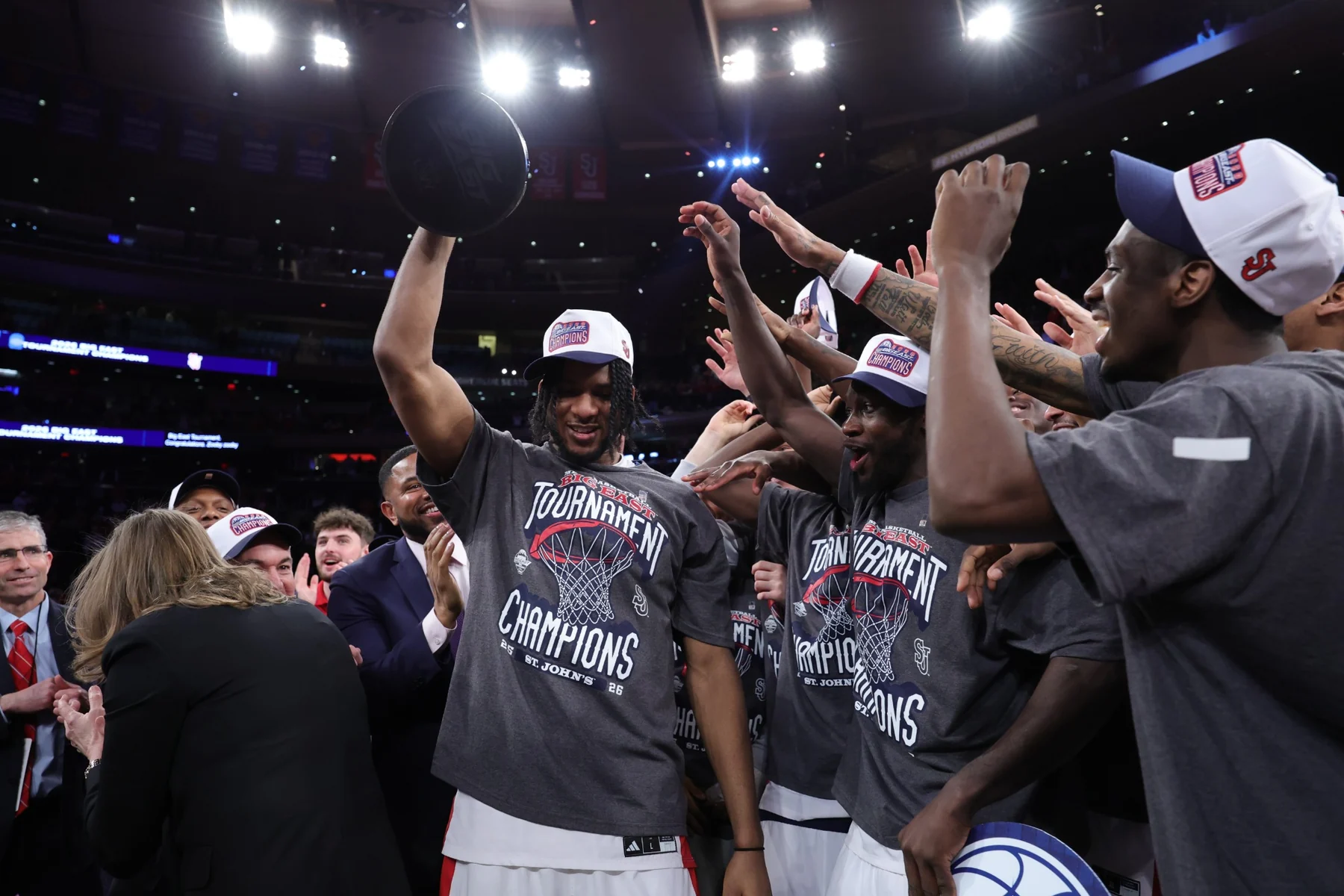
St. John's beat UConn 72-52 in the 2026 final. That is a completed result and part of the event's recent history. It is not a reason to assign either program a place in the 2027 championship game. The better use of history is to learn which basketball questions to ask, then answer them with the teams that actually reach the next bracket.
TV coverage and session planning
The announced 2027 coverage splits the early and late rounds. Peacock carries the opening round and Thursday afternoon quarterfinals. FS1 handles Thursday evening, while FOX carries the Friday semifinals and Saturday championship. Check the final event listing for exact tip times rather than copying the previous year's hours.
For a viewer following one school, the required service can change as the team advances. A first-round stream and a Saturday broadcast are different access questions. Open the exact event while signed into the relevant account, confirm the plan requirement and test the device before the first possession. This guide does not promise a free stream or a particular subscription price.
For an attendee, choose the session before choosing the seat. A ticket may cover one session rather than an entire day or tournament. Read the seller's actual terms for included games and entry, and verify whether the team you want to see is confirmed in that session. A possible quarterfinal route is not a guarantee that the school will win its opener.
MSG's official mobile-ticket tutorial encourages adding tickets to the phone wallet before arrival. Finish account access and any transfers ahead of time, then confirm that each person knows which phone holds the admission pass. A message saying a ticket was sent is not the same as checking that it has been accepted and can be displayed.
Also check the venue's current event information for bags, accessibility, entry and re-entry rules. Those are practical details with direct consequences for a long tournament day. An old account of what another fan brought to the Garden is less useful than the policy applying to the exact event.
When traveling, leave space around the basketball. Overtime, security lines and a delayed start can make an extremely tight return plan uncomfortable. An afternoon session followed by a separate evening session may require different admission arrangements. Do not assume that staying in the building or leaving and returning will be permitted without checking.
The safest planning anchor in October is the confirmed date and round. If the trip is worthwhile only for one specific school, wait for the actual bracket before treating a speculative matchup as a booking fact. If the attraction is the tournament itself, a session can be enjoyable for its basketball variety even when the teams differ from an early prediction.
What a tournament run means beyond the bracket
The Garden presents two overlapping competitions. Every team wants the BIG EAST trophy, while some also need to strengthen their position for the NCAA tournament. Those ambitions share the same scoreboard but require different assessments. A league favorite can lose a semifinal and retain a compelling season record. A lower seed can transform its immediate future by winning the championship. Neither outcome should be reduced to a claim that one Thursday result determines every team's March.
The automatic bid and the wider resume
The automatic-qualification route rewards the conference tournament champion. At-large selection instead involves the selection committee's evaluation of the broader season. NET helps organize that evaluation; it does not award a place automatically at a particular rank. A viewer following a possible at-large team should therefore connect a Garden result to its existing wins, losses and opponents rather than inventing a universal requirement to reach Friday.
The quality of the opponent matters to that discussion. Beating a strong opponent can add evidence that surviving an easier opening-round game cannot supply in the same way. Even then, a tournament win does not erase months of results. Distinguish the statement that a team played well from the claim that its selection position is settled. The latter requires a wider comparison, including teams playing in other conference tournaments that same week.
A fan checklist for the final week
After the regular season ends on March 6, replace every projected seed with the official bracket. Check the opponent path, the relevant session, the current television listing and the ticket that actually admits you to that session. Confirm player availability from the school close to the game. A bracket may remain unchanged while the usable rotation changes substantially, altering how a coach can handle a second game in two days.
During the event, update the next matchup only after the preceding game finishes. Compare how each advancing team used its guards and big men, whether foul trouble distorted the previous rotation, and whether a short bench had to absorb unusually heavy minutes. Those observations support a useful preview without pretending to know the result. Keep the event's layers clear: the bracket tells you who can meet, the schedule tells you when to watch, and the basketball explains why that meeting may be difficult.
Sign in with Google to join the discussion.