The 2026–27 BIG EAST schedule in one view
The BIG EAST has released its men's basketball conference calendar for 2026–27. The essentials are firm: 11 teams, 110 league games, 20 conference games per school and a double round robin. Butler visits Providence on Saturday, December 12, 2026 to begin conference play. The regular-season slate ends Saturday, March 6, 2027 with all 11 teams appearing in the final week and a five-game closing day. The BIG EAST Tournament follows March 10–13 at Madison Square Garden in New York.
This is a conference schedule, not the entire season for any one program. Schools have separate nonconference games and exhibitions, and their first countable game may arrive weeks before their first BIG EAST game. For example, UConn opens its regular season November 2 but its league slate December 23; Villanova's university release places its nonconference opener in Rome on November 1 and its league opener at Creighton December 19. If a search result presents only twenty dates, it may be the conference segment rather than a missing November schedule.
There are several easy anchors for a fan calendar. December 19 is the first four-game BIG EAST day. December 22–23 add five league games across the two days: two on Tuesday and three on Wednesday, based on the official composite. New Year's Eve includes Marquette at Creighton and UConn at Butler. January and February bring the bulk of home-and-away rematches. March 6 is the last regular-season Saturday before the bracket is set for Madison Square Garden.
The league has said FOX Sports, NBC Sports and TNT Sports will be part of 2026–27 men's coverage, but its release explicitly says the complete tip-time, arena and game-level network slate will come later. Do not read “FOX Sports coverage” as “this specific game is on FOX.” Several school releases make the same point. The date and matchup are ready to save; the channel and many start times are not.
For a team-specific view, use the conference directory to navigate to the BIG EAST and then confirm a chosen school's live calendar. This guide is current through September 16, 2026. Its job is to explain the schedule's structure and the most telling stretches, not to turn unplayed games into results or rankings.
How the 110-game double round robin works
The format is straightforward once the arithmetic is visible. Eleven teams each have ten conference opponents. In a double round robin, each opponent appears twice, once in each home/away direction, so every team has twenty league games. Multiply 11 by 20 and divide by two because every fixture belongs to two teams: that yields the league's 110 unique conference games. The BIG EAST says this is the seventh consecutive season with that format.
Twenty games and a home-and-away look at every opponent
For fans, the format offers a built-in second chapter. UConn's January road meeting with St. John's and its March home rematch are not interchangeable simply because the opponents are the same. Between the two, both teams may adjust lineups, defensive schemes and end-game actions. A center who controlled the glass in the first meeting might draw different help defense in the second. The change of venue matters too: an away crowd and a home crowd are not equivalent competitive environments.
That does not make a rematch a perfect experiment. Player availability, travel, officiating, shooting variance and the preceding week's workload all change. The sensible comparison is more detailed than “Team A won twice.” Look at whether the losing team solved a turnover problem, protected the defensive glass or generated cleaner late-clock shots. The conference calendar guarantees the second opportunity; it does not guarantee the same matchup conditions or the same result.
Why conference dates are not a school's whole schedule
A twenty-game league list omits nonconference play. Georgetown's official release, for instance, says its twenty BIG EAST games join twelve nonconference dates for a 32-game regular season. UConn also has twelve nonconference games and three separate exhibitions. The exact nonconference package must be checked school by school; a league-wide table is not a substitute for the university's full schedule, especially if a fan is planning a November trip or trying to count record-eligible games.
This matters for postseason discussion. Nonconference games can shape a résumé, and the quality of an opponent cannot be inferred merely from the BIG EAST label or from a school name. The conference race itself, however, is determined by the league slate. When comparing teams in January, separate overall record from conference record and consider who has played more road dates or more difficult opponent sequences to that point. Equal twenty-game endpoints can still be reached by very different routes.
A schedule guide should also keep exhibitions out of the regular-season tally. They can reveal rotation ideas and make for interesting basketball, but they are not extra BIG EAST standings games. Treat the 110-game ledger as the official conference map, then layer each school’s confirmed nonconference calendar on top when you need a complete season view.
December's staggered start and the first league tests
The BIG EAST does not flip one switch and send all eleven teams into league play on the same night. Its December slate contains fifteen conference games spread across six dates. This staggered start matters for comparisons: a team can be deep into nonconference play while another has already faced an opponent that counts in the league standings. The sensible way to read an early table is to check games played, not only the win percentage beside a name.
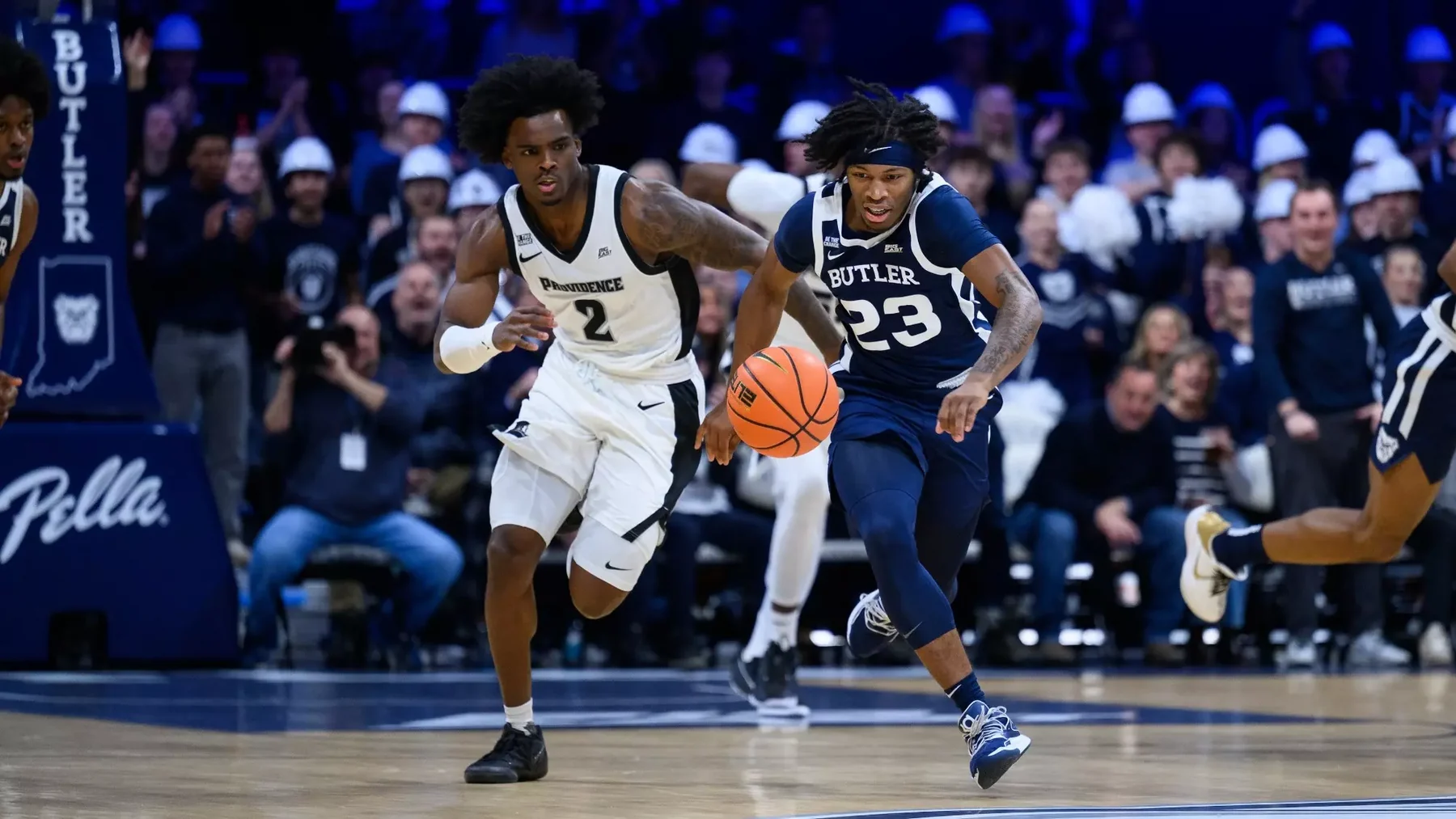
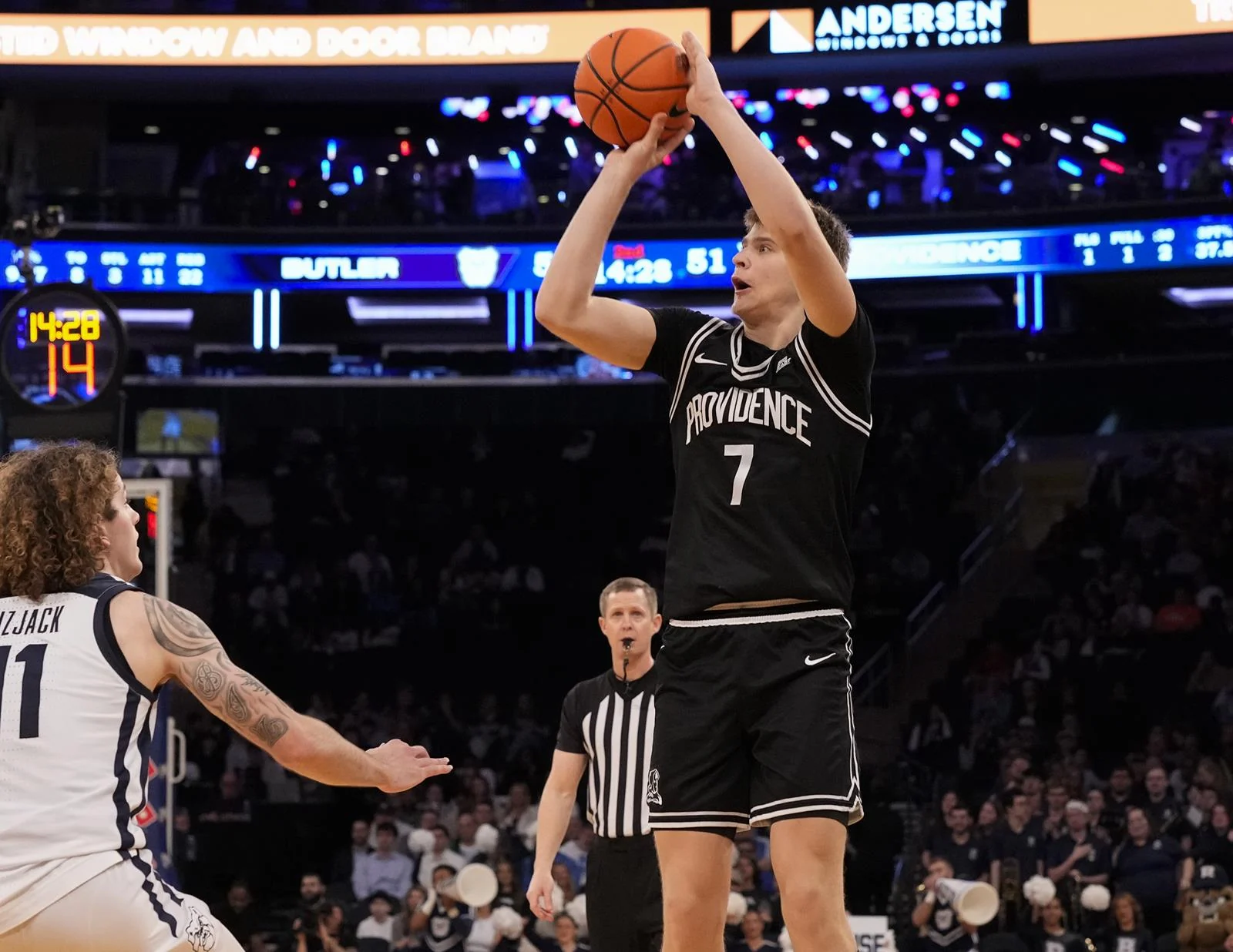
Butler and Providence open on December 12
Butler at Providence on Saturday, December 12 is the first league game. It is also an early measuring point for both programs, but not a conference-title verdict. One December result can be magnified because it sits alone in the opening window; the double round robin guarantees a return matchup later. Fans should watch how each side generates shots in the half court and whether the visitor can keep defensive rebounds away from second-chance opportunities. Those are game-analysis questions, not claims about lineups that have yet to play.
December 19 brings four games; December 22–23 bring five more
The next league Saturday, December 19, has DePaul at St. John's, Seton Hall at Georgetown, Villanova at Creighton and Xavier at Marquette. The matchups span four separate buildings, so a single “BIG EAST opening weekend” story would blur different home advantages and team conditions. Villanova's trip to Creighton, for example, is its university-announced league opener; Georgetown hosts Seton Hall before traveling to UConn four days later. The school releases align with the league composite on those dates.
On December 22, Creighton visits Xavier and Providence goes to Villanova. December 23 brings Marquette to Butler, St. John's to Seton Hall and Georgetown to UConn. Those five games put teams on different rest and travel tracks just before the holiday break. A club that has already made a road trip may have had less practice time for a second scouting plan; another may be returning to its own floor. That is a plausible basketball constraint, not evidence that either has a competitive disadvantage before tip.
Holiday travel stretches into New Year's Eve
The conference resumes December 30 with Xavier at Georgetown, Seton Hall at DePaul and St. John's at Providence. December 31 has Marquette at Creighton and UConn at Butler. The last two dates are worth saving because holiday travel can affect how fans attend and watch games, and because New Year's Eve produces an unusual midweek-feeling league showcase. Exact start times are still to be assigned in the complete league release.
On the court, the first fifteen games will start to show which teams can guard without fouling and make decisions when an initial action is denied. The small December sample should not be turned into a final hierarchy. Some clubs will have played more league games than others, and strength of opposition will differ. January's larger slate will provide a better test of whether the early patterns hold.
January and February games worth circling
Once the holiday dates pass, the conference calendar becomes a chain of first meetings and tactical return engagements. The best dates to circle are not necessarily the ones with the loudest preseason labels. They are the ones that let a team test an adjustment against an opponent it has already seen, sometimes in a very different building. The league's full composite provides the matchup dates; what those games mean in the standings must wait for results.
UConn–St. John's and the return meeting
UConn visits St. John's at Madison Square Garden on Friday, January 29. St. John's then goes to Connecticut on Tuesday, March 2, during the final regular-season week. The two schools met in the 2026 BIG EAST Tournament final, but that past result should not be used as a forecast for a new season with new lineups. The intriguing 2027 question is whether each side can create efficient shots when its preferred first action is taken away—and how much the second matchup reflects lessons from the first.
A January meeting can influence an immediate standings race, while a March rematch comes when tournament seeding and rest management may be sharper concerns. Madison Square Garden is a known site for the first game; UConn's exact home arena for the return meeting still requires its final venue assignment. Fans should not buy the same travel plan for both dates merely because the matchup name is repeated.
Villanova, Creighton and Marquette rematches
Villanova opens league play at Creighton December 19, then hosts Creighton January 27. A month between meetings allows scouting and lineup changes, though the second game is not a controlled laboratory test because venue and personnel availability can shift. Villanova's February schedule also places the Wildcats at UConn February 3 and at home against UConn February 14. That eleven-day gap may put the first game's defensive adjustments directly into the second scouting report.
Marquette hosts Xavier on December 19, with the return trip to Xavier on January 23. Those games illustrate another scheduling pattern: some home-and-away pairs are completed by late January, while others, such as UConn–St. John's, remain open until March. A fan assessing the league table should look at which opponents a club has already played twice. A good record built against one set of teams is not identical to a good record after a tougher travel and matchup mix.
In all these games, track the repeatable details: offensive rebounds yielded, turnover pressure, transition chances and how efficiently each team attacks when the first set fails. If a defense closes a driving lane after being hurt by it in the first meeting, the response says something useful about coaching and execution. But do not declare a rematch a revenge win or postseason preview until the teams actually play it.
Reading the stretch run and March tournament
The last league week is deliberately dense. Tuesday, March 2 features Marquette at Georgetown, St. John's at UConn and Butler at Creighton. Wednesday, March 3 adds DePaul at Villanova and Providence at Xavier. On Saturday, March 6 the composite schedule finishes with five games, including UConn at Xavier and Georgetown at Villanova. The final standings will be determined by games already played plus these closing dates; the composite does not yet tell us which results will carry title or seeding stakes.
The final week is crowded by design
A team that plays Tuesday and Saturday has only a few days to move from one opponent's scouting report to another. Late-season basketball is often about simplifying what travels: defending without fouling, getting the ball into a reliable half-court action and finishing possessions with a rebound. The actual rest equation varies because not every club plays on the same Tuesday or Wednesday. Compare each team's last two dates rather than assuming all eleven arrive at the finish with identical recovery time.
Villanova is one clear example from a school-issued schedule. It hosts DePaul on March 3 and Georgetown on March 6, a short turnaround but both home dates. UConn hosts St. John's March 2 and visits Xavier March 6, so its two closing games differ in site as well as opponent. Neither path is automatically easier. One may involve more travel; the other may involve a quicker in-building reset. The quality and health of each roster by March will matter far more than any September label.
Madison Square Garden, March 10–13
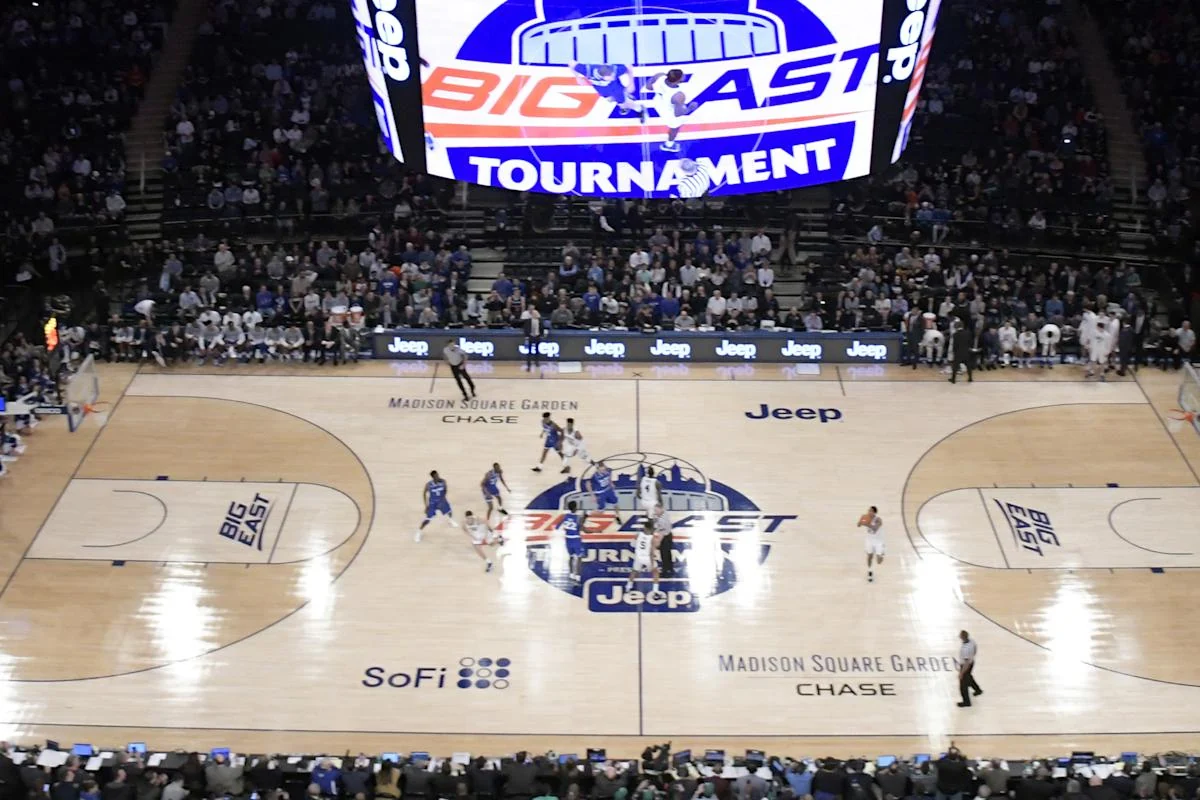
The conference tournament is scheduled for Wednesday through Saturday, March 10–13, 2027 at Madison Square Garden. The BIG EAST notes that it will be the tournament's 45th consecutive year at that venue. Fans can mark the venue and date range now. They cannot yet identify a particular team's opponent, seed, session or exact tip time from the regular-season calendar. Those depend on the final table and the later tournament bracket.
The postseason setting changes the calculus. A double-round-robin history gives every league opponent two data points, but a neutral-site tournament game is one elimination event. Coaches may lean more heavily on trusted lineups, shorten the bench or change coverage for an opponent they saw twice during the winter. These are common tactical possibilities, not claims about an announced 2027 plan. A photo of real tournament play belongs beside this discussion because the decisive environment will be a different building from each school's regular home floor.
If you are considering New York travel, the safest reservation is a flexible one until game sessions are announced. A ticket for a Wednesday session and a ticket for a Saturday final are not interchangeable. The conference has confirmed the March 10–13 event window; it has not published the team-level path through it.
TV, arenas and ticket planning without false certainty
Several BIG EAST schedule pages now have the right opponent and date but an unfinished time or channel field. That is normal at this stage. The conference's September 14 announcement names FOX Sports, NBC Sports and TNT Sports as 2026–27 coverage partners, then says the full game-time, arena and network slate will follow. A fan cannot assign a particular Saturday game to FOX, Peacock, FS1, TNT or another outlet solely from that partner list. Check the fixture itself when the league updates it.
League partners are not individual game assignments
Marquette's school release likewise says tip times and television information for all games will be announced in coming weeks. Villanova says the same for its schedule. These are direct warnings against copying last season's channel or assuming a rivalry gets the same slot every year. An early date is excellent for blocking out a weekend; it is not enough to know whether to arrange a streaming subscription, an afternoon meeting or an evening train.
The right order is league fixture first, university game page second and confirmed game-level network last. Broadcaster apps and regional availability can differ, so a team-specific TV listing close to tipoff is more useful than a September search snippet. The TV schedule guide can help when the season begins, but a dated article should preserve “to be announced” where the original sources do.
Team pages and neutral-site details matter
Even “home” is not always a complete arena address. Villanova's school announcement says its February 14 UConn game is at Xfinity Mobile Arena in Philadelphia, while several other home dates are at Finneran Pavilion. Marquette identifies Fiserv Forum for its Milwaukee home slate. Fans should use the home school's current game page, not the opponent's shorthand, to confirm which building, entrance and seller apply to a specific date. A tournament session at Madison Square Garden is a separate ticketing product from a St. John's home game in the same building.
Ticket sale timing also differs by school. Georgetown's September 14 announcement lists a member presale beginning September 17 and a public sale September 22 for its league games, but that is a Georgetown policy, not a BIG EAST-wide release date. Availability, prices and seat maps can change. For a road trip, confirm the venue and tip time before booking inflexible transportation; for a local game, verify the official school ticket link rather than buying from a screenshot of a schedule graphic.
These details are part of the fan experience, not administrative footnotes. A 1 p.m. campus game and a night game in a downtown arena produce different travel and viewing plans. We know the opponents and dates; the league and schools will fill in the remaining details on their own calendars.
What fans should track once play begins
The 2025–26 BIG EAST sent St. John's, UConn and Villanova to the NCAA Tournament, according to the league's March announcement. That is useful historical context, not a list of automatic 2027 contenders or bids. New rosters, coaching changes and injuries can alter the conference order. The only honest September 2026 claim is that the league has published the route; the teams still have to play it.
Start with a standings habit: check how many conference games a team has played and where those games occurred. A 3–1 start with three home dates is not directly equivalent to 3–1 after three road trips. Then look at the opponent mix. In a double round robin, every program eventually sees all ten rivals twice, but a January snapshot can favor or punish a team simply because one difficult pair came early. By late February, the return games offer a better comparison of adjustments than the first score alone.
Inside games, follow possessions rather than only final margins. If a team survives by shooting an unusual percentage from three while surrendering offensive rebounds, that is different from controlling the glass and limiting live-ball turnovers. If a guard handles pressure better in the second meeting, a coach may have changed spacing, personnel or timing. The data can show improvement; it cannot prove the cause without game film and opponent context. In a league where most opponents are revisited, those details make the season richer than a row of win-loss symbols.
Pay attention to the calendar's last turn, too. A club's position after the March 2–3 games may affect how it approaches the March 6 finale, but the actual seeding picture cannot be known now. The March 10–13 Madison Square Garden event will then produce its own bracket and short-turnaround demands. Do not assume a particular team will play a particular tournament session from the regular-season grid.
Use the scores page once games are played, then compare a result with the league's current fixture list and the school's official notes. The best schedule guide evolves from confirmed dates into informed interpretation as real evidence accumulates. This one is deliberately anchored to the September 16 announcements, with unknown TV windows and future outcomes left unknown.
Sign in with Google to join the discussion.