
ACC 2026–27 schedule at a glance
The ACC's 2026–27 men's basketball conference schedule is out, and the calendar has three distinct phases. The overall regular season begins Sunday, November 1, 2026. ACC league play begins Tuesday, December 29, and continues through Saturday, March 6, 2027. The 2027 ACC Men's Basketball Tournament follows March 9–13 in Greensboro, North Carolina. Those are the dates to put on a season calendar now; the game times and most television designations were still pending in the league's September 9 announcement. A published opponent and date should not be mistaken for a confirmed tip time or channel.
Key dates from opening night to Greensboro
One concrete league opener is Syracuse at Florida State on December 29, confirmed by Florida State's athletics department. Other schools begin the next day; Georgia Tech says it welcomes Duke on December 30. The distinction is worth spelling out because a fan searching “ACC opening night” may see the first conference game on December 29 and assume all 18 programs tip that day. They do not. The full composite schedule, rather than a headline date, is the right place to find the specific night for your team.
What the official release does and does not include
The ACC's conference announcement links both a composite league schedule and a team-by-team schedule PDF. Use the composite version when you want to see everything happening on a given date; use the team version when planning all 18 ACC games for Duke, Syracuse, California or any other school. The release covers conference games, so do not assume those documents supply every nonconference opponent or neutral-site event on a team's full season schedule.
Just as importantly, the league says game times and television designations will be announced later. Individual school pages may show placeholders such as “TBA,” and ESPN has separately announced five ACC Big Monday matchups with times and channels. Those five are real exceptions to the general TV uncertainty, not proof that all other slots have been assigned. A responsible schedule guide can give the confirmed dates and opponents now, then direct readers back to official team listings close to game day for final times, channels and any rescheduling. As of September 16, no 2026–27 ACC conference games have been played, so this article does not attach invented scores, rankings or seeding stakes to the future fixtures.
How the 18-game ACC schedule works
All 18 ACC men's teams are scheduled for 18 conference games in 2026–27, the second year of the league's current format. The arithmetic is useful: each school plays one permanent or “primary” partner twice, one season-specific “variable” partner twice, and 14 of the other 15 opponents once. That is four games against repeat opponents plus 14 single meetings, for 18 total. Because a team plays nine at home and nine away, the schedule balances venues in aggregate, but it does not give every school the same opponent mix. One conference member will be absent from each team's regular-season ACC slate.
Primary home-and-away partners
The ACC identifies these nine protected pairs: Boston College–Notre Dame; Clemson–Georgia Tech; California–Stanford; Duke–North Carolina; Florida State–Miami; Louisville–SMU; NC State–Wake Forest; Pitt–Syracuse; and Virginia Tech–Virginia. “Home-and-away” means each school in the pair hosts the other once in league play. The league's choice preserves many familiar annual rivalries, notably Duke-North Carolina and the two Bay Area programs. It does not mean the clubs play each other on consecutive weeks or at a fixed point in the season; dates are in the full schedule.
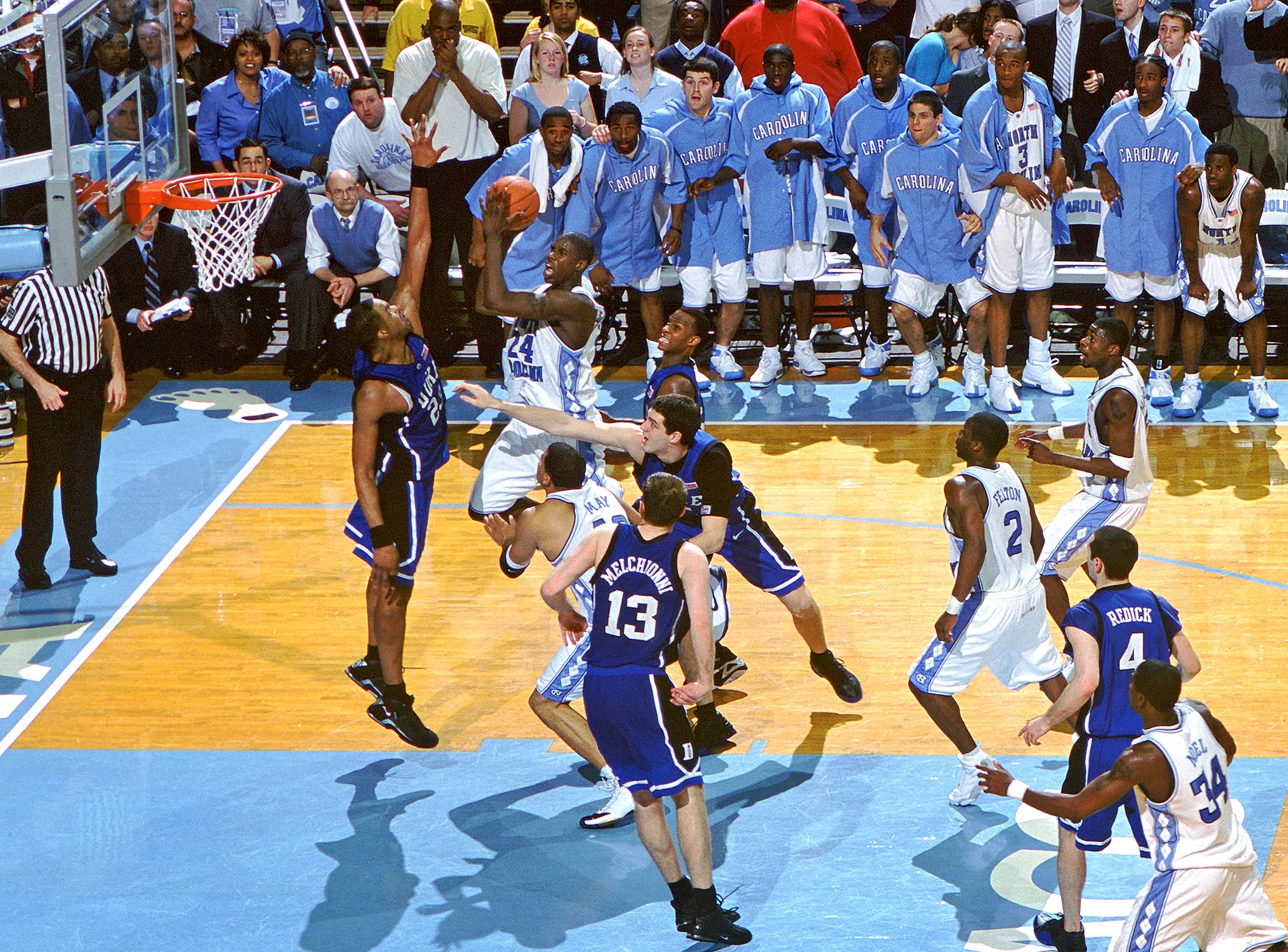
This structure also shows why a fan should not read the first meeting as a final verdict on a rivalry. Duke hosts North Carolina on February 13, according to Duke's release, and then goes to Chapel Hill for the March 6 finale. Those are two separate regular-season chances to adjust. A poor shooting night or foul trouble in the first game need not describe the second. Home court changes, and the season can look different three weeks later. The games still count equally in the conference standings.
The nine variable partner pairings
For this specific season, the additional home-and-away pairs are Boston College–Virginia Tech; California–NC State; Clemson–Florida State; Duke–Virginia; Georgia Tech–SMU; Louisville–North Carolina; Miami–Pitt; Notre Dame–Wake Forest; and Stanford–Syracuse. Those repeat matchups are selected for 2026–27, not permanently guaranteed. The ACC says the variable partner will be determined each season.
The Louisville-North Carolina pairing is a helpful example. The Tar Heels' own release confirms home-and-home games against both Duke (primary) and Louisville (variable). Louisville hosts North Carolina in January and goes to Chapel Hill on February 8. A fan could reasonably see two UNC-Louisville games on the calendar and assume a scheduling error if they missed the partner rule; it is intentional. Similarly, Duke-Virginia has two league meetings, including Virginia at Duke on March 1.
Keep the conference label attached to every game. North Carolina and NC State are scheduled to meet in a December 15 nonconference game in Greensboro and again in a January 9 ACC game at North Carolina, according to UNC. Counting both as league games would distort the standings. And because the 18-game formula omits one of the remaining 15 opponents, the absence of an ACC regular-season game against a particular school is part of the format, not automatically evidence of a cancellation. The official ACC matchup release lists each team's home and road opponents if you need to verify a specific school.
Games and stretches worth circling
An 18-team league playing 18 games each produces 162 ACC conference fixtures, so no short list can stand in for the entire calendar. A good “games to watch” list should instead help you recognize the schedule's shape: a protected rivalry, a run of nationally televised tests, and early games that establish a baseline before February. None of these dates comes with a guaranteed high-stakes label yet. The teams still have to play their nonconference schedules and the first weeks of ACC games.
Duke, North Carolina and the late-season rivalry finish
Duke's official release places North Carolina in Durham on February 13 and the return game in Chapel Hill on March 6, the final scheduled day of ACC regular-season play. This protected home-and-away pairing is one of the league's few annual constants. The placement creates a narrative arc, but the important detail for a fan is practical: the second meeting comes after the February 13 result and after several more conference games. It could affect the title or tournament seeding; whether it does depends on the standings by March 6.
Duke's stretch around that first UNC game is worth watching without overhyping it. The Blue Devils host Miami on Big Monday, February 1, travel to Virginia on February 6, then host North Carolina February 13. They later host Virginia on March 1 before visiting UNC five days later. That is a real pair of repeat-opponent sequences involving their primary and variable partners. If the teams are close in the league table, those return games could offer chances to respond to earlier tactical problems. If they are not, the schedule is still a useful measure of how Duke handles different defenses and venues.
Big Monday's five ACC windows
ESPN has separately named five ACC games for its 7 p.m. ET Monday slot: Miami at Duke on February 1; Louisville at North Carolina on February 8; Louisville at Virginia on February 15; Miami at North Carolina on February 22; and Virginia at Duke on March 1. All five are listed on ESPN in its September 14 release. This is a subset of ACC play, not an alternative conference schedule and not every game featuring those schools. Louisville's two appearances are consecutive Mondays on the road, while Miami's are separated by three weeks. North Carolina and Duke each host two of the five.
Those allocations are useful for early calendar planning. They are less useful as a preseason power ranking. ESPN selected marquee matchups for a TV property; the league standings will be decided by every conference game, including midweek fixtures that may not have the same spotlight. The ACC's official team schedules remain the source for all 18 games per team. Treat the five Monday dates as confirmed viewing anchors and then look at each school's full week to see whether a televised game is preceded by travel or followed by another strong opponent.
Other early league tests across the conference
Florida State hosts Syracuse on December 29, one of the league's first games. The Seminoles' school release then lists January trips to California and Stanford, making the shift from an East Coast home opener to a western road swing especially visible. The early results will not settle the league, but they can reveal how teams handle the first transition from nonconference play to familiar ACC scouting and then to cross-country travel.
December 30 adds two contrasting openers. Georgia Tech brings Duke to McCamish Pavilion and says three of its first four league games are at home. North Carolina hosts California in Chapel Hill to start its ACC slate. Those home settings may help the hosts, but home court is an advantage to analyze, not a predicted score. Georgia Tech also warns that midweek conference dates can move for television scheduling, so anyone planning a trip should recheck the school listing before booking. The point of circling these games now is to see the league's first assignments clearly; the point of revisiting them later is to judge the teams on current evidence rather than on September reputations.
Travel, home court and schedule difficulty
“Nine home, nine away” sounds balanced, but it does not describe the experience of playing the calendar. In this coast-to-coast ACC, dates and geography matter alongside opponent names. A team may play two away games on one western trip, another may cross time zones for a single stop, and a third may spend a week at home before a difficult road sequence. None of that automatically determines a result. It does affect how much time a staff has between games to travel, practice, prepare and recover.
Coast-to-coast games are not interchangeable
Florida State provides a clear early example. Its official September schedule places Syracuse in Tallahassee on December 29, then sends the Seminoles to California on January 6 and Stanford on January 9 before they host North Carolina on January 13. The two western games are three calendar days apart, which might allow one travel leg to cover both Bay Area opponents. But the article cannot assume an actual flight itinerary or that those are three complete days of rest; tip times and team logistics have not been published. What fans can see today is the sequence: an eastern home opener, two Pacific-time road games, then a return home for a notable UNC visit.
Syracuse has a similarly readable but later trip. The Orange's athletics department lists at Stanford on January 27 and at California on January 30, followed by a home game against Virginia on February 3. That swing comes after a January 23 home game with North Carolina. It illustrates why treating every road game as the same difficulty is too crude. The opponent's quality matters, but so do the venue, the local clock, the turn between games and the game waiting at home. Syracuse and Stanford also play a second game in Syracuse on February 17 because they are variable home-and-away partners. Comparing both sites will be more useful than extrapolating from their first meeting alone.
Georgia Tech offers the opposite-looking opening: three of its first four ACC games are at McCamish Pavilion, beginning with Duke on December 30. That is not a free pass; Duke is a demanding opponent regardless of location. But it is a meaningful schedule shape when compared with Florida State's immediate western swing. Later Tech has a more road-heavy February stretch, including trips to North Carolina and Boston College after its February 3 home game with Stanford. The season has to be judged in full rather than from the first two weeks.
For a reader evaluating schedule difficulty, I would use a simple order: first count the home and away fixtures, then identify two-game road trips and short calendar gaps, then consider the strength of the teams when the games are played. The ACC format gives every school nine home dates, yet the opponents and sequences are not uniform. Preseason labels can help you choose a game to watch, but they cannot measure how hard that game will actually be in January. Once tip times appear, convert Pacific starts for East Coast viewers and check whether travel or a late finish changes the practical viewing plan. The schedule is a map of assignments, not an outcome model.

TV updates and the 2027 ACC Tournament
There are two calendars at work here: the regular-season conference schedule and the five-day ACC Tournament after it. The league has published opponents and dates for the first one, but many tip times and television networks were still unassigned in its September release. It has published the dates and venue for the second one, but its bracket cannot be complete until the conference standings are final. Treating these layers separately is the easiest way to avoid a calendar full of confident but incorrect channel or seed claims.
Announced Big Monday channels versus unannounced assignments
The ACC explicitly says game times and TV designations will be released later. ESPN's later Big Monday announcement fills in five specific ACC games: one at 7 p.m. ET on ESPN on each Monday from February 1 through March 1. That does not assign a network to Georgia Tech-Duke on December 30, Syracuse at Stanford on January 27, or the rest of the league slate. A schedule page that lists “TBA” for those games is being appropriately cautious, not withholding a known time.
There is also room for normal schedule maintenance. Georgia Tech's school release says midweek conference games may change dates based on television coverage. Therefore, a fan buying travel or planning around a weekday matchup should recheck the school and ACC calendars rather than treating a September date as immovable. This is especially important for long-distance road games, where hotel and flight decisions are less reversible than a television reminder. The Big Monday dates and ESPN designation are confirmed today, but the ordinary pregame check is still sensible for any live sporting event.
Greensboro dates, qualification and bracket timing
The 2027 ACC Men's Basketball Tournament is set for Tuesday through Saturday, March 9–13, at First Horizon Coliseum in Greensboro, North Carolina. The league says it will reveal the bracket, including seeds, times and networks, on Saturday, March 7, after the March 6 regular-season finish. School releases from Duke and Georgia Tech state that the top 15 teams in the final 18-team standings qualify. That means three schools will not enter the conference tournament. Which three is unknowable in September and should not be inferred from preseason projections.
The format changes how the last month feels. A team near the top may be competing for a favorable seed or the regular-season title; a team near the cutoff may be trying simply to reach Greensboro. The same February matchup can serve both stories. For instance, Virginia at Duke on March 1 lands just before the final weekend, but its precise effect on the bracket will depend on the league records and any tiebreaker rules then. A single game matters because it changes a team's 18-game conference record, not because it appears on national TV.
Do not confuse the ACC Tournament with the NCAA Tournament. Greensboro is the league's postseason event; it does not replace March Madness. The March 7 bracket announcement is the point when fans can plan a specific ACC tournament game time and network with confidence. Until then, keep March 9–13 reserved but avoid printing a fictional seed line or opponent next to your team.
How to use the full team-by-team schedule
If your question is “When does my team play?”, start with the ACC's team-by-team PDF. It gives a focused view of each of the 18 league slates. If your question is “What games are on this Tuesday or Saturday?”, start with the composite league PDF. Both documents are linked from the conference's September schedule announcement. School athletics pages are a useful third check because they combine conference games with nonconference dates, venue details and subsequent changes. Do not expect a two-page article to reproduce all 162 ACC contests reliably after future edits; use the official full lists for that level of detail.
Read each line in a consistent order. Check the year first: a January or February date in this schedule means 2027, while December games are in 2026. Then check whether “at” means a road trip or whether the school lists a home opponent. Next, check the game's ACC designation before using it in a conference standings discussion. North Carolina's December 15 meeting with NC State is a good trap: UNC calls it a nonconference game in Greensboro, whereas the January 9 home meeting is an ACC game. Two familiar league schools on the floor do not, by themselves, make a matchup a league fixture.
The partner rule provides a second cross-check. Syracuse's school release explicitly identifies Pittsburgh and Stanford as its two home-and-away opponents and notes that it does not play NC State in this regular-season ACC slate. If a social graphic shows an extra Syracuse–NC State league game or only one Syracuse–Stanford date, check it against the current official calendar. Similarly, a California–Stanford pair appearing twice is expected, not a duplicate entry.
Once you have the right fixture, look for a posted tip time, time zone and network. If the school still says TBA, do not convert it into a made-up “usual” TV slot. On cross-country games, a California local evening start can fall quite late in Eastern time; wait for the confirmed start before setting a travel or viewing reminder. Recheck on the week of the game, especially a midweek date that may shift with TV coverage. For a broad day-of view, the site's [daily schedule](/) can help you find other men's games and scores alongside the ACC matchup.
Finally, remember what this guide is for. It explains the structure and the key points of the official 2026–27 ACC calendar as known on September 16, 2026. It does not choose tournament seeds, guarantee television for TBA fixtures, or turn a hard-looking road trip into a predicted loss. The most useful habit is to pair the fixed schedule with current records when the season arrives. That keeps the story grounded in basketball that has actually been played.
Sign in with Google to join the discussion.